




Art Deco Book Ends
These art deco book ends bring geometric clarity and animal figures to a shelf, made to keep volumes upright with undeniable style.
Art Deco Book Ends
When you search for art deco book ends, you encounter sturdy shelf supports shaped by the aesthetic movements of the early twentieth century and the interwar period. The examples found here span from nineteen hundred through nineteen thirty, capturing the shift towards stylised forms in domestic interiors.
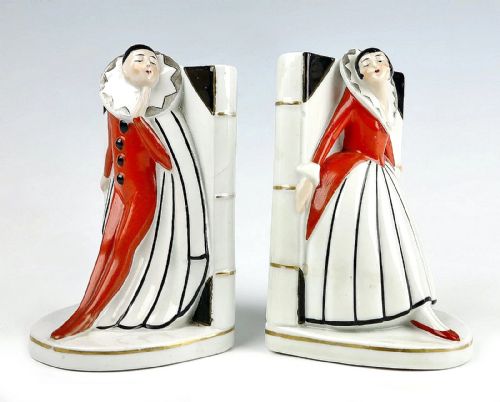
You are most likely to meet pairs modelled as animals, ranging from Scottish terriers and spaniels to elephants, birds, and fish, often mounted on heavy stone plinths. Alongside these figural designs appear human figures such as Pierrot and Pierrette, nymphs, and athletes, alongside geometric metalwork.
The objects serve the practical purpose of holding texts upright while functioning as small sculptures for desks and mantelpieces. Makers utilised contrasting materials to give each pair physical presence and stability.
Materials and construction methods
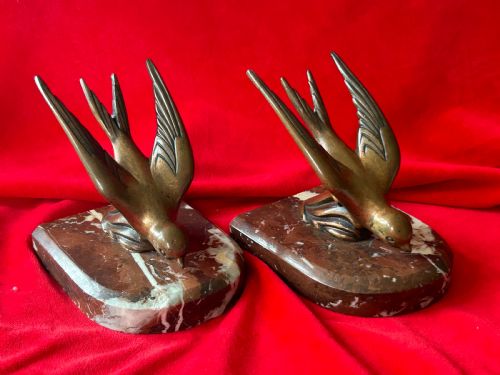
Foundry work dominates the metal pieces, utilising bronze, brass, silvered and gilt spelter, and chromed metal to cast animal and human figures with sharp definition. Cold painted finishes and patination were applied directly to the metal surfaces to create tonal depth.
These metal components were frequently mounted onto heavy bases of marble, onyx, alabaster, or ebonised wood to provide the necessary weight for supporting heavy volumes. Oak and mahogany also appear in the construction, sometimes incorporating carved wooden animal motifs or cricket equipment.
Animal subjects range from domestic terriers and spaniels to exotic elephants, pelicans, and fish.
Distinctions in manufacture and design
Quality rests upon the crispness of the casting and the integration of the metal figure with its stone or wooden base. Superior examples show careful chasing of the metal surface and use genuine marble or onyx rather than composite substitutes.
The artistic ambition of the modeling separates standard production items from masterworks signed by known foundries or sculptors. Attention to proportion and the naturalistic yet stylized rendering of animals or figures dictates the standing of each pair.
C Omin·Max Le Verrier·Bagley and Co·Jamar·Dan Karner·Charles·H Moreau·H Wandaele·Herzig
The Art Deco Book Ends Glossary
- Spelter
- A zinc alloy commonly used as a less expensive alternative to bronze during the interwar period. It was frequently painted or electroplated to imitate richer metals.
- Cold painted
- A technique where metal objects are painted with oil or enamel colours without being fired in a kiln. This finish is susceptible to chipping over decades of handling.
- Onyx
- A banded variety of chalcedony quartz frequently utilised for heavy decorative desk bases. Its translucent layers provide a polished, variegated surface beneath metal sculptures.
- Modernist
- A design approach emphasising clean lines, functional form, and the rejection of excessive ornamentation. This style appears frequently in the oak and metal combinations of nineteen thirty.
Art Deco Book Ends: Frequently Asked Questions
How heavy are they?
The weight varies depending on the materials used in the construction of each pair. Metal figures mounted on solid marble or onyx bases provide the necessary heft to keep rows of volumes secure.
Lighter examples made purely of wood or thinner metal rely on broad bases to distribute weight. Checking the base material gives an immediate indication of how heavy a specific pair will feel in the hand.
Can they hold heavy books?
Most pairs are engineered with substantial stone or metal plinths designed to resist the pressure of large volumes. The combination of dense marble and cast bronze offers significant counter-resistance.
Lighter wooden or hollow spelter variants suit smaller collections of novels rather than heavy encyclopaedias. The physical footprint of the base dictates stability on a standard shelf.
How should I clean them?
Dusting with a dry, soft cloth preserves the original patination on bronze, spelter, and wooden surfaces. Moisture can damage cold painted finishes and vulnerable stone bases.
Harsh chemical polishes must be avoided, particularly on plated or painted metals where abrasion removes the historic surface. Natural beeswax can be used sparingly on oak and walnut elements.
Are all pairs signed?
Signatures or foundry marks appear on select pieces, usually stamped into the metal near the base or etched directly onto the marble plinth. Many production pieces from the interwar period left the workshop unsigned.
Atributed works rely on documented stylistic traits and known models rather than explicit inscriptions. Unsigned examples match the exact casting quality of documented pieces from the same period.