

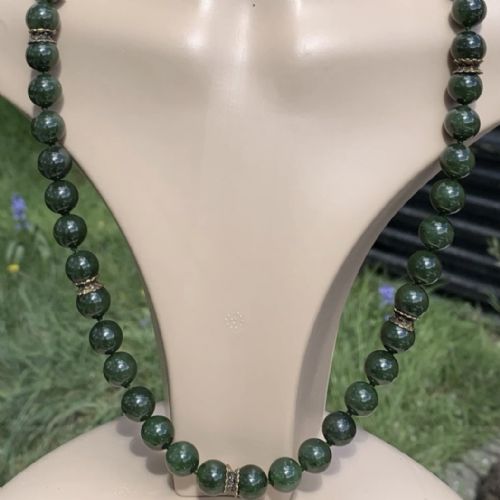


Art Deco Beaded Necklace
An art deco beaded necklace brings together period materials like Bakelite, amber, and silver into a striking, wearable length.
Art Deco Beaded Necklace
When you search for an art deco beaded necklace, you find pieces shaped by the 1920s, 1930s, and 1940s, alongside later mid-century examples. The most frequent versions on this page pair early plastics or natural amber with metal clasps, reflecting the design shifts of the period.
These items span single and double strands, often featuring graduated beads or contrasting spacers. Materials range from carved cherry and butterscotch Bakelite to pearls, jade, rock crystal, and glass set in silver or chrome.
How they were made
Maker methods combine natural mineral or organic elements with early synthetic resins like Bakelite and phenolic resin. Strands rely on strong threading techniques to support heavier components such as Baltic amber and nephrite jade.
Metal elements involve silver, chrome, platinum, and white or yellow gold, frequently shaped into intricate clasps. Fasteners often incorporate diamonds, paste stones, or opaline details to complement the main bead run.
Art Deco Beaded Necklace Retail Price Guide 2026
Typical asking prices for art deco beaded necklace among the pieces listed under this phrase on Sellingantiques today, from the lower quarter to the upper quarter. They describe what is for sale here now, not the wider market.
One cheerful 1940s piece includes a tiny paste swallow bird perched alongside pearls and silver.
What varies in quality
Quality separates through the integrity of the bead material, whether uniform natural amber or carved phenolic resin. The refinement of the clasp metalwork, from simple silver to platinum set with diamonds, shifts the tier of the piece.
Execution shows in the symmetry of bead graduation and the security of the original stringing. Pieces maintaining their intended length and original spacer elements hold greater stylistic cohesion.
The Art Deco Beaded Necklace Glossary
- Bakelite
- An early form of synthetic thermosetting plastic popular in the 1930s. It appears in colours such as cherry and butterscotch.
- Baltic amber
- Fossilised tree resin originating from the Baltic region. It ranges in tone from egg yolk yellow to deep orange.
- Phenolic resin
- A synthetic polymer sharing tactile and visual traits with early plastics. It is frequently carved into beads for period jewellery.
- Graduated beads
- Beads increasing in size steadily toward the centre of the strand. This arrangement is typical of 1930s necklaces.
- Paste stones
- Hand-cut glass used to imitate gemstones in period settings. They offer bright colour reflection without natural mineral cost.
Art Deco Beaded Necklace: Frequently Asked Questions
How do I clean an old beaded necklace?
Wipe the beads gently with a soft, damp cloth to remove surface dust. Avoid submerging amber or old stringing in water.
Keep chemical cleaners away from Bakelite and silver components to preserve the original surface finish.
Are these necklaces original to the 1930s?
Many examples date directly from the 1920s to the 1940s, utilising period materials and manufacturing methods. Some designs extend into the 1950s using vintage components.
Examine the clasp construction and bead wear to understand the manufacturing era of each specific strand.
What is the difference between Bakelite and plastic?
Bakelite is a specific phenolic resin developed in the early twentieth century with distinct weight and thermal properties. Common modern plastics lack the characteristic density and warm feel of period resin.
Testing methods and visual inspection help differentiate vintage synthetics from later polymer imitations.
Can I wear these necklaces every day?
These items survive from the early twentieth century and require careful handling during daily wear. Storing them flat prevents unnecessary strain on the original stringing.
Protect softer materials like amber and pearl from cosmetic sprays and abrasive surfaces to ensure longevity.