





Architectural Wrought Ironwork
Architectural wrought ironwork brings substantial character and historic weight to spaces through robust metalwork designed for endurance.
Architectural Wrought Ironwork
Architectural wrought ironwork encompasses functional and decorative metal fixtures designed for buildings, gardens, and entries. Buyers search this phrase to find sturdy structures that introduce historical depth to properties.
Origin styles range across Victorian, Art Deco, French Country, Edwardian, and Tudor designs. French and English pieces dominate the selection, often incorporating bronze components or mounted on pine doors.
How architectural wrought ironwork was made
Makers utilised wrought iron, cast iron, bronze, and steel to forge these architectural components. Techniques combined hand-forged wrought elements with cast sections and detailed strapwork.
Ironwork was frequently paired with wood, specifically pine, as seen in heavy chapel doors fitted with robust metal fastenings. Artisans incorporated intricate details such as trident motifs, twin spring bolt latches, and decorative panels.
Architectural Wrought Ironwork Retail Price Guide 2026
Typical asking prices for architectural wrought ironwork among the pieces listed under this phrase on Sellingantiques today, from the lower quarter to the upper quarter. They describe what is for sale here now, not the wider market.
Listings span from sixteenth-century English door locks to twentieth-century Art Deco screens by Raymond Subes.
What varies in quality
Quality differentiates by the complexity of the forging and the integrity of the design. Pieces attributed to notable makers or specific stylistic movements command higher regard due to artistic execution.
The combination of materials also influences standard, particularly where bronze elements or complex strapwork accompany the primary iron structure. Intricate detailing, such as specialised hardware mechanisms or cast decorative panels, elevates the execution.
Raymond Subes·Brandt
The Architectural Wrought Ironwork Glossary
- Wrought iron
- Iron that has been heated and hammered into shape by a blacksmith. This material provides the tensile strength required for gates and structural brackets.
- Cast iron
- Iron poured into a mould to create complex shapes. It offers ornamental detail but less flexibility than hammered metal.
- Strapwork
- Flat bands of metal applied in geometrical patterns across surfaces. This technique reinforces structural timber or decorates heavy gates.
- Balustrade
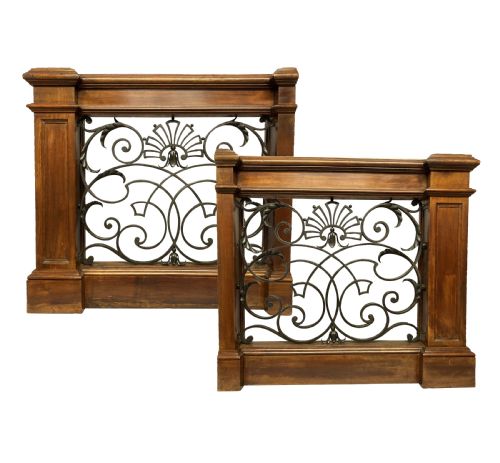
- A row of small pillars supporting a rail to form a barrier. These architectural panels often define staircases or garden terraces.
- Architectural hardware
- Functional metal items such as locks, latches, and brackets. These fixtures secure doors while adding decorative visual weight.
Architectural Wrought Ironwork: Frequently Asked Questions
How were garden gates used historically?
Garden gates served as physical boundaries and decorative entry points for estates, courtyards, and church grounds. They managed access while establishing the visual character of the property perimeter.
Heavier examples, such as estate driveway gates, were built to withstand frequent use and heavy weathering. Lighter panels and garden gates balanced security with ornamental design.
How do I install heavy iron gates?
Installing heavy iron gates requires secure anchoring into robust masonry, brick piers, or substantial timber frames. The immense weight of nineteenth-century ironwork demands professional structural support.
Alignment must account for the natural sag of large metal leaves over time. Proper hanging ensures that latches, such as twin spring bolt mechanisms, engage correctly.
How do I care for antique ironwork?
Caring for antique ironwork involves monitoring for surface corrosion and applying appropriate protective treatments. Regular inspection helps preserve the original metal finish and any associated wooden mounts like pine doors.
Keeping the metal clean prevents moisture accumulation in intricate strapwork and joints. Gentle maintenance protects the structural integrity without altering the historic patina.