

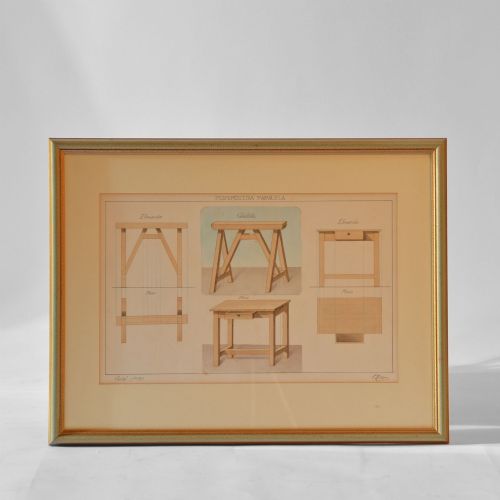
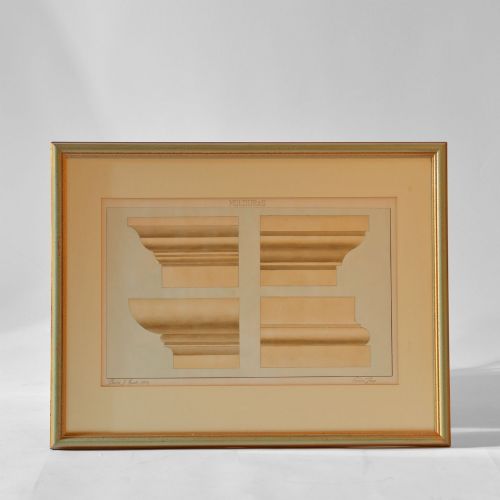


Architectural Watercolour Print
These architectural watercolour print examples capture grand facades and classical monuments on paper with ink and paint, offering instant historical character for your walls.
Architectural Watercolour Print
When you search for an architectural watercolour print, you encounter original watercolours, ink drawings, and mixed media works depicting buildings, streetscapes, and ancient ruins. These pieces span periods from the mid-eighteenth century through the Edwardian era and the interwar years.
The selection on this page ranges from detailed depictions of Dutch guildhalls and English country seats to Italian landmarks and Venetian markets. Works appear framed in wood and gilded wood, often protected beneath glass.
You are most likely to meet Edwardian interpretations and early twentieth-century views alongside nineteenth-century works and eighteenth-century Italian architectural paintings. Styles stretch from Neoclassical and French Second Empire to Dutch Renaissance and Interwar Realism.
How they were made
These works rely primarily on paper support combined with watercolour pigment and ink. Artists applied washes of colour over precise ink outlines to define stonework, shadows, and perspective.
Many examples employ monochrome ink beneath watercolour to establish depth before adding finishing touches in paint. The resulting sheets are typically housed in traditional wood or gilded wood frames behind glass.
Architectural Watercolour Print Retail Price Guide 2026
Typical asking prices for architectural watercolour print among the pieces listed under this phrase on Sellingantiques today, from the lower quarter to the upper quarter. They describe what is for sale here now, not the wider market.
Even a grand Dutch hall built in sixteen-hundred-and-three can comfortably find itself travelling across Europe inside a modest Edwardian frame.
What varies in quality
Quality rests upon the precision of the draughtsmanship and the fluidity of the watercolour washes. The most accomplished works display confident perspective and subtle tonal variation that bring stone and structure to life.
The integration of the framing material also influences the piece. Original wood and gilded wood frames that complement the age and subject of the artwork elevate the overall presentation.
Thomas Ellison·Edith E Caswall
The Architectural Watercolour Print Glossary
- Watercolour on Paper
- A painting medium where coloured pigments are suspended in a water-based solution applied to a paper support. This method allows for transparent washes and delicate layering.
- Gilded Wood
- Timber frames treated with a thin layer of gold leaf or metallic gilt. This finish adds a reflective border that enhances the framed artwork.
- Neoclassical
- A style inspired by the classical art and architecture of ancient Greece and Rome. It emphasises symmetry, straight lines, and classical proportions.
- Monochrome Ink
- A drawing technique utilising a single colour of ink, often black or sepia, to create tonal depth. Artists frequently combined this with watercolour washes.
- Edwardian
- The period spanning the reign of King Edward VII, characterised by refined artistic production and polite optimism. Works from this era often exhibit decorative charm.
Architectural Watercolour Print: Frequently Asked Questions
How should I hang these framed works?
Keep them away from direct sunlight to protect the watercolour pigments and paper from fading over time. Ensure the wall fixings match the weight of the wood and glass frame.
Group smaller architectural studies together to create a balanced display, or let a larger streetscape or monument anchor a wall on its own.
What periods do these pieces represent?
The selection includes works from the eighteenth, nineteenth, and early twentieth centuries. You will find pieces from the Edwardian era, the 1920s, and earlier periods.
Each era brings its own approach to perspective and subject matter, from Grand Tour landmarks to detailed studies of Dutch and English buildings.
Are these works original or reproductions?
The listings comprise original watercolours, ink drawings, and period paintings rather than modern reproductions. Artists created each piece by hand using paint and ink on paper.
Signatures, brushwork, and paper texture confirm the handmade nature of these historical artworks.
How do I identify a Grand Tour style piece?
Grand Tour pieces typically depict famous continental landmarks, Italian architecture, and classical ruins encountered by travellers during their European journeys. These watercolours and drawings served as prized souvenirs of foreign travel.
Look for detailed renderings of Venetian markets, Roman monuments, and Mediterranean streetscapes.