




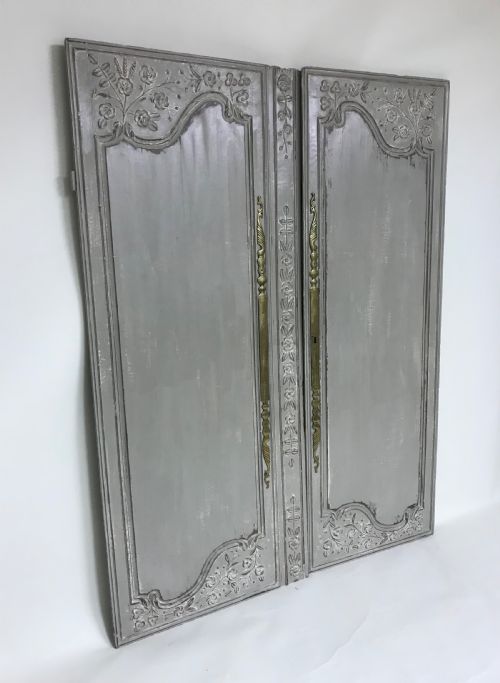

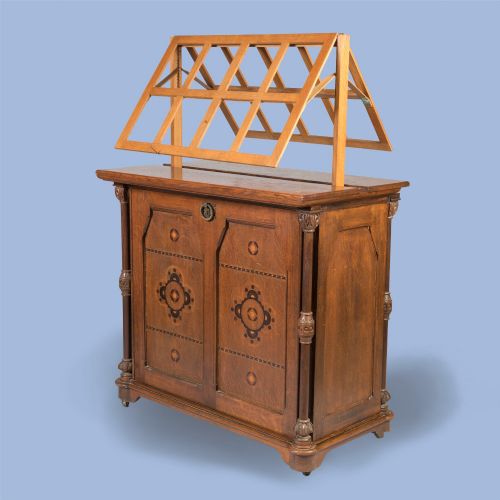
Architectural Oak Cabinet
These architectural oak cabinet pieces bring solid timber presence and historical joinery straight into a modern interior.
Architectural Oak Cabinet
An architectural oak cabinet search uncovers heavy timber items and salvage components spanning the nineteenth and twentieth centuries, including bookcases, folio cabinets, plan chests, and carved panels.
The versions most commonly met range from large nineteenth century cabinet bookcases to structural doors and panels reflecting Gothic Revival, Arts and Crafts, and Victorian architectural styles.
Buyers encounter distinct forms built for storage or display, alongside architectural salvage pieces that retain the heavy mouldings and dense grain characteristic of older oak joinery.
Materials and construction methods
These items utilise solid oak and timber, combined with brass, iron, and wrought iron hardware such as hinges and handles.
Makers employed traditional joinery techniques alongside surface treatments including wood inlay, paint, and hand carving such as linenfold motifs.
Architectural Oak Cabinet Retail Price Guide 2026
Typical asking prices for architectural oak cabinet among the pieces listed under this phrase on Sellingantiques today, from the lower quarter to the upper quarter. They describe what is for sale here now, not the wider market.
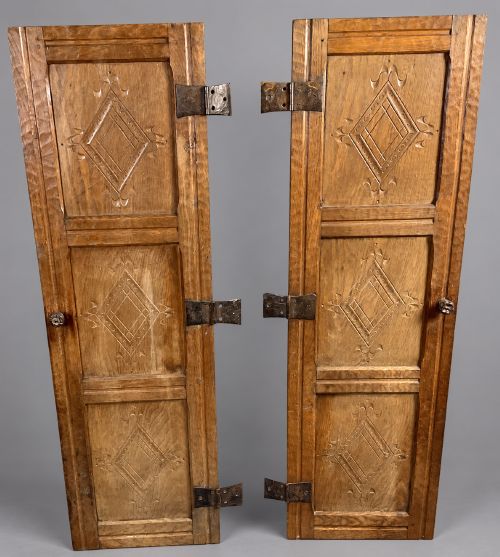
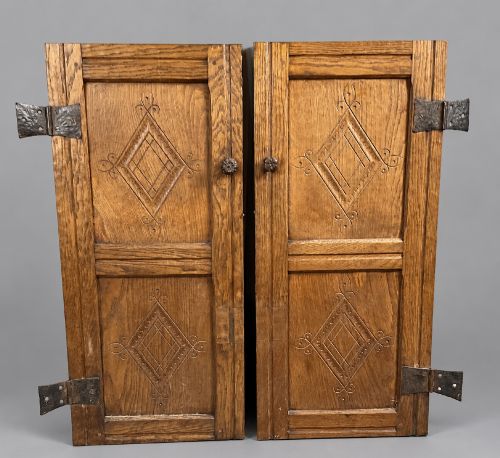
One set of oak doors bears the legendary local suspicion that they might just be early Mouseman work.
Distinguishing quality in oak cabinets
Quality rests in the depth and crispness of the hand carving, particularly on linenfold panels and structural mouldings.
The integrity of the timber selection and the precision of the joinery separate standard utility items from works bearing distinct workshop attributions.
Benjamin Taylor and Sons·Mouseman
The Architectural Oak Cabinet Glossary
- Linenfold
- A style of carved wooden panelling that resembles vertically folded fabric. It is commonly found on sixteenth-century and later revival oak panels.
- Folio Cabinet
- A specialist piece of furniture designed for storing large sheets of paper, prints, or drawings. These units often feature shallow drawers or vertical compartments.
- Gothic Revival
- An architectural and decorative style drawing inspiration from medieval forms. It frequently incorporates pointed arches, trefoils, and heavy timber construction.
- Plan Chest
- A multi-drawer cabinet built with wide, shallow drawers for flat storage. They are typically constructed from dense timbers like oak.
- Architectural Salvage
- Building elements or furniture components rescued from older structures. These pieces retain original fixings, paint finishes, or structural carvings.
Architectural Oak Cabinet: Frequently Asked Questions
What is an architectural oak cabinet?
An architectural oak cabinet is a heavy timber storage piece or structural furniture component incorporating period design details like linenfold carving or revival mouldings.
These items range from large bookcases and folio units to salvaged doors and panels originating from the nineteenth and twentieth centuries.
How do I identify a Gothic Revival piece?
Gothic Revival pieces display medieval architectural motifs such as pointed arches, quatrefoils, and heavy timber framing. They are constructed to mimic the monumental stone work of older cathedrals.
In oak furniture, this style appears through deep hand carving, structural iron hardware, and imposing proportions.
Where were folio cabinets used?
Folio cabinets were utilised in studies, libraries, and studios to organise large documents, maps, and artistic prints. Their shallow compartments kept paper flat and protected.
Today, they function well in contemporary homes as storage for modern collections or flat surfaces for display.
How should I care for vintage oak?
Vintage oak requires stable indoor humidity levels to prevent the dense timber from splitting or warping over time. Direct sunlight and sudden temperature shifts should be avoided.
Applying occasional natural wax helps nourish the wood grain and preserves historical finishes without sealing the timber.