




Aquamarine Gemstone Ring
An aquamarine gemstone ring brings a cool blue clarity to the hand, drawing on decades of design from the early twentieth century onward.
Aquamarine Gemstone Ring
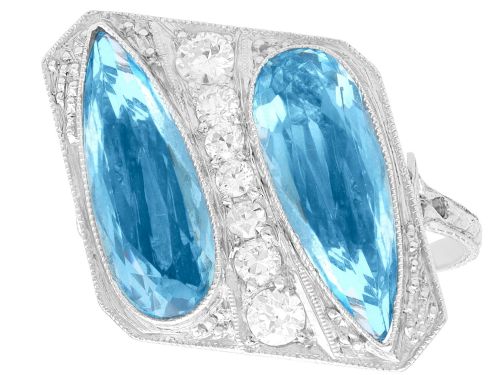
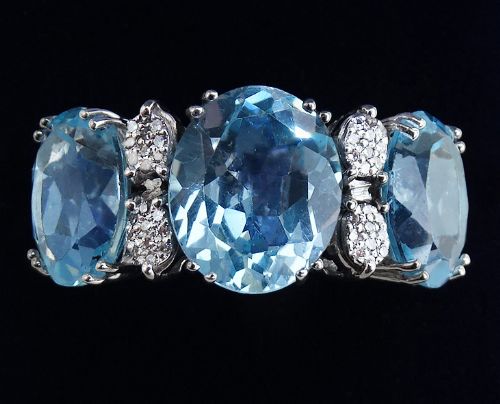
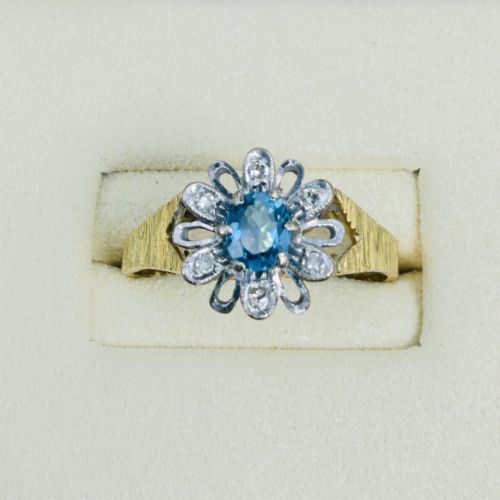
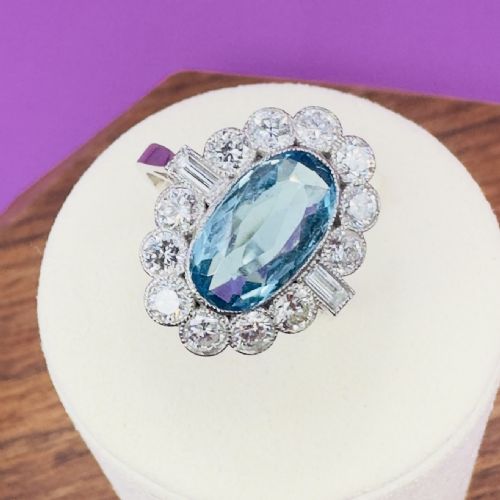
An aquamarine gemstone ring centres on a transparent blue-green beryl stone, often flanked by diamonds in platinum or gold settings. You are looking at a selection spanning the nineteenth century through to the mid-twentieth century, capturing shifts in scale and geometry.
The most common forms on this page include substantial cocktail rings and cluster rings. These pieces range from delicate early floral and figural motifs to massive stones set during the retro and mid-century periods.
Makers and designers from the 1920s to the 1960s utilised these ice-blue beryls in distinct ways. Whether you encounter a slender platinum trilogy or a heavy yellow gold dress ring, the focus remains squarely on the pale presence of the central stone.
What varies in quality
The depth of colour and saturation within the beryl itself shifts considerably across the range. Stones move from an almost colourless icy transparency to deep saturated blue, influencing the visual weight of the ring.
Proportion and stone weight dictate the presence of the piece, moving from understated everyday wear to monumental cocktail proportions. The integration of supporting diamonds, whether in tight clusters or elongated oval frames, defines the ambition of the original design.
Aquamarine Gemstone Ring Retail Price Guide 2026
Typical asking prices for aquamarine gemstone ring among the pieces listed under this phrase on Sellingantiques today, from the lower quarter to the upper quarter. They describe what is for sale here now, not the wider market.
Materials utilised include aquamarine, diamond, platinum, 18ct gold, white gold, yellow gold and onyx.
The Aquamarine Gemstone Ring Glossary
- Aquamarine
- A blue-green variety of beryl named after seawater. It forms the pale centrepiece of every ring on this page.
- Cocktail ring
- A large, prominent ring designed to draw attention during evening social events. These pieces often feature oversized beryls exceeding twenty carats.
- Cluster ring
- A design where a central gemstone is surrounded by a tighter grouping of smaller stones, typically diamonds. This arrangement maximises the reflective brilliance around the central beryl.
- Platinum
- A dense, durable white metal prized for fine jewellery setting. It was heavily utilised during the 1920s and 1930s for intricate work.
- Old cut diamond
- A diamond cut by hand before modern standards were established, featuring a small table and deep pavilion. These stones possess a softer, candlelit sparkle distinct from modern brilliant cuts.
Aquamarine Gemstone Ring: Frequently Asked Questions
How do I wear a large cocktail ring daily?
Large stone settings require a degree of mindfulness during everyday tasks to avoid sharp impacts against hard surfaces. Pairing them with simpler attire allows the scale of the beryl to sit comfortably as the focal point of an outfit.
Rotating your rings depending on the activity helps preserve the integrity of the claw settings in gold or platinum. Proper storage in a lined box prevents stones from scratching against one another when not on the hand.
What is the difference between art deco and mid-century rings?
Art deco designs from the 1920s and 1930s lean heavily into strict geometry, platinum settings and contrasting elements like onyx. They favour linear precision and structured cluster arrangements.
Mid-century and retro pieces from the 1950s and 1960s often abandon rigid symmetry in favour of sweeping gold forms and massive standalone stones. Yellow gold re-emerges strongly during this later era alongside organic floral motifs.
How do I clean an aquamarine ring safely?
Warm soapy water and a very soft brush will safely lift everyday oils from the surface of the beryl and surrounding diamonds. Avoid harsh chemical cleaners or ultrasonic baths, particularly if the piece incorporates delicate side stones like onyx.
Dry the metal thoroughly with a soft cloth after rinsing to maintain the finish of the gold or platinum band. Regular gentle cleaning keeps the pale interior of the stone visually crisp.
Are these rings handmade?
The majority of pieces from the early and mid-twentieth century involve substantial hand fabrication, particularly in platinum mountings from the 1920s. Jewelers individually shaped the settings to accommodate stones of varying carat weights and irregular cuts.
Hand-cut diamonds and bespoke claw work mean each ring possesses subtle individual traits that distinguish it from mass-produced modern jewellery.