



Antique Zoological Engravings
Antique zoological engravings bring the disciplined study of natural history into a room through finely worked prints of birds, beasts, and reptiles.
Antique Zoological Engravings
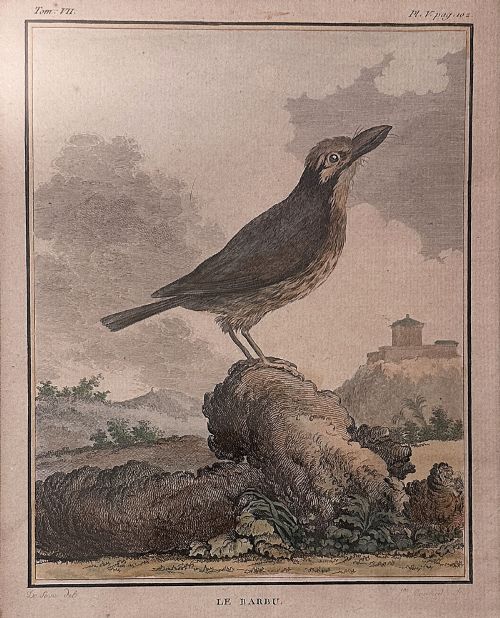
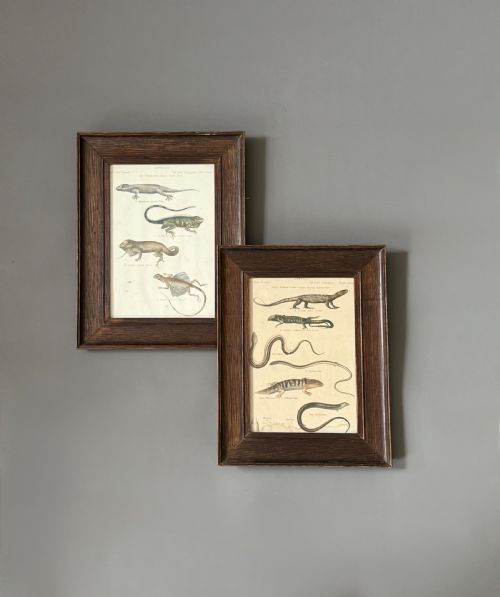
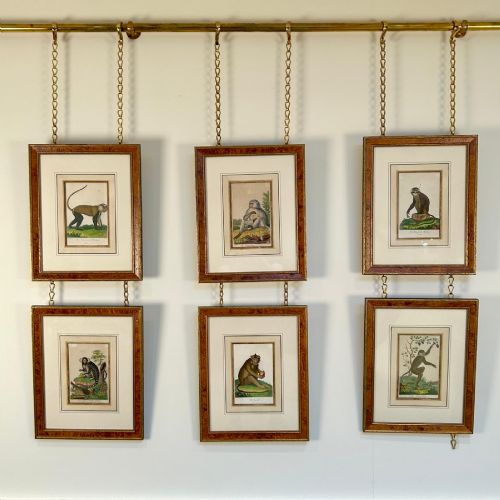
When you search for antique zoological engravings, you encounter works produced across the eighteenth and nineteenth centuries that record animals, birds, and reptiles with scientific intent. These pieces range from solitary framed plates of monkeys and dogs to pairs and sets depicting serpents, hippopotami, and skeletal anatomy.
The versions most commonly met on this page belong to the Georgian and Victorian periods, presented as framed prints or wall art. They reflect an era when natural history illustration served both research and domestic decoration, capturing subjects from single birds to elaborate anatomical studies.
Originating largely from British and European publishing traditions, these prints encompass individual works by named observers alongside multi-plate series. The paper supports carry the marks of their century, whether through hand colouring or monochrome ink work.
Materials and construction
These works rely fundamentally on paper supports inscribed with ink through engraving techniques, often finished with delicate watercolour washes applied by hand. The resulting lines capture feather, scale, and fur with sharp definition before any colour is introduced.
Framing materials reflect the period of display, utilising wood, burr wood, glass, and occasional gold leaf alongside brass fittings. These surrounds protect the delicate paper surfaces while anchoring the natural history plates within a decorative domestic context.
Antique Zoological Engravings Retail Price Guide 2026
Typical asking prices for zoological engravings among the pieces listed under this phrase on Sellingantiques today, from the lower quarter to the upper quarter. They describe what is for sale here now, not the wider market.
Listings feature paper, glass, wood, gold leaf, ink, watercolour, burr wood, and brass across the eighteenth and nineteenth centuries.
Evaluating quality and execution
Quality rests upon the precision of the initial engraving and the sensitivity of any subsequent hand colouring. Plates that render anatomical detail with absolute clarity separate superior scientific records from cruder decorative copies.
The preservation of the paper support and the integrity of early framing elements, such as original wood or glass, dictate the standing of a piece. Strong provenance linked to known naturalists or established publishing sources elevates the standing of an individual print.
William Bird MD FLS·John Hancock·Buffon·Bernhard Siegfried Albinus·William Swainson·Audebert
The Antique Zoological Engravings Glossary
- Engraving
- A printmaking process where an artist cuts lines directly into a metal plate using a burin. The inked plate then transfers the detailed image onto paper under pressure.
- Natural History
- The scientific study of animals, plants, and minerals, particularly through observation. In print form, it encompasses detailed illustrative records of specimens.
- Plate
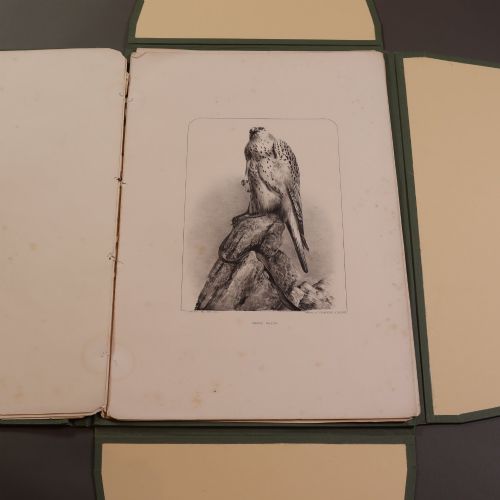
- A single engraved sheet bearing an illustration, often numbered or lettered with species descriptions. These units formed the basis of bound volumes before being separated for framing.
Antique Zoological Engravings: Frequently Asked Questions
How are antique zoological engravings framed?
Most examples arrive in period wood frames, frequently incorporating glass to protect the fragile paper beneath. Burr wood and gold leaf mouldings appear on finer nineteenth-century pieces.
Original framing elements add historical context, though many prints are reframed across generations to suit changing interior tastes.
Are these prints hand coloured?
Many plates feature watercolour applied by hand over the base ink engraving. This technique was common in natural history publishing to render plumage, fur, and reptile scales accurately.
Closer inspection reveals the delicate brushwork and variation in tone that distinguish hand-applied pigment from later mechanical printing.
What periods do these engravings cover?
The selection spans the eighteenth and nineteenth centuries, encompassing Georgian and Victorian eras of natural history study. Dates range from late seventeen-hundreds publications to eighteen-ninety wall art.
Stylistic shifts emerge between the classical anatomical precision of the eighteenth century and the more diverse Victorian framing formats.
How do I care for antique paper prints?
Keep prints away from direct sunlight to prevent the fading of ink lines and hand-applied watercolours. Stable humidity levels protect the paper support from warping or foxing over time.
Ensure that framing materials do not trap moisture against the face of the engraving during seasonal temperature changes.