




Antique Yew Caddy
An antique yew caddy holds dried leaves safely, bringing rich wood grain and Georgian or Regency design into a room.
Antique Yew Caddy
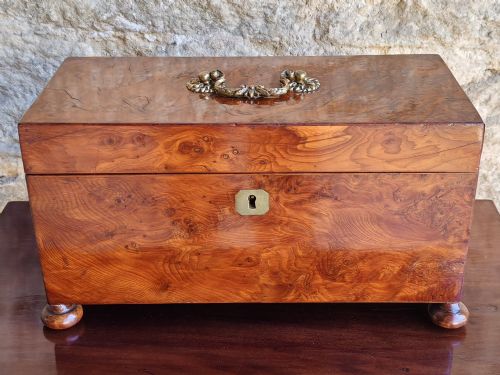
An antique yew caddy is a small lidded chest designed to store valuable tea leaves during the eighteenth and nineteenth centuries, constructed from resilient timber. These boxes protect precious leaves from damp air and pilfering, often featuring internal compartments for black and green varieties.
Buyers browsing this selection will most frequently encounter Georgian and Regency examples fashioned from burr yew, alongside related forms such as tea chests and treen boxes. The inventory spans straightforward domestic containers from the eighteenth century up to larger mid-nineteenth-century items.
Makers shaped these vessels into distinct geometric profiles including cubes, semi-circular shapes, hexagons, and barrels, occasionally producing unusual pieces like eggcup stands. Each piece reflects the functional requirements of historic tea storage combined with domestic decorative tastes.
How these pieces were made
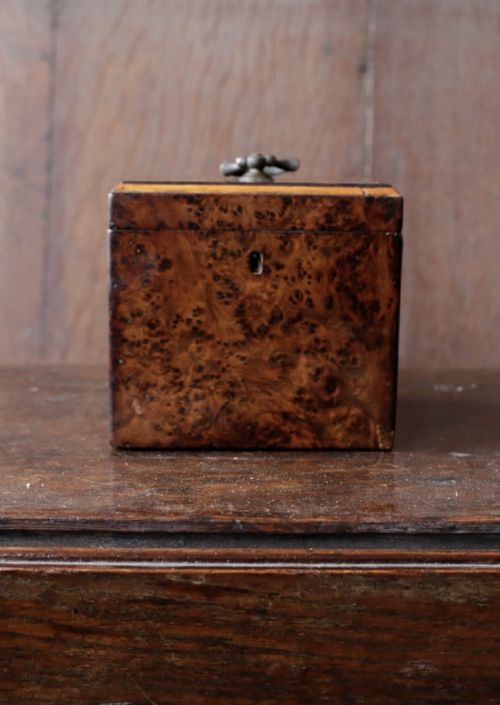
Craftsmen built these vessels using solid timber and decorative veneers of yew wood, selecting burr yew for its complex, swirling grain patterns. Woodworkers applied thin slices of burr wood over stable base timbers to create highly figured exterior surfaces.
Many examples incorporate contrasting inlay work, utilising organic materials such as bone alongside brass fittings for key escutcheons and hinges. These metal and bone details provide structural reinforcement while accentuating the warm natural tones of the timber.
Antique Yew Caddy Retail Price Guide 2026
Typical asking prices for yew caddy among the pieces listed under this phrase on Sellingantiques today, from the lower quarter to the upper quarter. They describe what is for sale here now, not the wider market.
At least one maker decided that morning breakfast required an unexpected wooden barrel dedicated entirely to holding boiled eggs.
What distinguishes quality in a yew caddy
Quality rests principally upon the choice of timber figure, with deeply swirled burr yew veneers displaying greater visual depth than plain straight-grained wood. The skill required to select and match these natural grain patterns determines the visual success of the exterior.
The precision of the cabinetwork and the survival of original decorative elements dictate the standing of an individual piece. Refined examples demonstrate careful marquetry work, integrated brass hardware, and well-fitted internal compartments that remain intact.
The Antique Yew Caddy Glossary
- Burr yew
- A growth on a yew tree that produces knotty wood with highly distorted, decorative grain patterns. Cabinetmakers prize this timber for creating striking veneered surfaces on luxury small boxes.
- Tea caddy
- A small storage jar or box designed to hold loose tea leaves securely. Early versions often included lockable lids to safeguard expensive tea from household servants.
- Marquetry
- The art of applying decorative pieces of wood veneer to a structure to form geometric or pictorial designs. This technique embellishes the exterior panels of higher-grade boxes.
- Teapoy
- A pedestal table fitted with a lidded box on top for storing tea and serving accessories. These larger pieces often date from the Regency and Victorian eras.
- Treen
- Small handmade wooden household objects and utilitarian wares. The category encompasses boxes, caddies, and domestic stands carved from timber.
Antique Yew Caddy: Frequently Asked Questions
What is an antique yew caddy?
An antique yew caddy is a wooden lidded box created during the Georgian or Regency periods to store dry tea leaves. These containers protected precious contents from moisture and theft.
Craftsmen utilised figured yew and burr wood veneers to fashion these items into various geometric shapes, ranging from simple cubes to hexagonal forms.
How were caddies used historically?
Wealthy households used these vessels in the parlour or dining room to dispense tea safely before brewing. The boxes often contained internal lidded compartments to keep different leaf varieties separate.
Because tea carried high financial value in past centuries, the containers typically featured small working locks and brass keys.
How do I date a yew caddy?
Dating relies on observing structural proportions, cabinetmaking techniques, and decorative styles associated with specific historic eras. Pieces from the eighteenth century often display simpler geometry, while Regency examples lean towards bold architectural forms and elaborate veneers.
Hardware styles, interior linings, and construction methods offer further clues to the decade of manufacture.
How do I care for antique yew wood?
Protect antique timber boxes by placing them away from direct sunlight, radiators, and rapid changes in atmospheric humidity. Excessive heat causes wooden veneers to warp or split.
Dust the surface gently with a dry cloth and avoid applying modern chemical polishes that can damage historic finishes.