


Antique Writing Slope Inkstand
An antique writing slope inkstand brings a tangible sense of nineteenth-century order to a desk, offering dedicated space for pens, ink, and correspondence.
Antique Writing Slope Inkstand
When you search for an antique writing slope inkstand, you are looking at nineteenth-century desk accessories designed to hold inkwells, pens, and stationery in an orderly fashion. These pieces range from simple wooden stands to grand sets featuring hand-painted porcelain and metalwork.
Materials and construction
Makers utilised a combination of dense hardwoods such as oak, coromandel, and walnut, often pairing them with contrasting decorative elements. Brass, ormolu, and gilt bronze provide structural mounts and hinges, while cut glass and ceramic form the inkwells themselves.
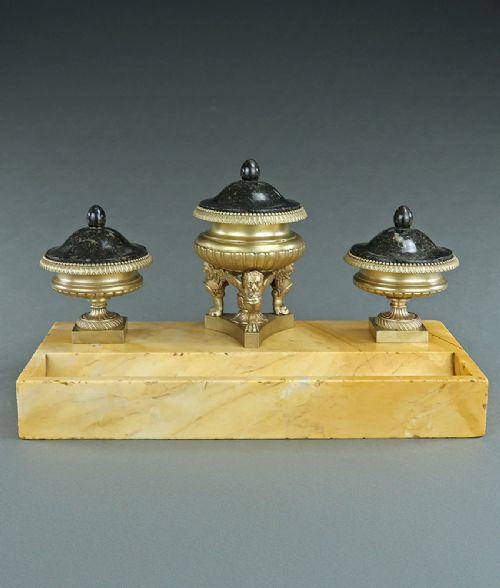
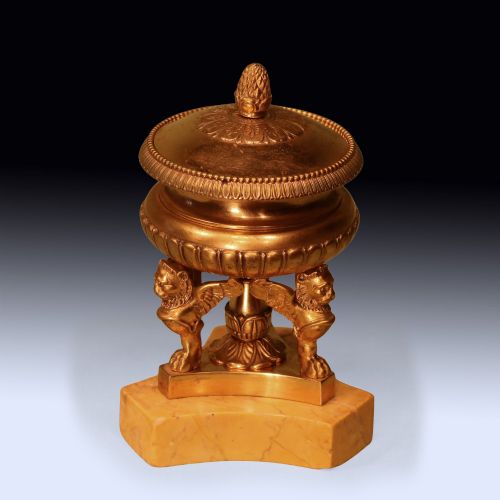
Surface decoration required specialist skills, seen in inlaid boulle work, mother of pearl detailing, and tunbridgeware. Stonework such as Sienna marble forms heavy, stable bases for ormolu and bronze inkstands.
Dalmatian dog inkwells remind us that nineteenth-century desk accessories could be surprisingly playful amidst the solemnity of Victorian correspondence.
Assessing quality and execution
Quality rests in the precision of the joinery and the weight of the materials used in the construction. Solid hardwoods and heavy cast bronze or ormolu distinguish superior examples from lighter, simpler pieces.
The sophistication of the decorative programme separates the standard from the exceptional. Hand-painted porcelain insets, intricate boulle inlay, and fully intact fitted interiors demonstrate a higher level of workshop competence.
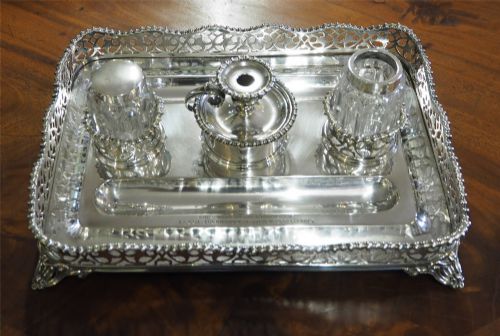
Elkington·Wilkinson & Co·Lefebvre of Belgium
The Antique Writing Slope Inkstand Glossary
- Encrier
- A desk stand or inkstand designed to hold one or more inkwells and pen trays. This French term often appears on continental Neoclassical and Empire pieces.
- Ormolu
- Gilt bronze mounted on decorative objects and furniture. It provides a bright golden finish that contrasts with marble and dark woods.
- Boulle
- A form of marquetry using brass and tortoiseshell inlaid into wood. It was popular in French nineteenth-century desk sets.
- Tunbridgeware
- Small wooden objects decorated with mosaic patterns made from many tiny pieces of naturally coloured wood. This technique creates geometric designs on boxes and travelling inkwells.
- Standish
- An alternative historical term for a stand holding ink, pens, and sanders. It usually denotes a substantial desk accessory.
Antique Writing Slope Inkstand: Frequently Asked Questions
What is an antique writing slope inkstand?
An antique writing slope inkstand is a desk accessory designed to hold inkwells and writing equipment. These pieces date predominantly from the nineteenth century and vary from simple wooden trays to elaborate multi-piece sets.
They reflect the stationary writing habits of the period, providing a permanent station for ink bottles, sanders, and pens on a library or study desk.
How were these inkstands used?
These pieces kept writing materials organised and accessible before the invention of the fountain pen. Users dipped their nibs into glass inkwells housed securely within the stand.
Larger versions often incorporated letter racks, stationery boxes, and compartments for sealing wax, centralising all correspondence tasks in one place.
How do I care for wooden and marble inkstands?
Wooden stands benefit from occasional waxing to feed the grain and protect the surface from moisture. Marble bases require simple dusting and gentle wiping to avoid staining from old ink residues.
Glass and ceramic inkwells should be removed and washed carefully by hand if they contain dried ink sediment.
How do I identify Victorian styles?
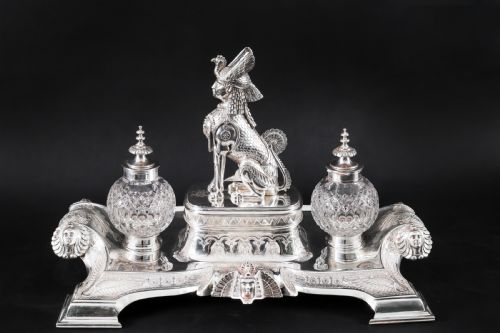
Victorian pieces encompass a wide range of revival styles, including Egyptian Revival, Neoclassical, and the Aesthetic Movement. Materials like papier-mache, walnut, and heavy brass are typical of the era.
Maker marks, registration lozenges, and specific construction methods help narrow down the decade of manufacture within the nineteenth century.