


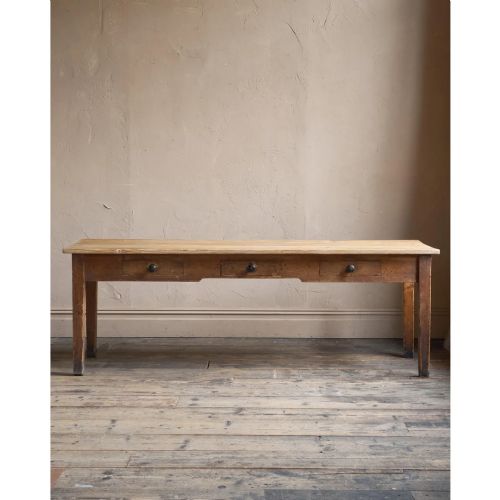
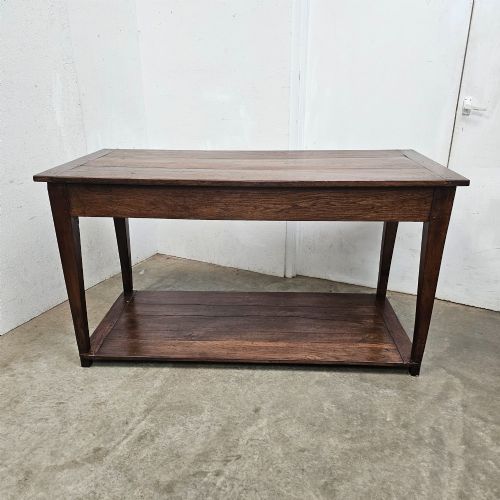
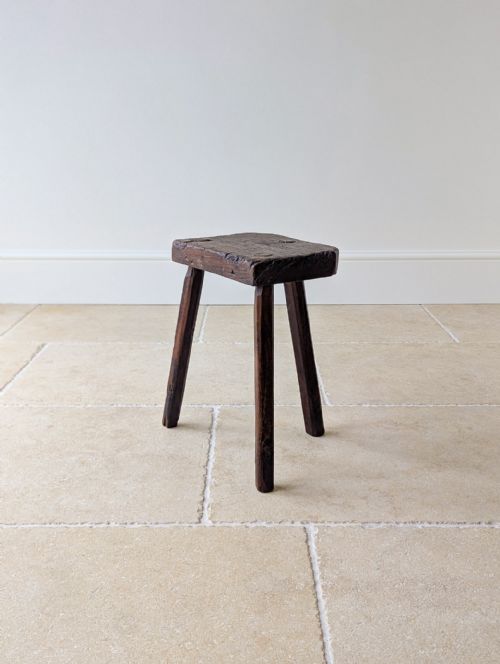
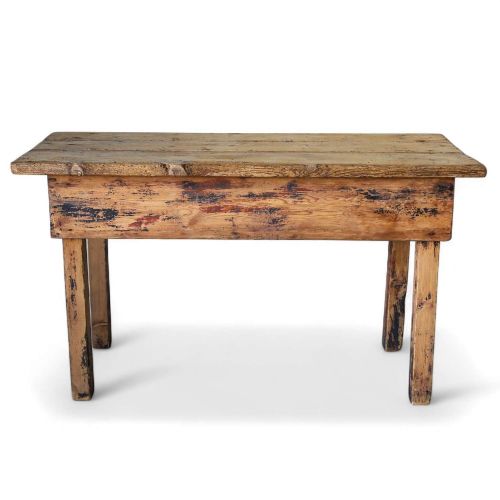
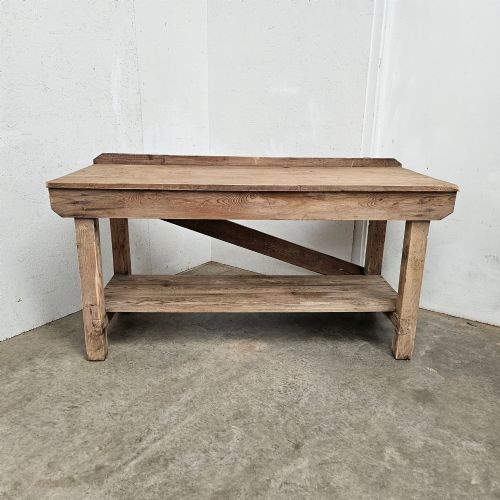
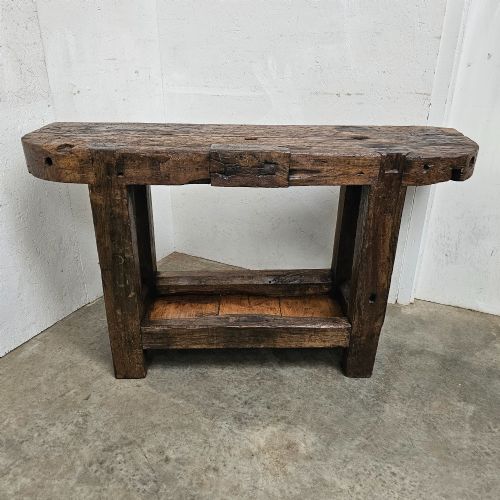
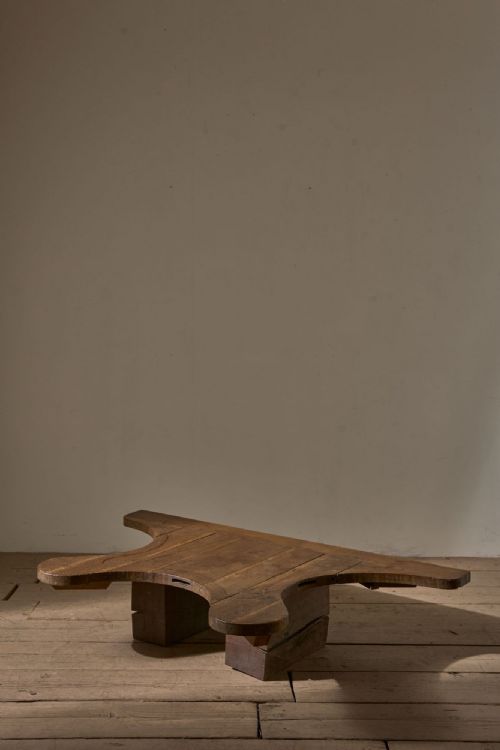
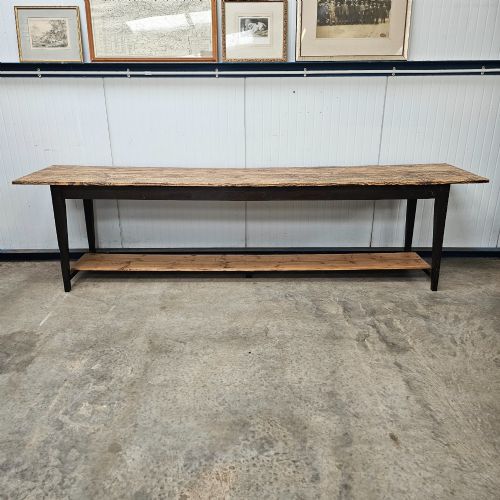
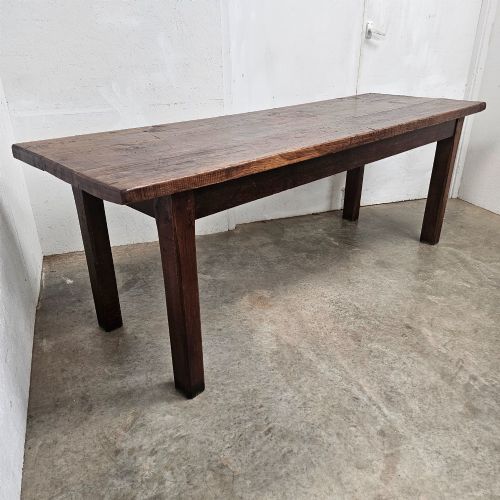
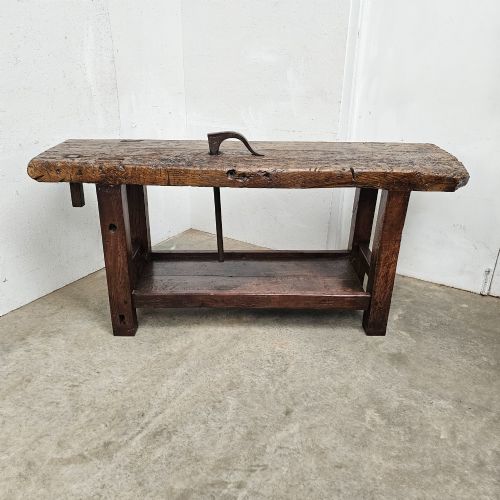

Antique Workbench
An antique workbench brings honest utility and heavy timber character into modern domestic spaces.
Antique Workbench
An antique workbench is a heavy-duty utilitarian table originally built for manual trades like carpentry, watchmaking, tailoring, and metalworking. When you search for this phrase, you find robust tables and benches designed strictly for hard labour rather than formal parlour use.
The pieces on this page span the nineteenth century and the early twentieth century, originating from workshops, schools, and farmhouses across England, France, Scandinavia, and Wales. You will frequently encounter heavy pine and oak surfaces, often fitted with original vises, clamping bars, or lower storage shelves.
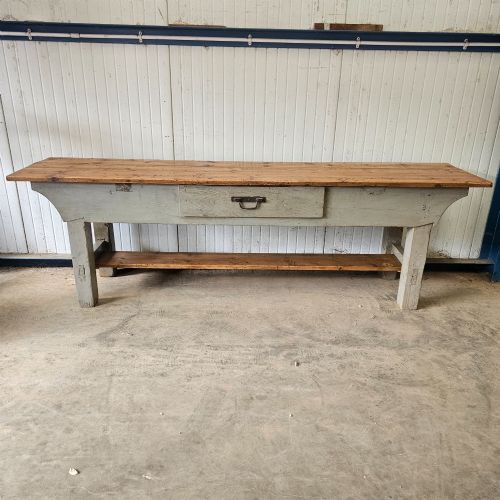
Forms range from long French artisans' benches and Swedish pine tables to compact jewellers' stations and scullery tables. Many examples show the clear marks of daily trade, functioning today as kitchen prep islands, dining tables, or console surfaces.
Materials and construction
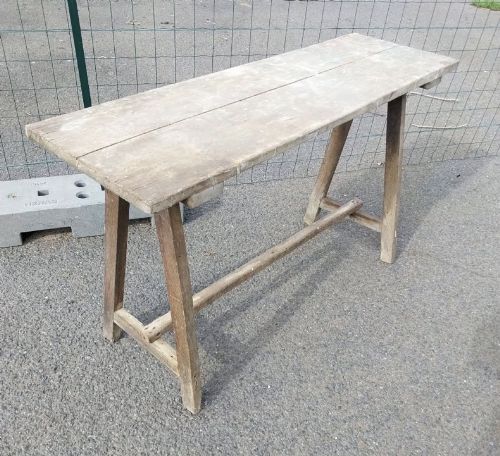
Makers built these tables using dense domestic and European timbers such as pine, oak, elm, ash, and beech to withstand heavy pounding and downward pressure. Tops are typically fashioned from thick planks of solid wood, sometimes supported by cast iron bases or sturdy timber trestles.
Construction methods prioritize absolute rigidity over decorative finish, utilising pegged joints, deep aprons, and robust under-framing. Functional hardware like wooden vices, steel clamping bars, and metal brackets form an integral part of the physical structure.
Antique Workbench Retail Price Guide 2026
Typical asking prices for workbench among the pieces listed under this phrase on Sellingantiques today, from the lower quarter to the upper quarter. They describe what is for sale here now, not the wider market.
Current listings feature pieces constructed from pine, oak, elm, ash, beech, iron, and cast iron, originating across the nineteenth and early twentieth centuries.
Assessing quality and character
Quality in a utility table rests upon the integrity of the original timber and the honesty of its wear. Superior pieces retain their original working mechanisms, such as wooden bench screws or vice handles, rather than replaced modern hardware.
The distinction between standard utility and higher quality lies in the proportion, timber thickness, and depth of patination accumulated through decades of trade use. Tables that preserve their original painted finishes or unblemished thick top boards demonstrate greater surviving integrity.
The Antique Workbench Glossary
- Clamping bar
- A heavy wooden or metal bar fixed across the workbench to secure materials during sawing or planing. It allows craftsmen to clamp large boards firmly to the work surface.
- Trestle table
- A table comprising two or more supports connected by a horizontal beam holding a loose or fixed top. This design provides maximum legroom and stability on uneven workshop floors.
- Scullery table
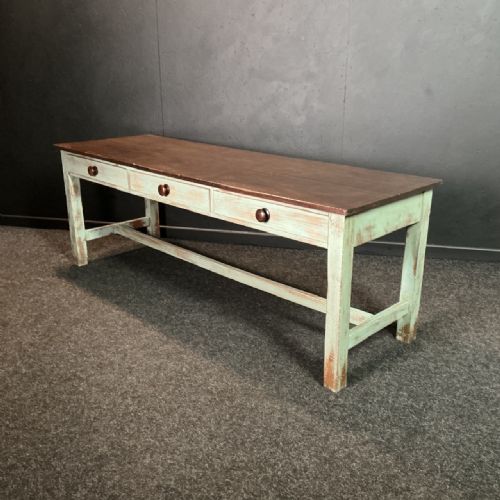
- A heavy utilitarian table used in large domestic kitchens for food preparation and washing tasks. These pieces typically feature thick scrubbed timber tops and occasional storage drawers.
- Patina
- The surface sheen and colour acquired by wood and metal through age, friction, and repeated oiling or cleaning. It serves as a visual indicator of genuine historic use.
- Primitive
- A descriptive term for furniture made with straightforward, unpretentious construction methods by local carpenters rather than professional cabinetmakers. These items prioritize direct utility over refined stylistic details.
Antique Workbench: Frequently Asked Questions
Can I use an antique workbench as a kitchen island?
These pieces function exceptionally well as kitchen islands due to their robust construction and generous working height. The thick wooden tops provide durable preparation space for culinary tasks.
Ensure the dimensions and leg clearance suit your kitchen layout before placement, keeping heavy moisture away from unsealed historical joints.
What is the difference between a work table and a workbench?
A workbench typically incorporates heavy mechanical elements such as integral vises, bench stops, or thick clamping bars designed for active manual trades. Standard work tables offer flat top surfaces and lower shelves intended for general sorting, sewing, or kitchen tasks.
Both forms share utilitarian origins, but workbenches carry more specialised hardware associated with carpentry or metalwork.
How do I date an old workbench?
Examine the construction methods, saw marks on the underside of the timber, and the type of metal used in any nails or screws. Hand-sawn boards and pegged joinery generally point towards nineteenth-century craftsmanship.
Compare the style of any attached vises or the presence of factory stamps to known periods like the Victorian era or the early twentieth century.