


Antique Woolwork Tapestry
An antique woolwork tapestry brings tactile warmth and historic narrative into a room, offering a rich window into nineteenth-century domestic artistry.
Antique Woolwork Tapestry
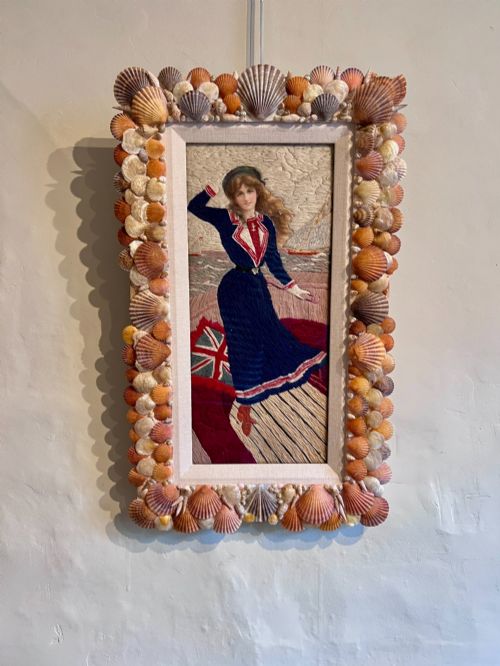
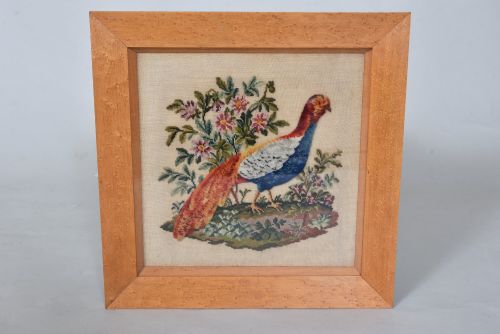
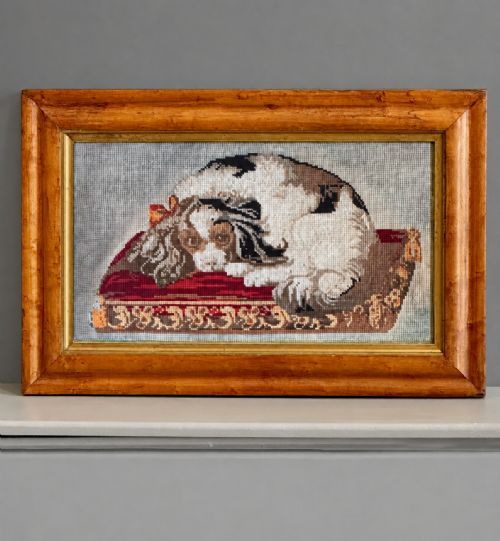
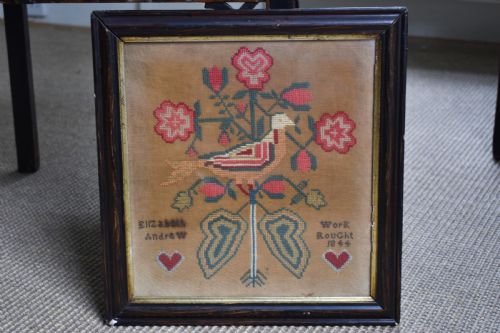
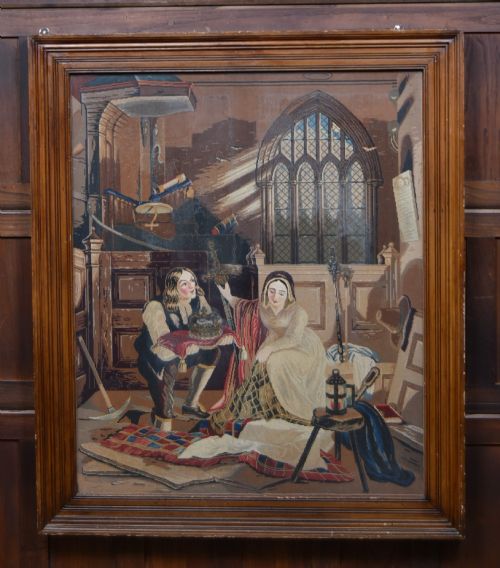
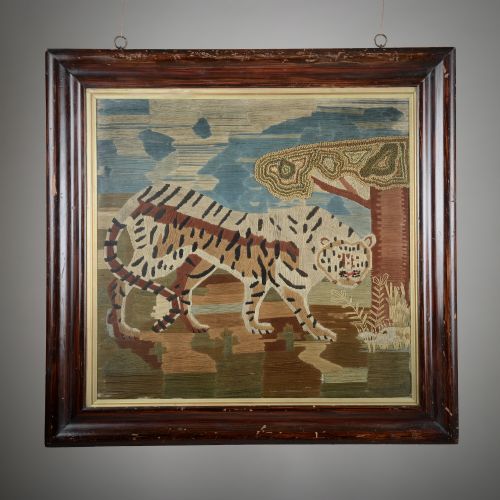
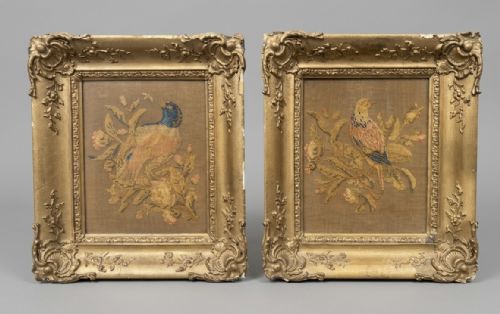
The most common formats on this page are framed wall art and needlepoint panels housed in period wood, giltwood, or burr maple frames. You will also find specialised domestic items such as fire screen panels, footstools, and side chair seats upholstered in needlework.
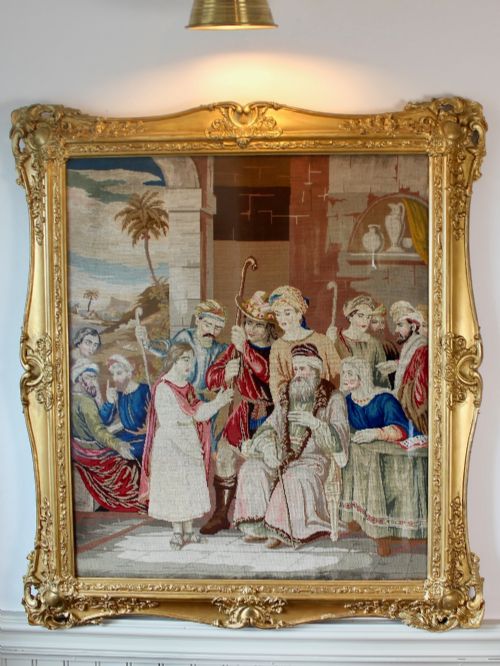
Originating largely from British and continental workshops, these textiles range from intimate needlework samplers to large German Berlin wool work wall hangings and detailed carpet mosaic pictures. Each piece records the domestic patience and visual tastes of nineteenth-century makers.
Materials and technique
The primary material foundation relies on wool yarn and cotton or linen canvas, occasionally augmented with silk threads, felt, and plushwork to create varied texture and depth. These textiles are worked using counted-thread embroidery techniques such as Berlin work, gros point, and petit point.
Framing is integral to the survival of these pieces, utilising woods like mahogany, walnut, rosewood, oak, and burr maple, alongside giltwood and specialised 'verre églomisé' glass mounts. Glass and heavy timber protected the delicate wool fibres from atmospheric damage over generations.
Listings feature Victorian and Regency periods, utilising wool, canvas, glass, wood, giltwood, silk, gold leaf, and fabric across diverse framed formats.
Judging quality in needlework
Quality rests significantly in the density of the stitching and the clarity of the pictorial composition. Finer needlework utilises smaller stitches and varied point techniques like petit point to render facial expressions and subtle tonal shifts with remarkable precision.
The ambition of the design and the integrity of the original frame elevate certain pieces above standard domestic work. Elaborate framing, such as burr maple or gilded surrounds, combined with sophisticated iconography like allegorical scenes or portraiture, distinguishes superior examples.
The Antique Woolwork Tapestry Glossary
- Berlin work
- A popular nineteenth-century style of needlepoint worked on canvas from printed, hand-coloured grid patterns. It allowed makers to produce complex pictorial designs with shaded wools.
- Gros point
- A coarse needlepoint stitch used on canvas to cover ground quickly and provide a durable textured surface. It often forms the background or bold structural elements of nineteenth-century panels.
- Plushwork
- A tactile embroidery technique employing raised loops of wool that are often cut to create a velvety pile. This method adds a three-dimensional effect to animal coats and foliage.
- Verre églomisé
- A historic decorative technique involving cold painting and gilding on the reverse face of glass. It provides a luminous, reflective border for antique oval pictures and portraits.
Antique Woolwork Tapestry: Frequently Asked Questions
How do I care for an antique woolwork tapestry?
Keep textile panels out of direct sunlight to prevent the wool and silk threads from fading over time. Display them in dry environments away from high humidity to protect the underlying canvas and wooden frames.
Dust the frames gently with a dry cloth and avoid using liquid cleaners on the embroidery itself. Professional conservation framing ensures the wool remains safely suspended and protected behind glass.
What is Berlin work?
Berlin work refers to a counted-thread embroidery style that spread rapidly across Europe during the nineteenth century. Makers used printed grid charts and brightly coloured wools to stitch elaborate pictorial scenes.
This technique democratised needlework, allowing domestic makers to produce rich tapestries depicting animals, historical events, and religious subjects with remarkable standardisation.
How can I tell the period of a needlework picture?
Examine the framing materials and construction techniques alongside the style of the embroidery. Regency pieces often feature specific glass surrounds and classical motifs, while Victorian examples embrace rich floral borders and plushwork.
The type of canvas, the palette of the wool yarns, and secondary woods on the reverse help narrow the date of manufacture.
Were these always framed as wall art?
Many nineteenth-century needlework panels served functional roles before entering frames later in life. Skilled needlework adorned fire screens, footstools, side chair seats, and table carpets in period homes.
Over generations, fragile or treasured textile panels were frequently removed from functional furniture and mounted in wood or gilt frames for wall display.