





Antique Wool Picture
An antique wool picture brings texture and colour to a wall through centuries of thread work.
Antique Wool Picture
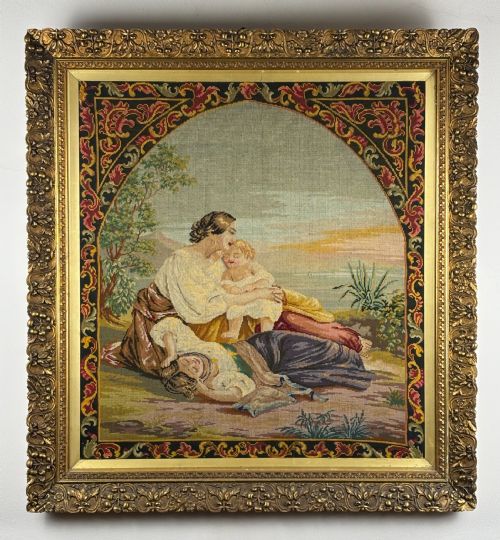
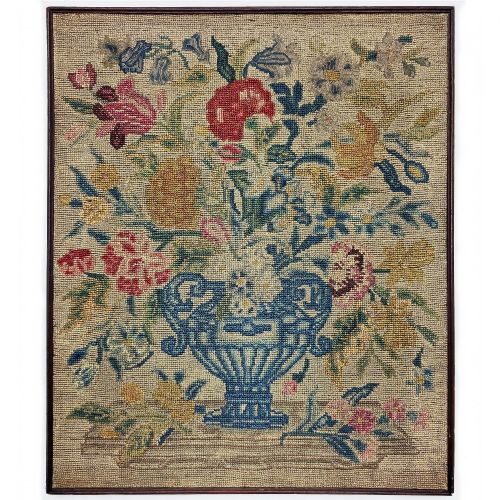
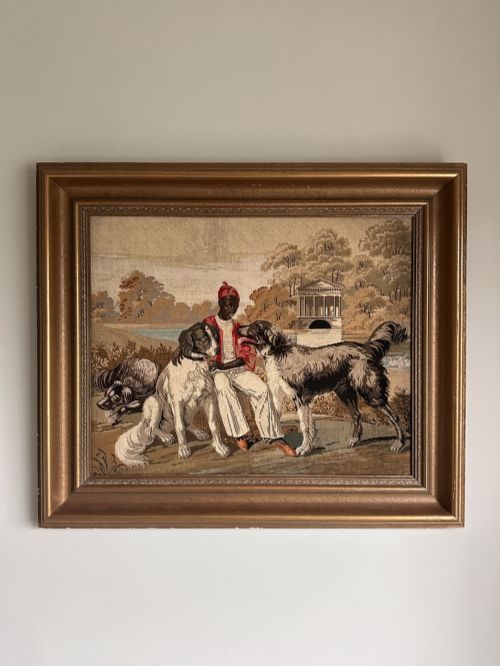
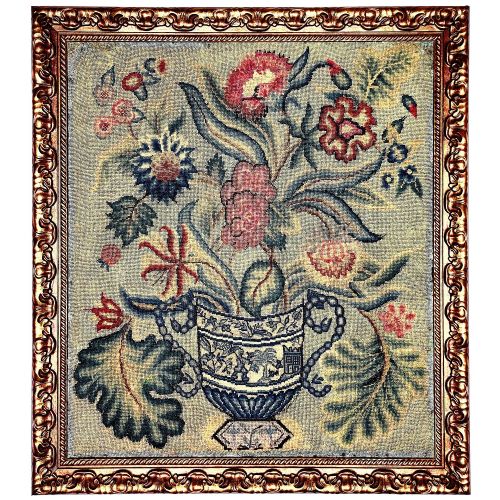
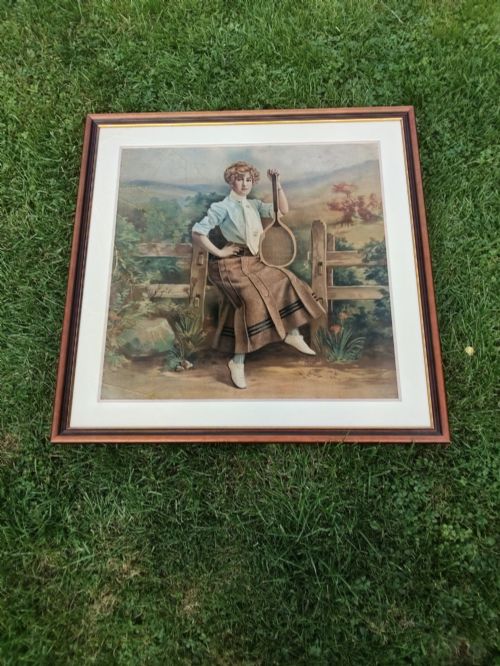
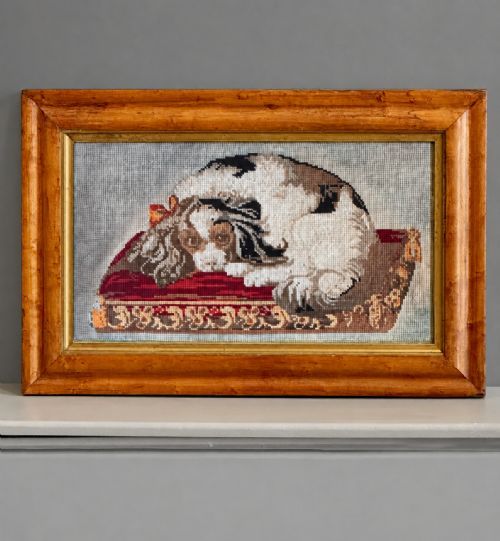
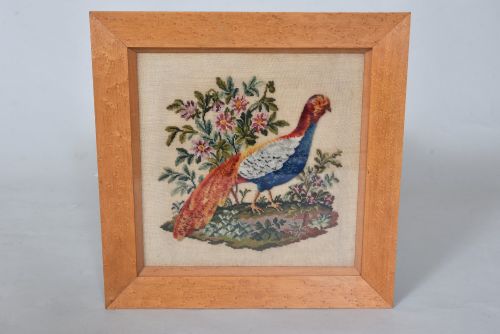
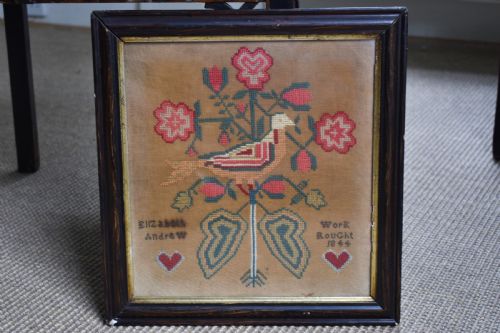
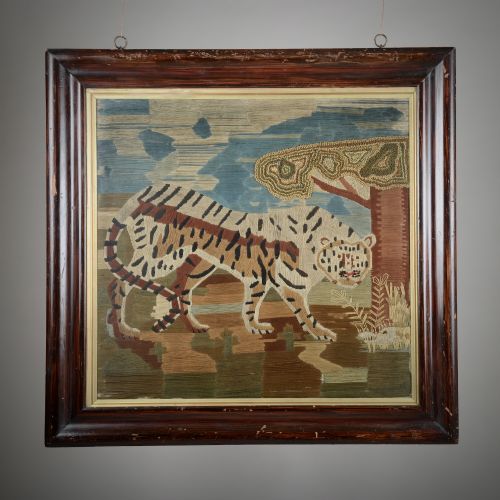
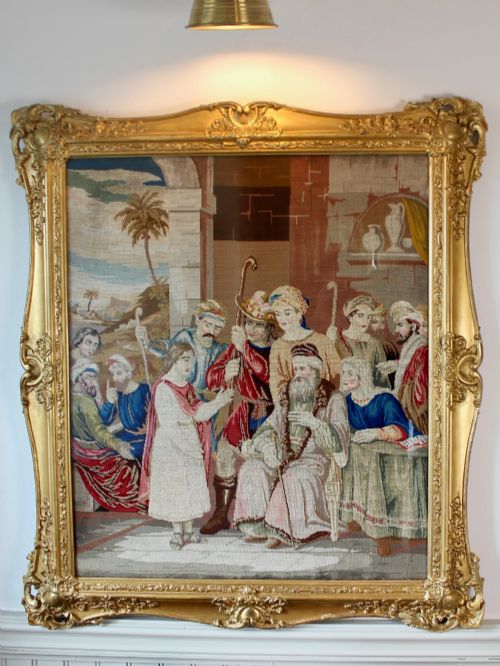
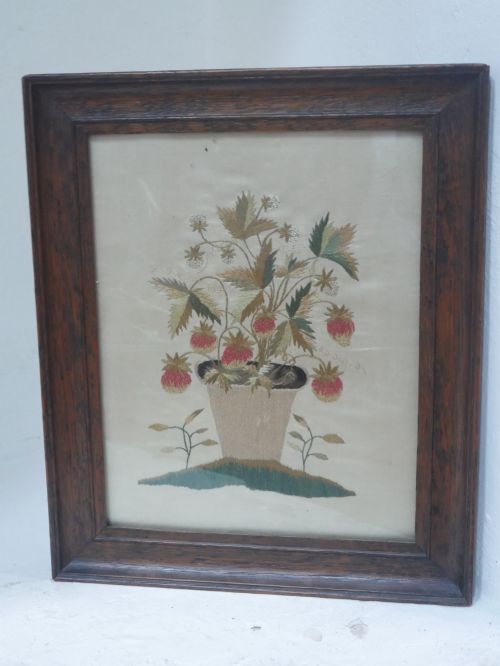
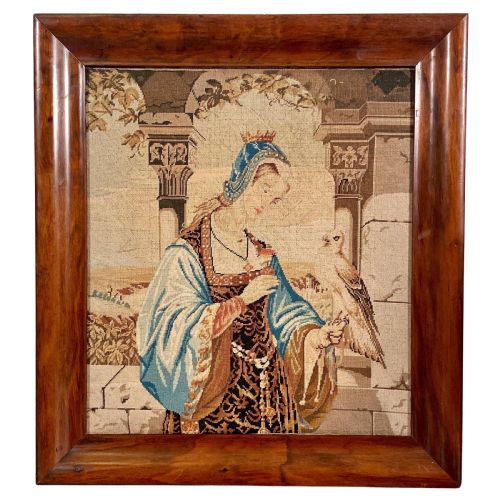
An antique wool picture is a textile artwork created with wool, canvas, and linen, often set behind glass in a wooden frame. You will encounter needlework pictures, Berlin woolwork, and sailors' woolies spanning the eighteenth, nineteenth, and early twentieth centuries.
The subjects range from portraits and domestic animals to landscapes, classical scenes, and religious motifs. Pieces originate from Britain, France, Italy, Germany, and Flanders, reflecting diverse regional stitching traditions.
Framing varies considerably, from original burr maple and giltwood frames to verre églomisé surrounds. These textiles function as wall art, bringing historical needlecraft directly into domestic interiors.
Materials and technique
Stitching was worked on canvas or linen grounds using wool, silk, and occasionally gold leaf elements. Workers employed varied techniques including gros-point, Berlin work, plushwork, and carpet mosaic to build texture and form.
Finished textiles were stretched and housed in frames of wood, giltwood, or burr maple, frequently protected behind glass. The combination of dyed wool yarns and sturdy plant fibre backings allowed these pictorial compositions to survive centuries.
Antique Wool Picture Retail Price Guide 2026
Typical asking prices for wool picture among the pieces listed under this phrase on Sellingantiques today, from the lower quarter to the upper quarter. They describe what is for sale here now, not the wider market.
Listings include Victorian, Georgian, Edwardian, and Regency pieces utilising wool, glass, canvas, linen, silk, giltwood, and gold leaf.
What separates the best examples
Quality rests in the precision of the needlework, the complexity of the design, and the preservation of the wool pile. Finer shading and deliberate control of the stitch direction create depth and realism in portraits and landscapes.
The integrity of the original frame, such as burr maple or giltwood, alongside the survival of the glass and backing, influences the overall character. Condition of the wool yarns, free from excessive fading or moth damage, distinguishes superior examples.
The Antique Wool Picture Glossary
- Berlin work
- A type of needlepoint embroidered in coloured wools using charted patterns on squared paper, popular during the nineteenth century. This method allowed makers to produce intricate pictorial scenes with complex colour shading.
- Gros-point
- A coarse needlepoint stitch worked on canvas that creates a durable, textured surface. It forms the structural background or main body for many historical needlework panels.
- Plushwork
- A needlework technique utilising looped stitches that are cut to create a velvet-like pile. This method added tactile three-dimensional depth to depictions of animals and foliage.
- Verre églomisé
- A process of applying gold or silver leaf to glass along with engraving and painting on the reverse side. Frames featuring this technique provide an ornamental border for oval portraits and landscape pictures.
- Woolie
- A pictorial embroidery created by nineteenth-century sailors using leftover coloured yarns from rigging maintenance. These naive works typically depict naval ships on the water.
Antique Wool Picture: Frequently Asked Questions
How do I hang an antique wool picture?
Protect the textile from direct sunlight and high humidity to prevent the wool yarns from fading and the backing canvas from degrading. Use sturdy picture hooks suited to the weight of the framed wall art.
Ensure the frame hangs securely against the wall without placing strain on old wooden joints or original glass mountings.
What is the difference between Berlin work and a sampler?
Berlin work utilises printed grid patterns and coloured wools to build complete pictorial scenes like landscapes, portraits, or literary events. A sampler typically displays rows of alphabets, numbers, and practice stitches alongside smaller decorative motifs.
Samplers often record the maker's name and date, whereas Berlin work focuses primarily on replicating detailed artistic paintings through counted thread embroidery.
Are sailors' woolies different from standard needlework?
Sailors' woolies are specific embroidered pictures made by maritime workers aboard ships using surplus rigging wool. They frequently feature folk art depictions of sailing vessels on textured stitched backgrounds.
Standard needlework encompasses a broader range of domestic subjects, including floral studies, religious figures, and landscape copies stitched on linen or canvas.