





Antique Wooden Thermometer
These antique wooden thermometers and combined weather instruments bring scientific utility into domestic spaces through refined cabinetry.
Antique Wooden Thermometer
When searching for an antique wooden thermometer, a buyer encounters domestic instruments housed in timber wall cases, desk stands, and combined weather stations. These pieces frequently emerge from the Victorian era, alongside Regency, Edwardian, and Art Deco examples.
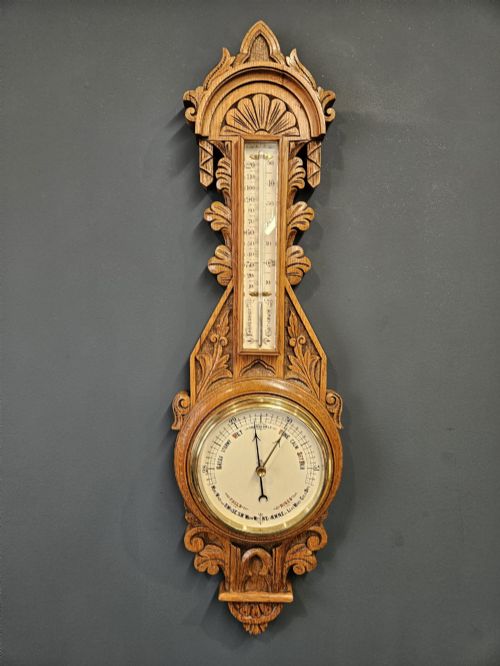
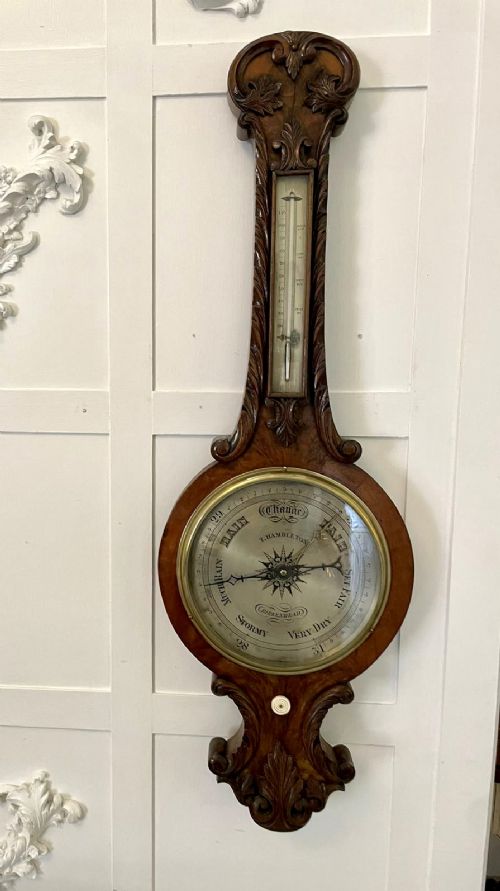
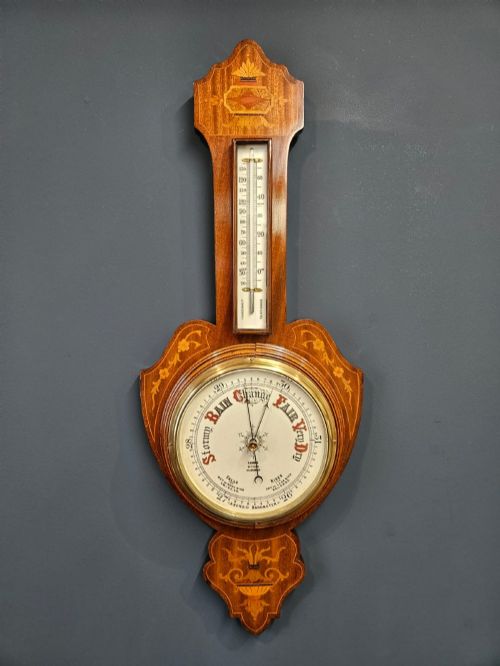
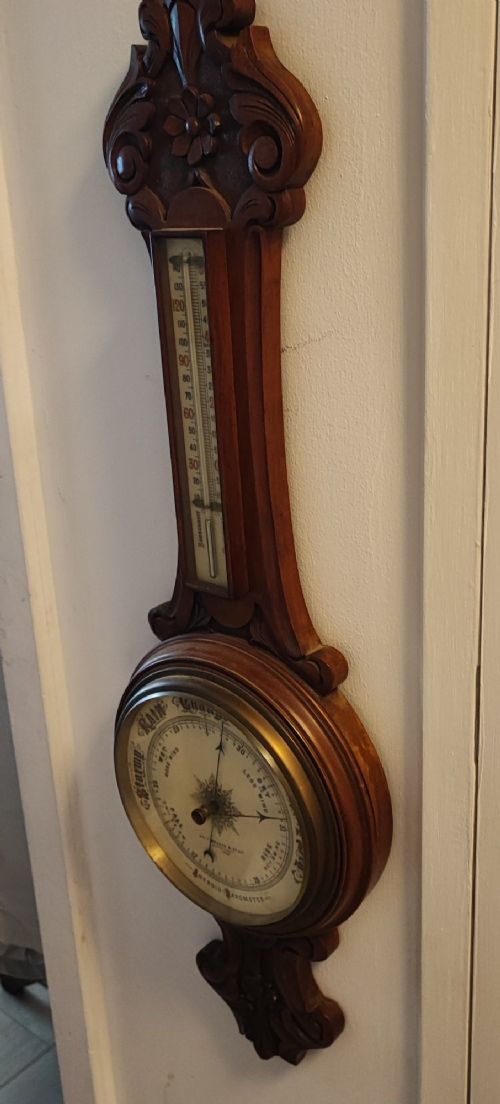
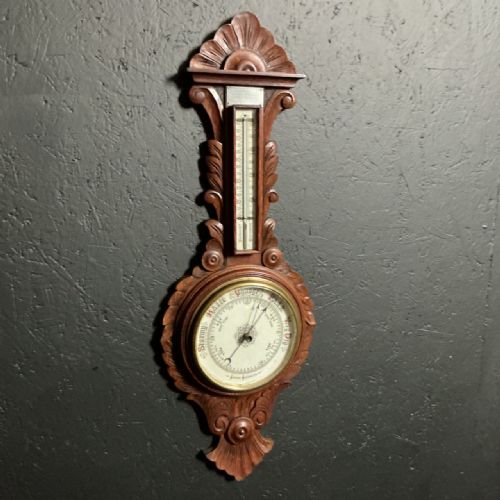
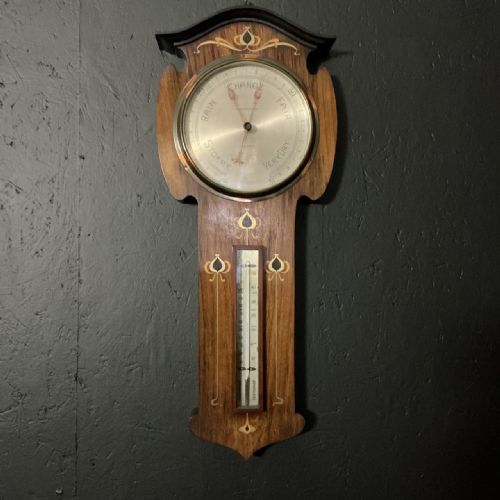
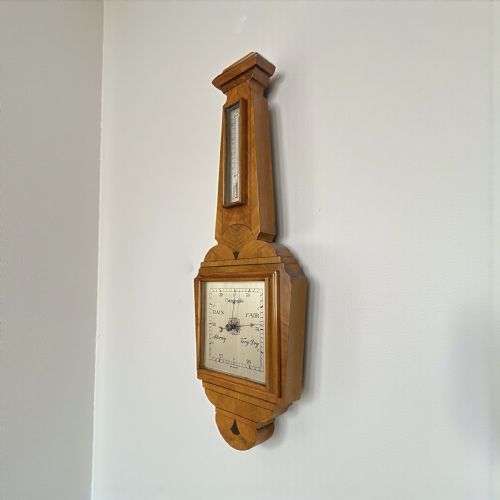
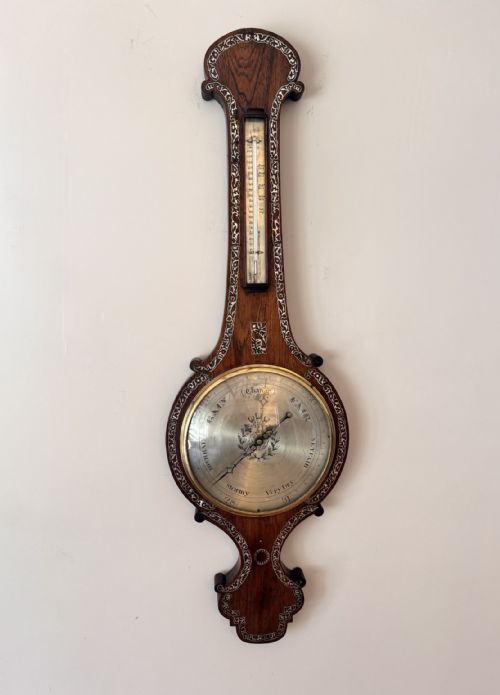
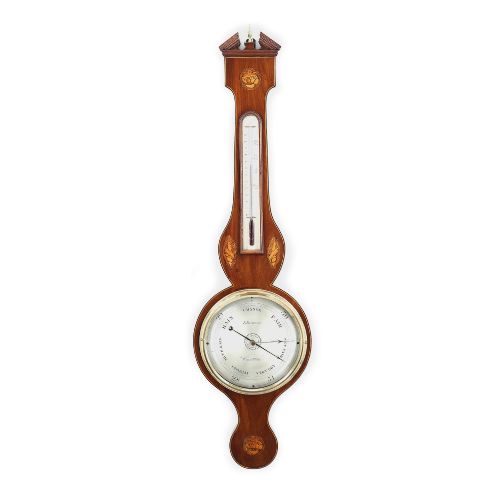
The most common form on this page combines a mercury or aneroid mechanism with a thermometer scale mounted on a carved or inlaid wooden board. Oak, mahogany, walnut, and rosewood form the structural backdrops for these dials and tubes.
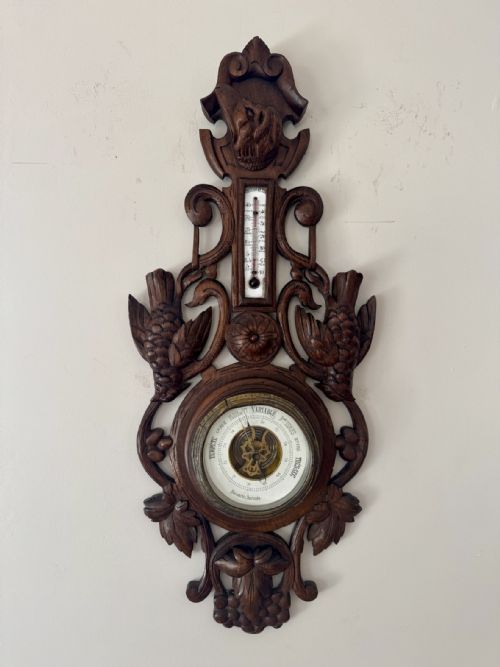
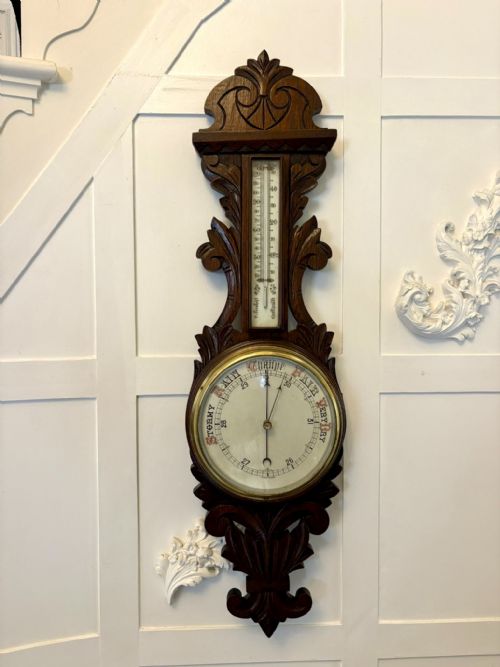
Makers integrated thermometer scales into wheel barometers, stick barometers, and architectural desk sets. The woodwork ranges from plain mahogany panels to heavily carved Black Forest foliage and geometric marquetry.
Materials and construction methods
Cabinetmakers utilised dense timbers such as mahogany, oak, walnut, and rosewood to construct the mounting boards and banjo cases. These woods were turned, carved, or flat-sawn to house delicate glass tubes and brass bezels.
Makers applied decorative techniques including mother-of-pearl inlay, boxwood stringing, and deep relief carving depicting birds and foliage. Instrument makers then mounted silvered brass scale plates and enclosed mercury or spirit columns alongside mechanical aneroid movements.
Antique Wooden Thermometer Retail Price Guide 2026
Typical asking prices for wooden thermometer among the pieces listed under this phrase on Sellingantiques today, from the lower quarter to the upper quarter. They describe what is for sale here now, not the wider market.
Listings feature scientific instruments across Victorian, Georgian, Edwardian, and Regency periods, utilising glass, brass, mahogany, oak, walnut, and porcelain.
Evaluating craftsmanship and execution
Quality rests in the crispness of the timber carving and the precision of the cabinet joints. Fine examples display sharp relief work on oak and walnut cases without soft edges or mismatched grain.
The refinement of the engraved brass dial and the clarity of the thermometer scale separate standard pieces from superior examples. Signed brass plates by documented makers elevate the stature of the instrument within its wooden housing.
B Besozzi of Weymouth·Molton of Norwich·W Watson and Sons·Cox of Plymouth Dock·Watkins and Hill·Jules Richard·WE Pain of Cambridge·Vecchio and Co of Shaftsbury·J Groce York
The Antique Wooden Thermometer Glossary
- Aneroid barometer
- An instrument measuring atmospheric pressure without liquid, using a flexible metal box. This movement often pairs directly with a thermometer scale on a wooden wall plaque.
- Banjo barometer
- A household weather glass housed in a shaped wooden case resembling a stringed instrument. These usually incorporate a thermometer along the central trunk.
- Thermoscope
- An early device showing relative temperature changes without a calibrated numerical scale. Examples appear in boxwood formats from the Regency period.
- Marquetry
- The art of applying small pieces of veneer to form decorative patterns on a wooden surface. Neo-classical designs often utilise this technique on barometer backs.
- Stick barometer
- A tall, narrow wooden instrument displaying a mercury column exposed against a calibrated scale. These represent the more traditional form of domestic pressure measurement.
Antique Wooden Thermometer: Frequently Asked Questions
How do I read an antique wooden thermometer?
Read the mercury or spirit level against the calibrated scale etched onto the brass plate or printed backing card. These numbers indicate ambient room temperature at the time of observation.
Older instruments may use Fahrenheit scales or early meteorological markings specific to their period of manufacture.
Where were these instruments placed in a home?
These pieces hung in hallways, libraries, and principal reception rooms where temperature and weather tracking mattered to daily life. Wall-mounting brackets or hanging eyes secured them safely to timber panelling or plastered walls.
Desk variants sat upon writing tables alongside matching timepieces and inkstands.
How do I distinguish a Victorian thermometer from an Edwardian one?
Victorian examples often feature dark carved oak or burr walnut with heavier ornamentation, including deep relief foliage and birds. Edwardian pieces tend towards lighter mahogany with delicate boxwood stringing and simpler Edwardian inlaid motifs.
Scroll through the timber grain and carving depth to spot the shift from Victorian heaviness to Edwardian restraint.
Can these antique thermometers still be calibrated?
The thermometer portion relies on the liquid column remaining intact within the sealed glass tube. Minor discrepancies can occur over centuries, so view them primarily as historical decorative objects rather than laboratory standards.
Combined barometer mechanisms require professional handling if internal linkages need adjustment.