


Antique Wooden Table Chairs
Antique wooden table chairs bring traditional craftsmanship into daily dining spaces, offering solid oak and mahogany construction shaped across centuries of design.
Antique Wooden Table Chairs
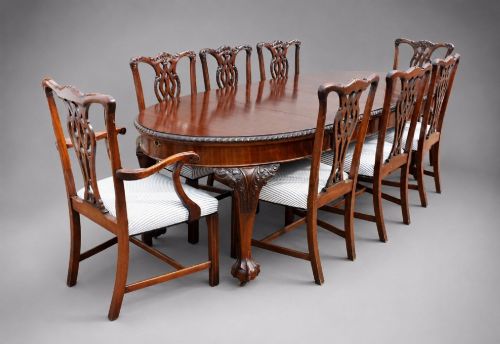
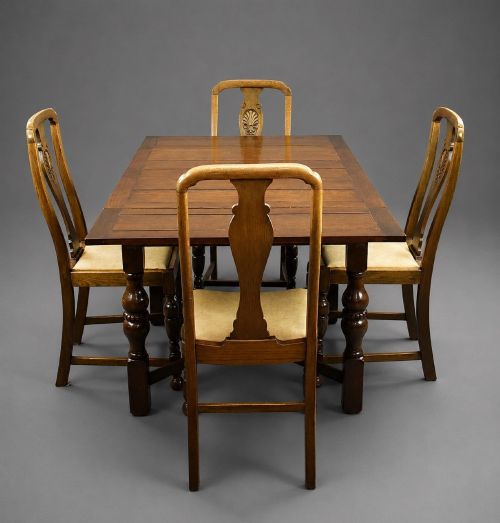
When searching for antique wooden table chairs, buyers encounter a diverse selection ranging from expansive Edwardian dining sets to compact 17th century oak chair-tables and monks benches. The listings frequently feature mahogany dining suites, Windsor kitchen chairs, and walnut side chairs alongside oak draw leaf tables.
Most pieces date from the Victorian, Regency, and 1920 periods, with earlier examples including 17th century Jacobean designs and George III primitive forms. These items serve practical seating and dining functions while displaying distinct historical stylistic revivals such as Queen Anne and Jacobean motifs.
Materials and construction methods
Makers utilised solid timbers such as oak, mahogany, walnut, and pine, often enhancing structural integrity with brass fittings and iron elements. Upholstered sections incorporate various fabrics and textiles to provide padded comfort on armchairs, bedroom chairs, and dining seats.
Joinery techniques span centuries of cabinetmaking, from panelled oak construction found on early monks benches to carved walnut details on side chairs and balloon back frames on later dining sets.
Listings feature oak, mahogany, and walnut across 17th century, Regency, and Victorian periods.
Distinctions in craftsmanship and condition
The standard of a piece rests upon the quality of the timber selection, such as Cuban mahogany or figured walnut, and the crispness of hand-carved details. Superior sets maintain matching timber grains and uniform proportions across all chairs and associated tables.
Maker provenance also elevates standing, evidenced by stamped signatures like James Shoolbred or specialised regional construction, distinguishing standard utilitarian furniture from high-workshop production.
James Shoolbred·Ellen E Houghton of Minton
The Antique Wooden Table Chairs Glossary
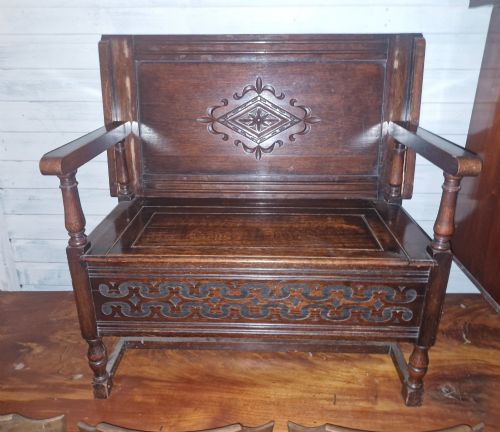
- Monks bench
- A versatile convertible furniture form with a folding top that transforms a bench or seat into a table. These pieces often feature lift-up storage compartments beneath the seat.
- Draw leaf table
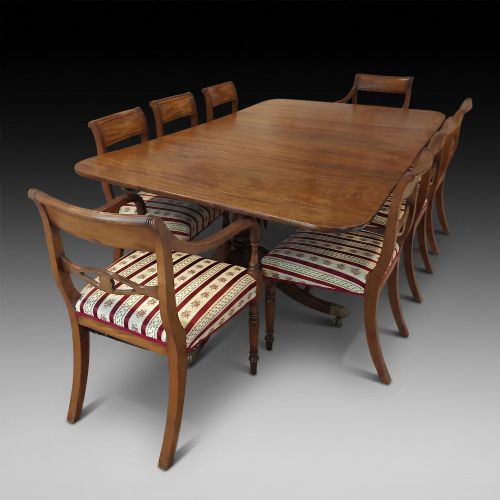
- A dining table equipped with sliding leaves tucked beneath the main top that pull out to extend the surface length. This mechanism accommodates larger gatherings without requiring separate loose leaves.
- Carver
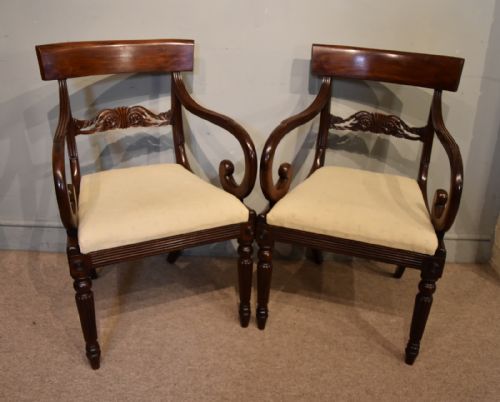
- An armchair designed to match a set of dining side chairs, traditionally placed at the head of the table. These incorporate supportive armrests alongside the standard upright back.
- Balloon back
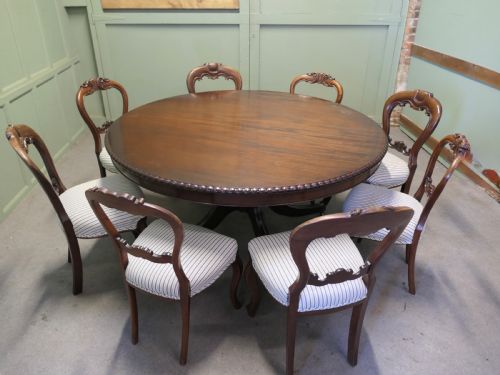
- A rounded, continuous chair back contour resembling an inflated balloon, popular during the 19th century. This upholstered or wooden profile offers ergonomic support.
- Jacobean Revival
- A 19th or early 20th century stylistic movement copying 17th-century English furniture characteristics. Pieces typically display dark oak, geometric panelling, and turned legs.
Antique Wooden Table Chairs: Frequently Asked Questions
What is a chair table?
A chair table is a dual-purpose item featuring a hinged back that folds down flat over the seat to create a table surface.
Originating in earlier centuries, this space-saving form provides both a secure seat with storage beneath and an impromptu surface for dining or work.
How do I match chairs to a table?
Matching antique chairs to a table involves looking at corresponding timber types, such as oak or mahogany, and period styles like Regency or Jacobean Revival.
Complete dining suites ensure uniform height, wood tone, and decorative carving across both the seating and the central dining table.
Where were these pieces used?
These wooden table chairs and benches were utilised primarily in dining rooms, kitchens, and large halls of English country houses.
Smaller variants also served in bedrooms, dressing areas, and hallways as functional seating or combined storage commodes.
How do I identify a monks bench?
A monks bench is identified by its solid oak construction, hinged top that converts the backrest into a table, and a lower storage compartment accessed via a lift-up seat.
Many examples display carved panels or drawer additions typical of 17th-century designs and later revival periods.