


Antique Wooden Music Rest
An antique wooden music rest brings craftsmanship and function together, holding scores for musicians and pages for readers with distinct period character.
Antique Wooden Music Rest
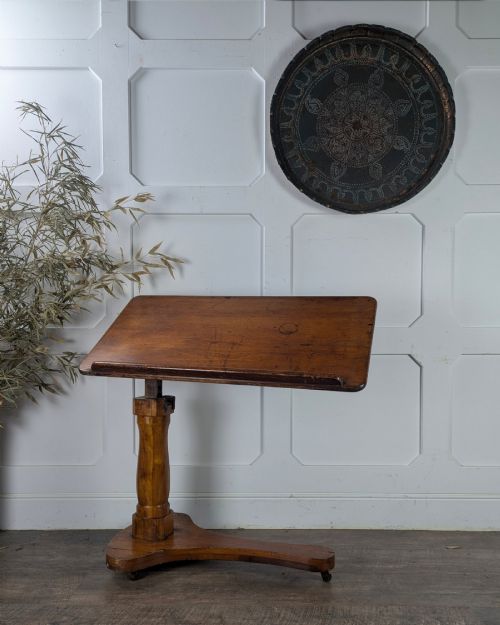
When you search for an antique wooden music rest, you encounter a range of functional supports designed for books, folios, and sheet music. These items bridge domestic utility and fine cabinet-making across several historical eras.
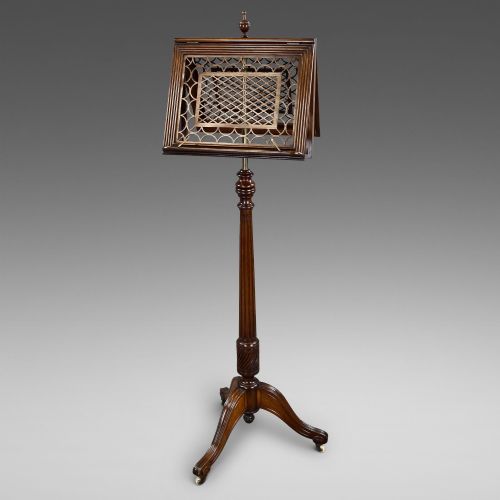
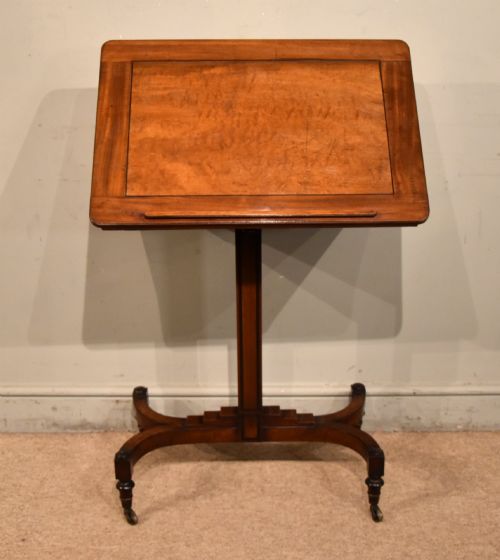
The selections span distinct periods including the Georgian, Regency, and Victorian epochs, alongside pieces from the early twentieth century. You find diverse configurations such as reading tables, duet stands, and portfolio holders.
Most examples utilise rich timbers like mahogany, walnut, and pine, often incorporating adjustable mechanisms for practical use. The forms range from simple folding rests to elaborate carved structures suited for musical recitals.
Materials and construction
Cabinet-makers built these supports using substantial native and exotic hardwoods, predominantly selecting mahogany and walnut for their stability and grain. Workshops often incorporated secondary timbers like pine alongside brass fittings and iron ratchets to achieve adjustable movement.
Surface decoration relied on traditional woodworking techniques including satinwood inlay, fretted openwork, and detailed hand carving. Black Forest examples display deep figurative carving, whilst Regency and Victorian pieces favour clean turned columns and inlaid motifs.
A carved eagle stands ready to support your heavy volumes.
Distinctions in quality
Quality rests upon the cleverness of the adjustment mechanism and the soundness of the underlying timber selection. Superior pieces utilise figured woods like burr walnut and feature complex brass hardware that operates smoothly without play.
The refinement of the carving and inlay separates standard utility stands from grand parlour pieces. Well-executed fretted music desks and finely turned supports demonstrate the maker's care far beyond basic joined construction.
The Antique Wooden Music Rest Glossary
- Duet stand
- A wide music stand designed to accommodate two musicians reading from the same shared score.
- Lectern
- A freestanding or table-top reading stand with a slanted top designed for books or manuscripts.
- Fretted
- Woodwork pierced with decorative open patterns, often seen on the desk portion of music stands.
- Burr walnut
- Timber taken from a walnut tree growth, prized for its swirling and highly decorative grain patterns.
- Lyre-shaped
- A music stand back formed in the classical outline of a stringed musical instrument.
Antique Wooden Music Rest: Frequently Asked Questions
How do I adjust the height?
Most adjustable examples utilise a sliding wooden stem secured by a brass screw or a ratcheted iron mechanism at the back.
You simply loosen the fixing, raise the desk to the desired eye level, and tighten the mechanism to hold the weight.
Can I use these for modern books?
These stands were originally built for heavy bound folios and manuscript music scores. Their sturdy ledges easily support modern heavy volumes and tablets.
Ensure the adjusting mechanism is secure before placing heavy items on the slanted desk.
How do I date a stand?
Dating relies on identifying the prevailing timber fashions, construction joints, and decorative styles of periods like Regency or Victorian.
Turned columns, inlay types, and the complexity of the brass hardware offer clear clues to the decade of manufacture.
What is a Black Forest stand?
Black Forest stands originate from the woodcarving traditions of central Europe during the nineteenth century. They feature deep, naturalistic carvings of animals, foliage, or birds.
These decorative pieces often double as portfolio or magazine holders rather than strict music desks.