
Antique Wood Trinket Box
An antique wood trinket box brings small-scale craftsmanship into daily life, offering a secure home for keepsakes and jewellery.
Antique Wood Trinket Box
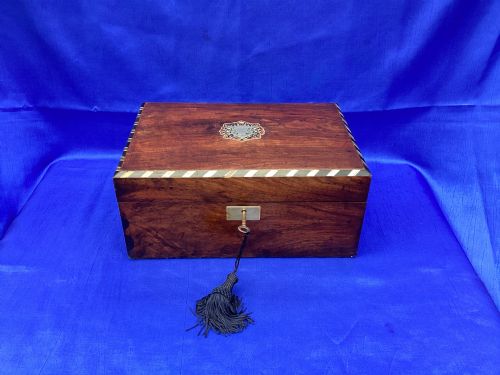
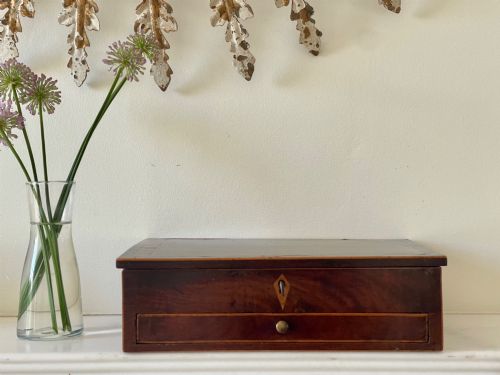
An antique wood trinket box serves as a portable container designed for personal valuables, tokens, and small keepsakes. These pieces appear across multiple eras, ranging from restrained Georgian designs to more elaborate Victorian and Regency examples.
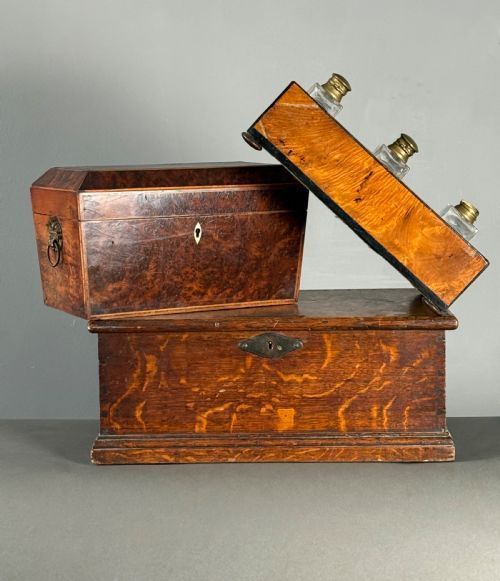
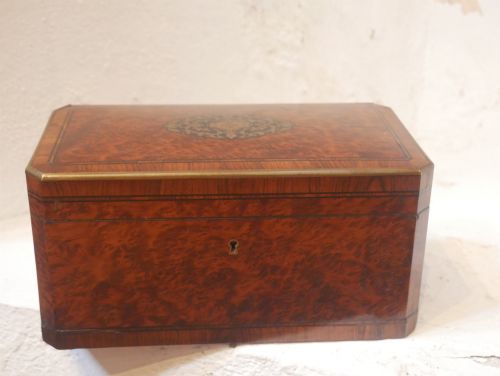
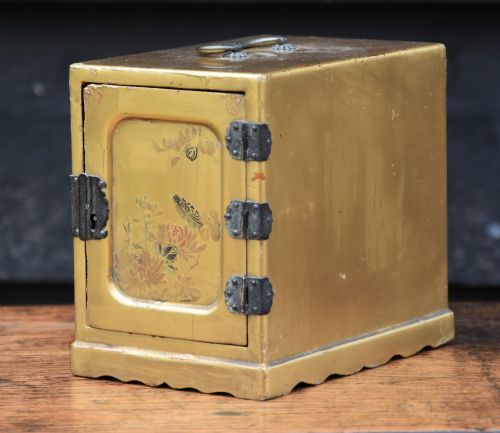
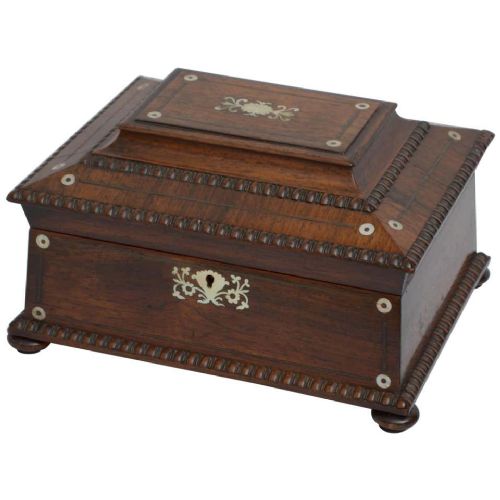
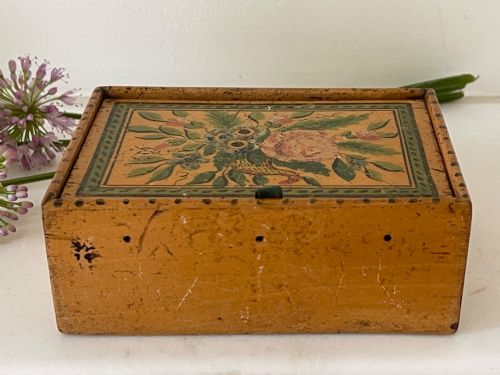
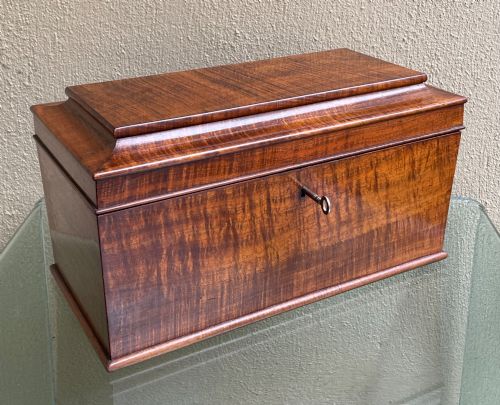
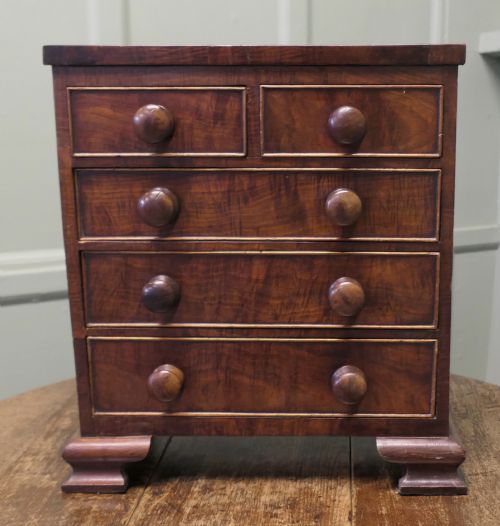
The selection here encompasses various timber forms, including tea caddies, sarcophagus-shaped caskets, needlework receptacles, and pocket snuff containers. Rosewood, mahogany, and walnut dominate the offerings, often augmented by specialised compartments and trays inside.
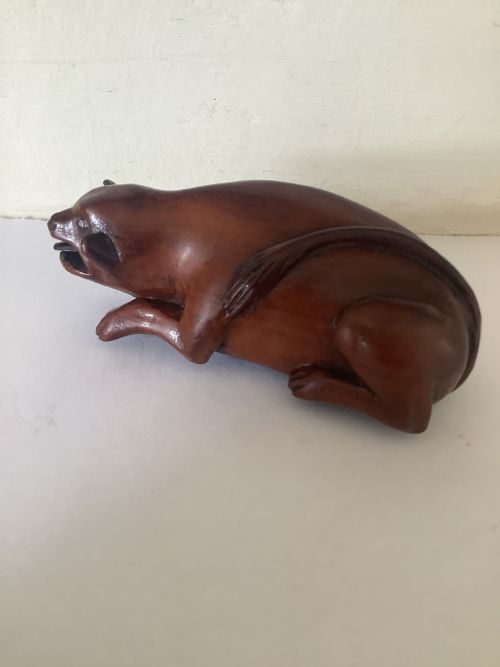
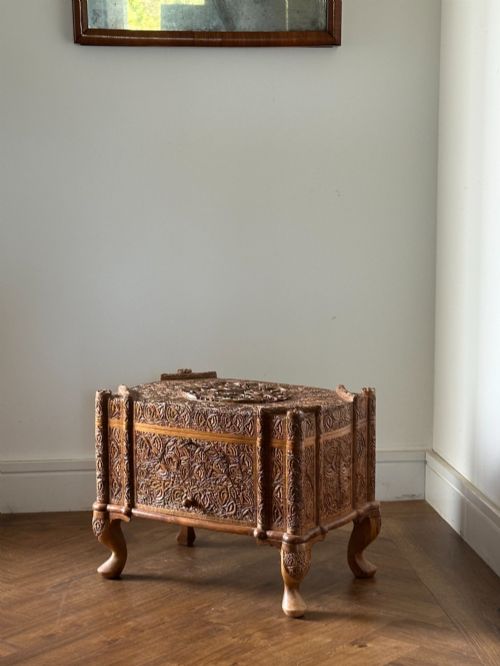
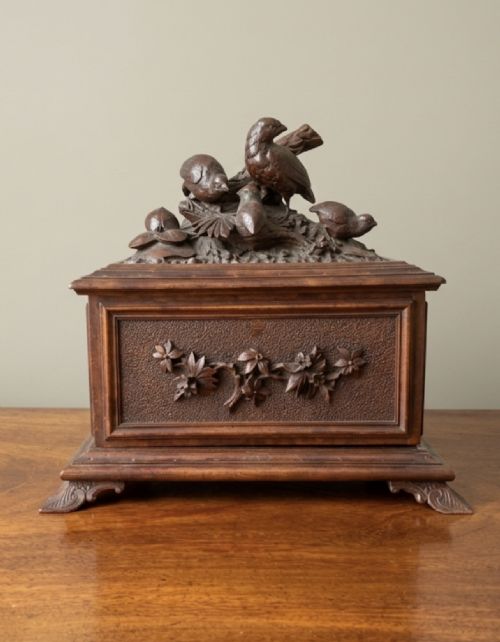
Makers utilised diverse regional traditions, resulting in items that span from British Tunbridge Ware and Scottish laburnum treen to continental Black Forest carvings and Indian sandalwood pieces.
How They Were Made
Joinery and carcass construction relied on dense hardwoods such as rosewood, mahogany, oak, and coromandel, often shaped into solid blocks or applied as fine veneers over secondary timber. Artisans enhanced these surfaces through precision sawing, turning on lathes, and detailed hand carving.
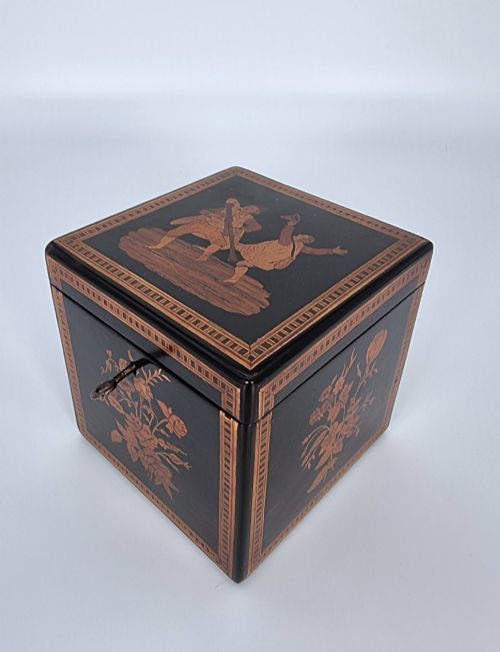
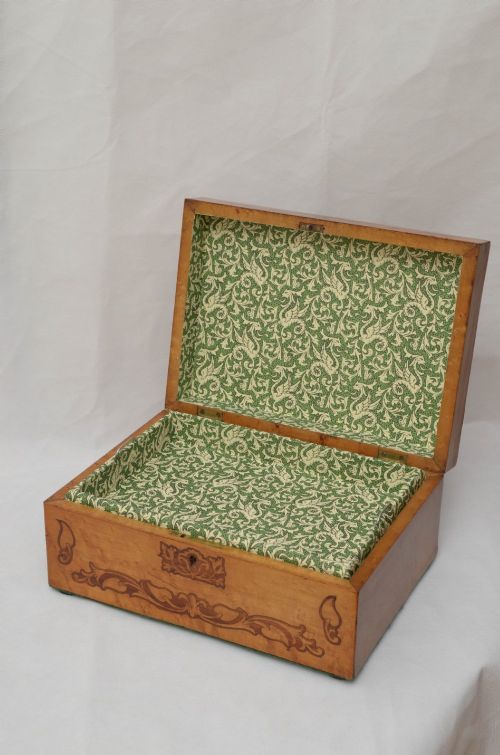
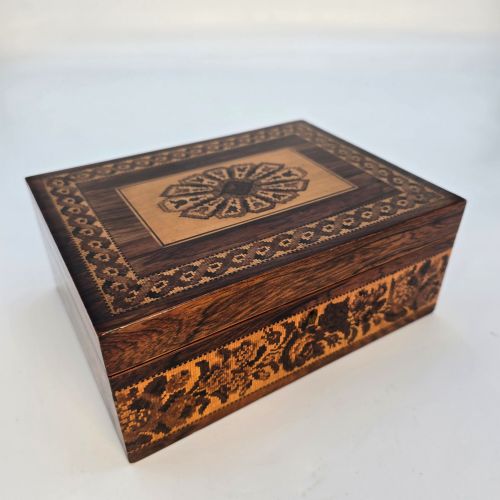
Decoration frequently involved contrasting inlays of mother-of-pearl, bone, brass, tulipwood, and specialised mosaic woodblocks known as Tunbridge Ware. Interior spaces received tailored linings of silk, satin, or velvet to protect delicate contents.
Listings feature timbers including rosewood, mahogany, walnut, sycamore, laburnum, ebony, and sandalwood across periods spanning the seventeenth to the twentieth century.
What Varies In Quality
The standard of a box rests upon the precision of its construction and the complexity of its surface decoration. Finely executed marquetry, tight mitre joints, and retained original internal trays distinguish superior examples from simpler utilitarian containers.
Material selection also dictates standing, with dense exotic timbers and intricate chip carving or engine turning indicating higher levels of workshop investment.
Tahan Paris·Edmund Nye·Horace Woodward And Co
The Antique Wood Trinket Box Glossary
- Treen
- Small handmade wooden domestic objects produced prior to the twentieth century. This term covers items ranging from small snuff containers to sewing accessories.
- Tunbridge Ware
- A form of mosaic woodwork originating from Kent, featuring tiny geometric tiles assembled to depict pictorial scenes or borders. It appears frequently on nineteenth-century surfaces.
- Caddy
- A small container originally intended for storing loose tea leaves in locked compartments. Many examples share forms similar to larger trinket and jewellery boxes.
- Marquetry
- The art of applying decorative pieces of veneer to a structural carcass to form geometric or pictorial designs. Craftsmen utilised contrasting timbers to achieve tonal depth.
- Sarcophagus
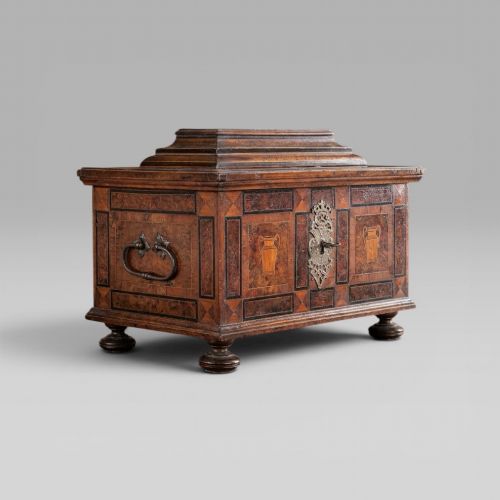
- A box shape featuring a sloping lid and a stepped plinth base, mimicking ancient monumental tombs. This profile remains popular in Regency and Victorian tea caddies and heavy caskets.
Antique Wood Trinket Box: Frequently Asked Questions
How were these boxes originally used?
These containers served for storing personal valuables, jewellery, tea, or tobacco depending on their internal partitions and sizing. Wealthy households kept them on dressing tables or writing desks to secure daily accessories.
Smaller pocket versions held snuff or dry spices for personal use during travel. Their presence signalled both utility and refined taste in domestic spaces.
How do I care for antique wood?
Keep wooden containers away from direct sunlight and sudden changes in humidity to prevent timber shrinkage and veneer lifting. Maintaining a stable indoor environment protects both the outer polish and fragile internal linings.
Apply occasional specialist wax lightly if the finish appears dry, avoiding modern synthetic polishes. Gentle dusting with a soft cloth preserves the original patina over time.
How can I tell different periods apart?
Georgian examples often display restrained lines in flame mahogany or yew, prioritising proportion over heavy ornamentation. Regency pieces introduce bold brass stringing and exotic rosewood surfaces.
Victorian boxes frequently employ denser mother-of-pearl inlays, Tunbridge mosaic patterns, or deep relief carving. Eighteenth-century iterations generally rely on simpler structural joins and native hardwoods.
Are interior linings usually original?
Many surviving containers retain their fitted velvet, silk, or satin paper linings, though some show evidence of later replacement due to natural wear. Original linings often exhibit fading and wear corresponding to the exterior age.
Replacement interiors do not diminish utility, but original fabrics provide a clearer picture of the box's history. Inspecting the glue residue and fabric wear helps determine originality.