


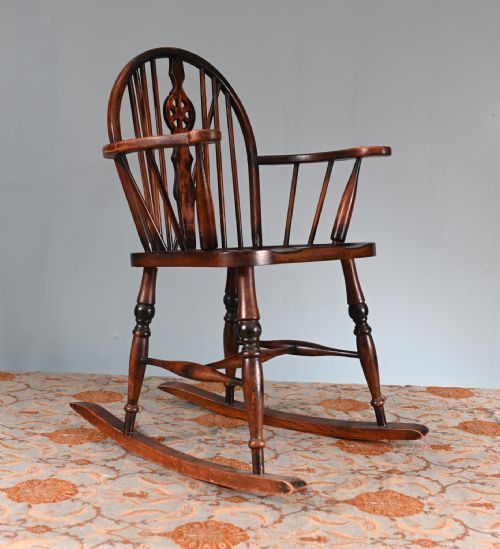


Antique Wood Rocking Chair
An antique wood rocking chair brings domestic comfort and vernacular craft to a room, ranging from country windsors to bentwood designs.
Antique Wood Rocking Chair
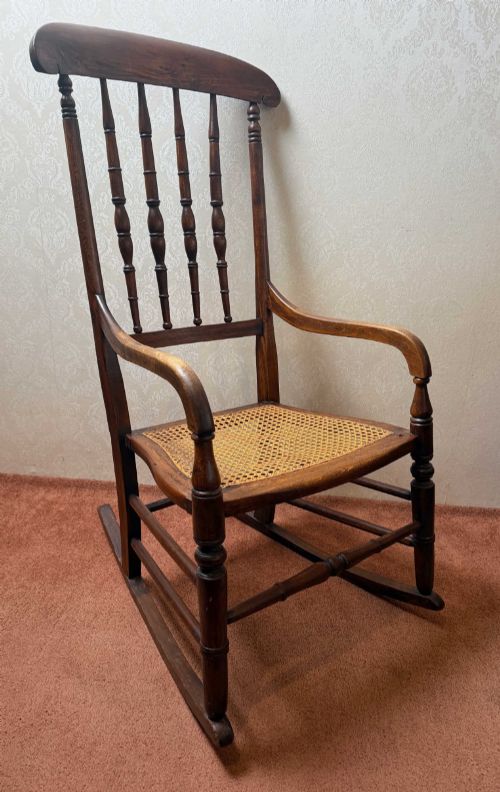
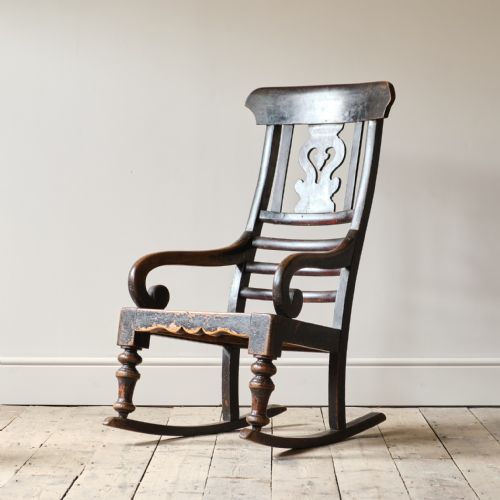
When you search for an antique wood rocking chair, you encounter a wide selection of seating shaped by regional traditions and nineteenth-century domestic life. The examples gathered here span formal parlor seating to rustic country vernacular pieces, reflecting both modest domestic workshops and industrial production.
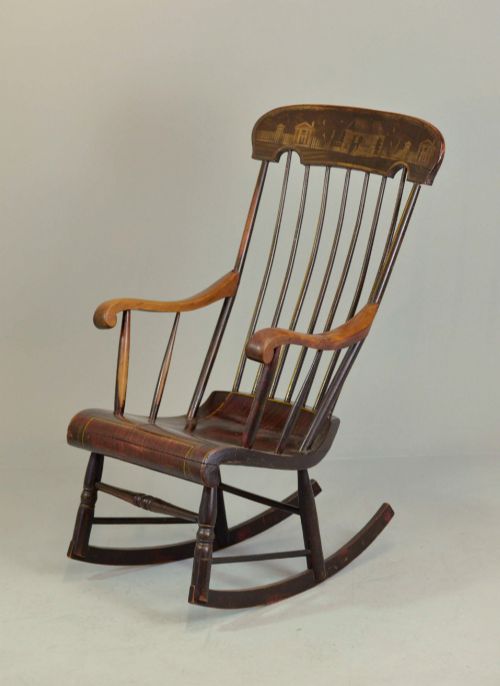
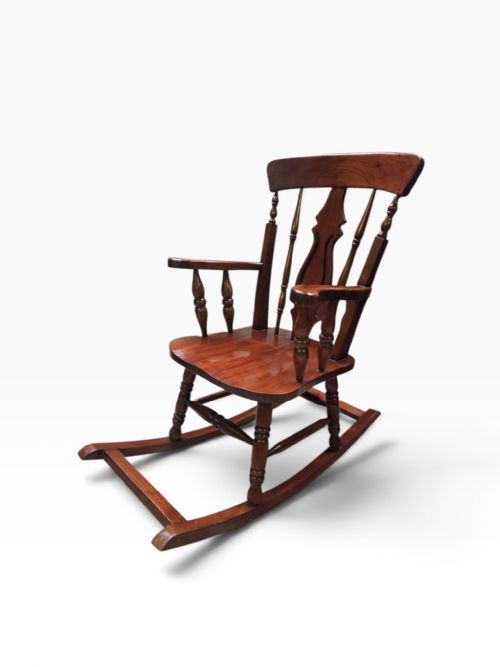
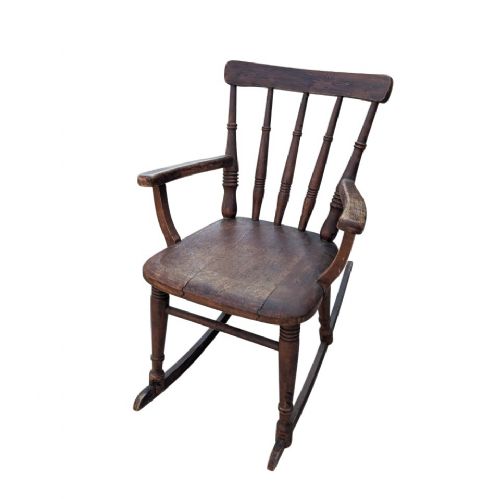
The most common versions met on this page are nineteenth-century Windsor rocking chairs and Victorian country models. These typically combine traditional timber framing with solid seats, offering a direct link to historical domestic seating habits.
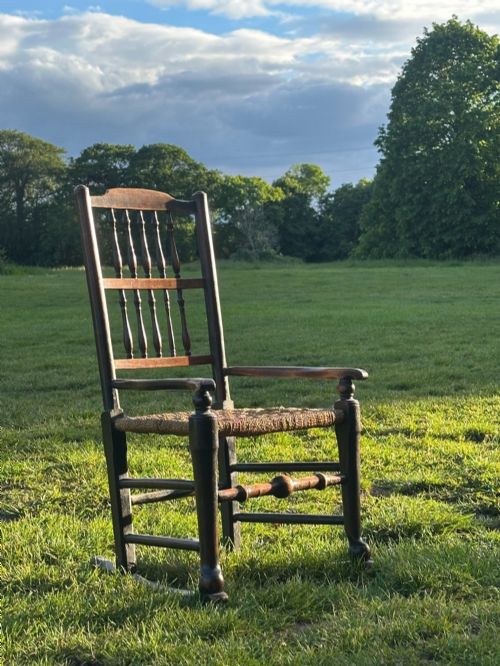
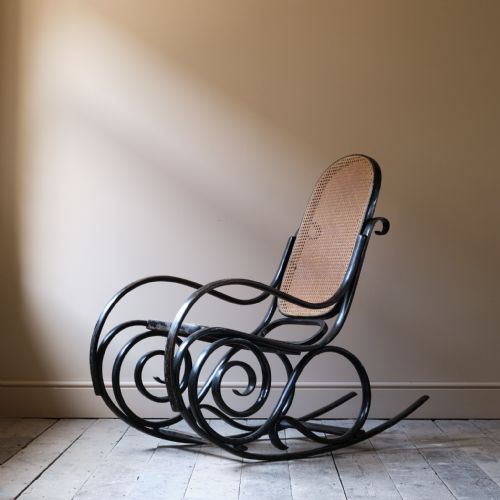
Regional variations appear frequently among the listings, from Lancashire and Cheshire elm chairs to Thames Valley windsor designs and Scottish vernacular pieces. Alongside these sit continental bentwood forms and American-style influences from the later periods.
Materials and Construction
Makers utilised a variety of native timbers including elm, beech, ash, oak, and mahogany, selecting each wood for its specific structural properties. Elm frequently provided strong, split-resistant seats, while ash and beech offered the necessary flexibility for bent components and turned spindles.
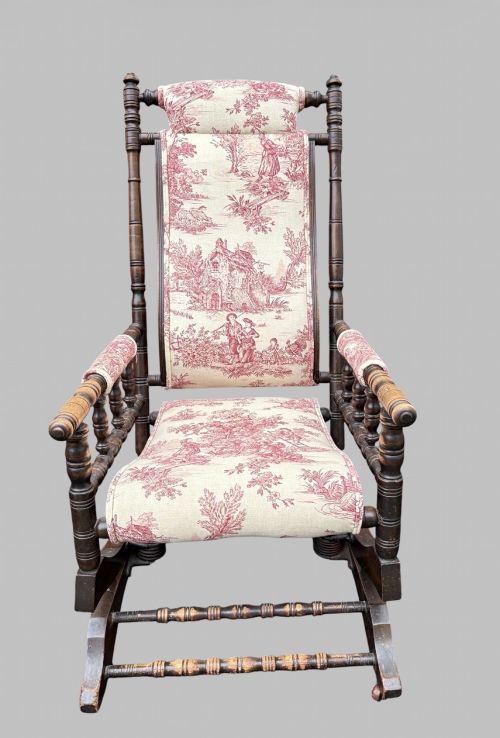
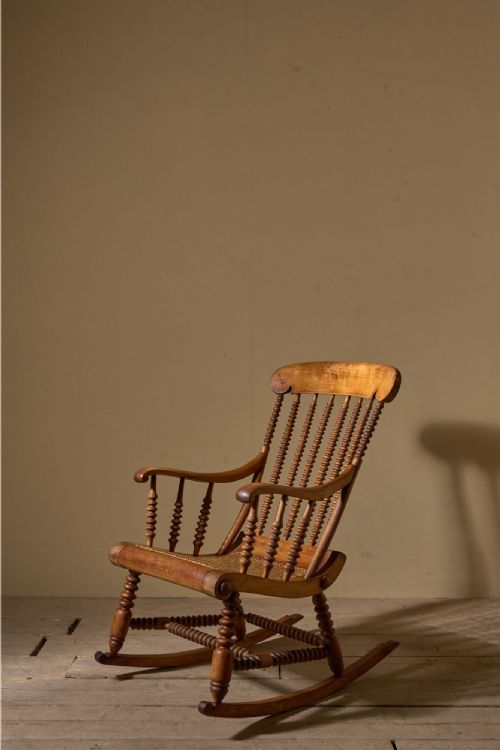
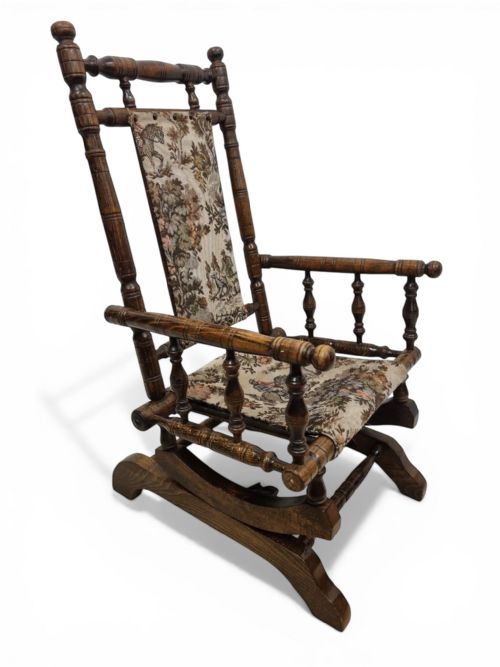
Construction techniques relied heavily on traditional joinery, incorporating pegged mortise and tenon joints, steam-bent elements, and turned bobbin framing. Many examples integrate flexible seating surfaces such as cane, rush, seagrass, or woven tape, while others utilise upholstery over buttoned backs.
Antique Wood Rocking Chair Retail Price Guide 2026
Typical asking prices for wood rocking chair among the pieces listed under this phrase on Sellingantiques today, from the lower quarter to the upper quarter. They describe what is for sale here now, not the wider market.
Several examples are specifically proportioned for children or dolls, preserving miniature versions of full-size vernacular furniture.
Distinctions in Quality
The calibre of a piece rests largely on the integrity of its timber selection and the skill of its initial construction. Superior examples maintain crisp turning detail on spindles and legs, alongside tight, uncompromised joinery in the rocking action.
Proportion and comfort also distinguish finer pieces from simpler utilitarian seating. A well-balanced chair demonstrates careful attention to the rake of the back and the curve of the rockers, ensuring stability and ease of movement.
Jacob and Josef Kohn·Thonet
The Antique Wood Rocking Chair Glossary
- Windsor
- A traditional chair construction method where turned legs and spindle backs are fitted directly into a solid carved wooden seat. This style developed deep regional variations across British and American workshops.
- Bentwood
- Furniture formed by steaming timber until pliable and bending it into curved structural shapes. This technique defines much of the late nineteenth-century production associated with major continental makers.
- Bobbin turned
- Timber turned on a lathe to create a series of rounded, bead-like shapes resembling bobbins on a thread. This decorative turning style is common on nineteenth-century vernacular frames.
- Ladder back
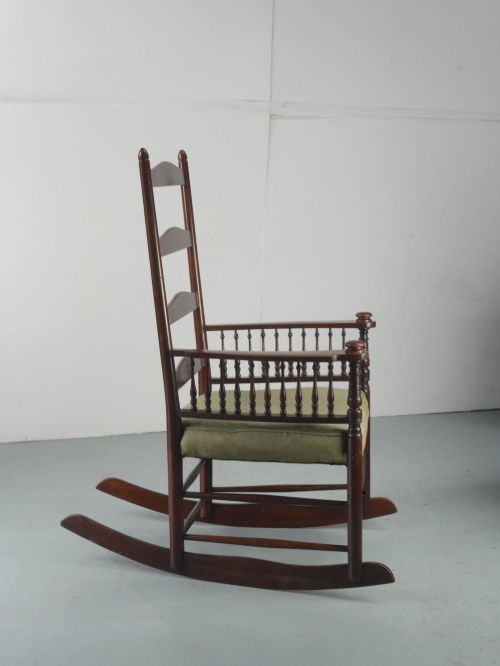
- A chair back constructed with horizontal arched slats between vertical uprights. This traditional form appears frequently in early country and regional seating.
Antique Wood Rocking Chair: Frequently Asked Questions
How do I date an old rocking chair?
Dating relies on observing construction methods, timber choices, and stylistic markers such as bobbin turning or bentwood framing. Earlier eighteenth-century pieces often show simpler ladder backs in oak or ash.
Later nineteenth and early twentieth-century examples introduce factory methods, steam bending, and upholstered button backs influenced by Victorian and Edwardian fashions.
Were rocking chairs used outdoors?
These chairs were primarily designed for interior domestic use, specifically for nurseries, firesides, and sitting rooms. Their timber construction and woven or upholstered seats make them unsuited for continuous outdoor exposure.
Many specific forms, such as nursing chairs or low fireside chairs, were tailored to particular indoor domestic activities during the Victorian period.
What woods were used in these chairs?
Makers selected native hardwoods and softwoods depending on the required function and regional availability. Elm was favoured for solid seats, while beech, ash, and oak provided strength for spindles and frames.
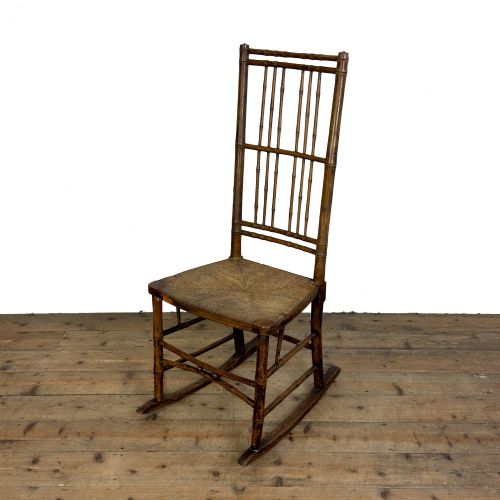
Finer parlor models occasionally utilise mahogany or walnut, sometimes incorporating decorative elements like faux bamboo or inlaid details.