

Antique Wood Caddy
When you handle an antique wood caddy, you hold a small chest designed to keep precious dry leaf secure under lock and key.
Antique Wood Caddy
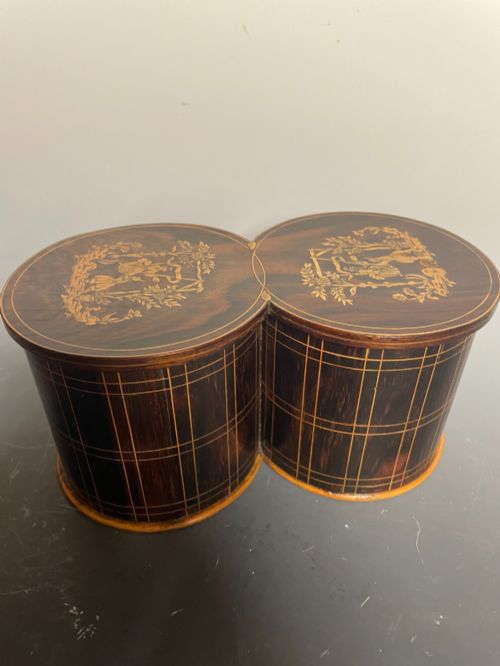
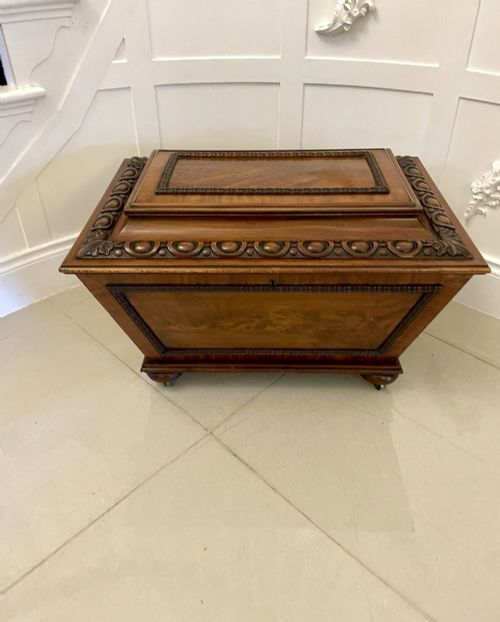
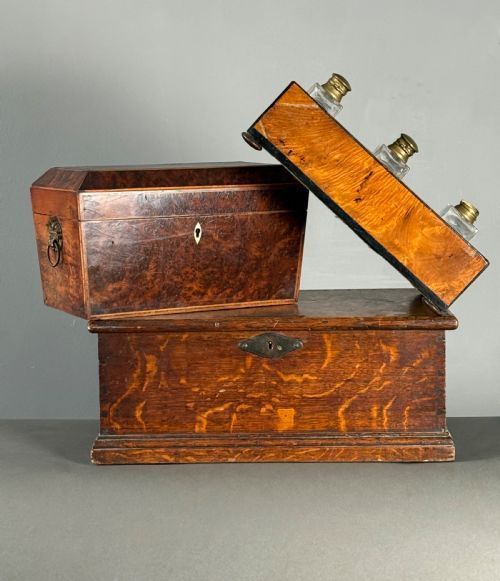
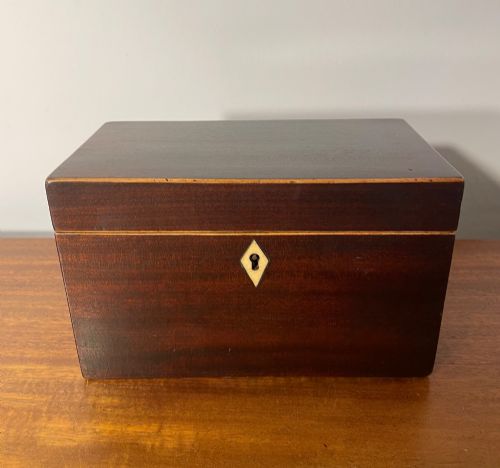
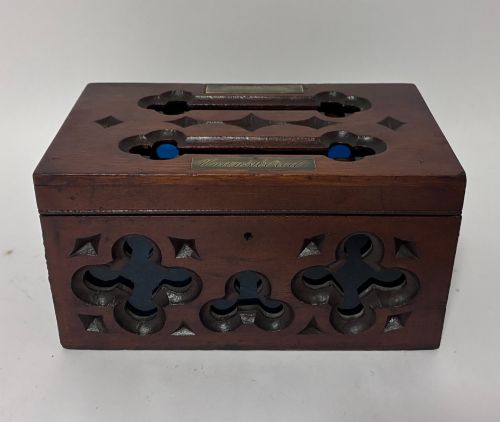
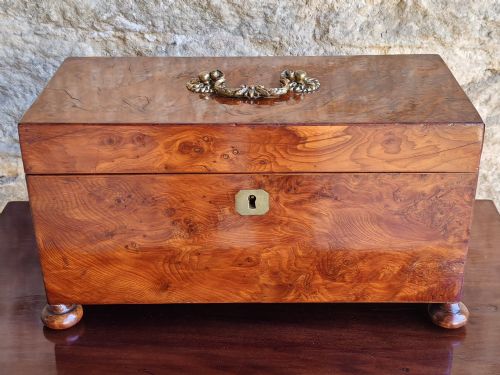
An antique wood caddy is a lidded box created to store expensive tea in domestic rooms during the eighteenth and nineteenth centuries. The versions most often met on this page take a rectangular or sarcophagus shape, frequently resting on small feet and fitted with internal compartments.
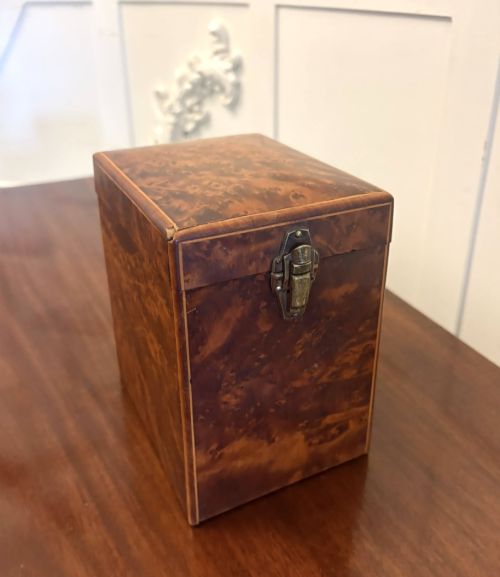
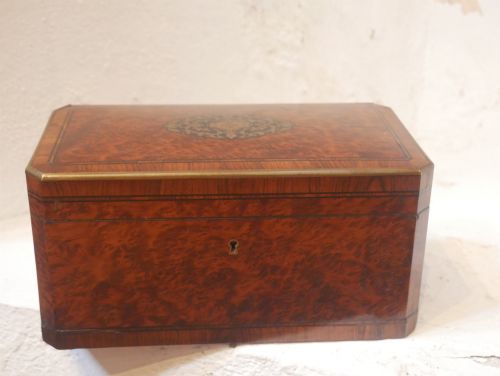
Makers shaped these vessels from dense hardwoods such as mahogany, rosewood, walnut and yew, often augmenting the exteriors with brass stringing or mother of pearl detail. Many surviving examples retain internal mixing bowls and lidded canisters intended for blending loose leaves before brewing.
How they were made
Cabinetmakers constructed the main body using solid timber frameworks or panelled veneers of mahogany, rosewood and satinwood, joined at the corners with precise dovetails. They integrated secondary softwoods for internal partitions and lined compartments with foil or paper to preserve the aroma of the contents.
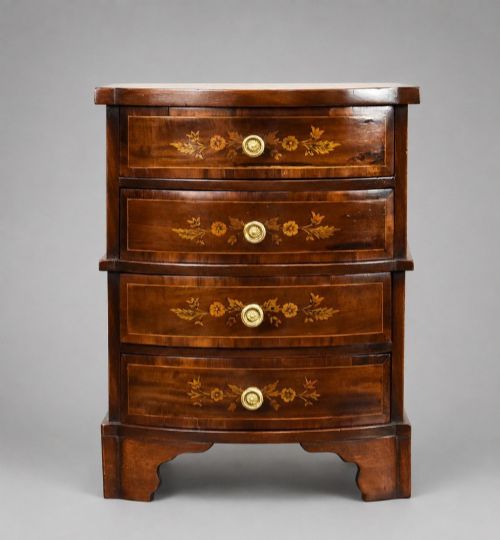
Surface ornamentation relied on meticulous woodworking techniques including Tunbridge ware micro-mosaic banding, brass inlay set flush into the grain, and hand-carved shell motifs. Metal elements such as lion mask handles, escutcheons and working lever locks were secured with small brass pins and screws.
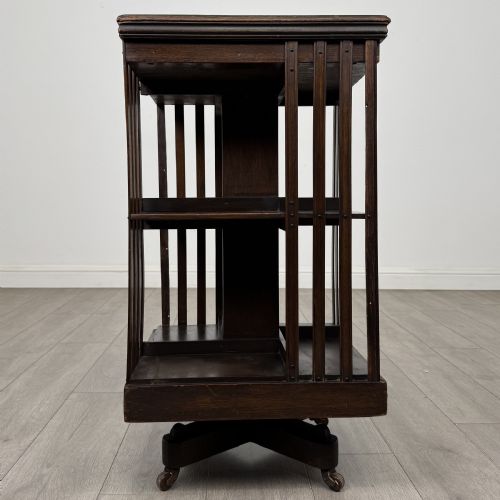
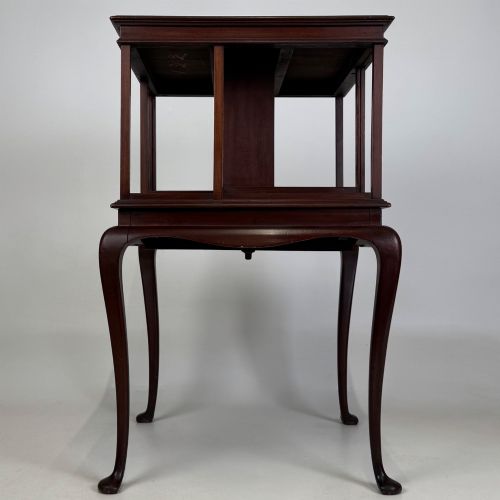
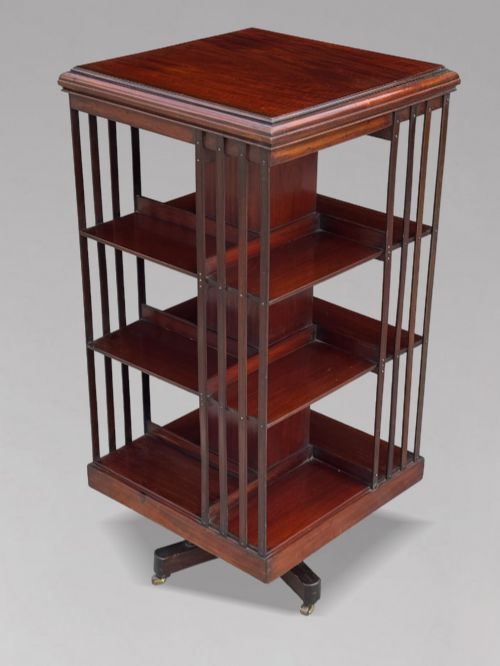
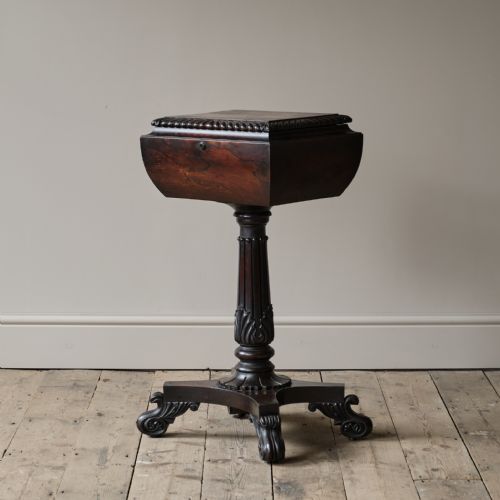
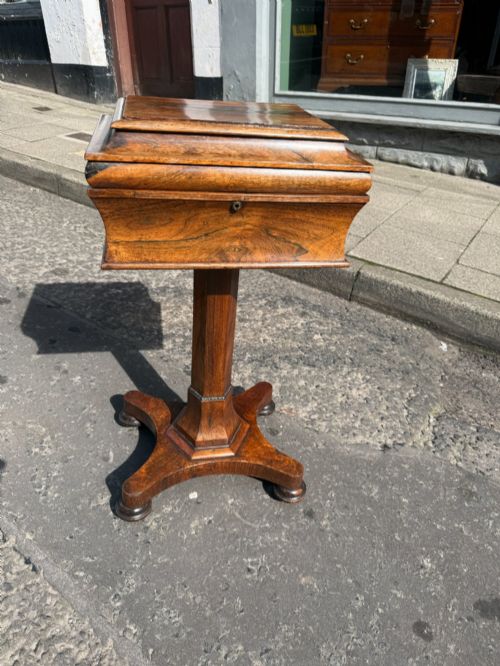
Container forms range from simple lidded tea chests and spice boxes to revolving bookcases and tall standing teapoys.
What varies in quality
The grade of an antique wood caddy depends heavily on the selection of timber, such as heavily figured burr yew or rich grain rosewood, matched evenly across the lid and sides. Superior examples display crisp brass inlay without gaps and retain their original working locks, internal crystal mixing bowls and matching secondary lids.
Lesser pieces show simpler construction with plain mahogany veneers, replaced hardware, or missing internal components where canisters and bowls have been lost over time. The precision of the joinery and the survival of the original French polished finish mark the distance between standard production boxes and workshop pieces.
Tahan Paris·Mappin & Webb·Henry Hollamby·Gillows·Asser & Sherwin
The Antique Wood Caddy Glossary
- Sarcophagus shape
- A box profile featuring a sloping, flared lid reminiscent of a stone coffin, popular during the Regency period. This form offered generous internal depth for multiple tea compartments and a central bowl.
- Teapoy
- A small stand or table designed specifically to support a tea caddy, often fitted with a pillar and claw foot. They lifted the storage chest to a convenient height beside the fireplace or tea table.
- Tunbridge ware
- Woodworking craftsmanship involving thousands of tiny coloured wood prisms glued together to form geometric or pictorial mosaics. It takes its name from the Kent town where specialists produced these detailed surface decorations.
- Escutcheon
- A flat plate of brass surrounding a keyhole to protect the surrounding wood from wear. On these boxes, they frequently double as decorative focal points on the front panel.
- Mixing bowl
- A glass or crystal vessel fitted into the centre of the caddy interior. Hosts utilised this bowl to blend different varieties of dry tea leaves before transferring them to the teapot.
Antique Wood Caddy: Frequently Asked Questions
What were antique wood caddies used for?
These boxes stored dry tea leaves when tea was a costly commodity kept under lock and key by the head of the household.
Servants brought the caddy to the parlour where the mistress of the house mixed the leaves before brewing.
Why do some caddies have glass bowls?
The central glass or crystal bowl served as a mixing vessel for combining different grades of loose tea leaves.
It could also hold spent leaves or act as a rinsing basin between infusions during tea service.
How do I tell Regency caddies apart from Victorian ones?
Regency examples frequently feature sarcophagus silhouettes with bold brass inlay, lion mask ring handles, and rich rosewood veneers.
Victorian pieces often lean towards heavy Gothic revival influences, Tunbridge ware panels, or simpler rectangular forms with mother of pearl escutcheons.
Can I use an antique caddy for tea storage today?
Modern dried tea loses its aroma if stored in unsealed antique compartments that lack airtight seals.
Collectors generally use them to store jewellery, letters, or small keepsakes while preserving the original paper and foil linings inside.