

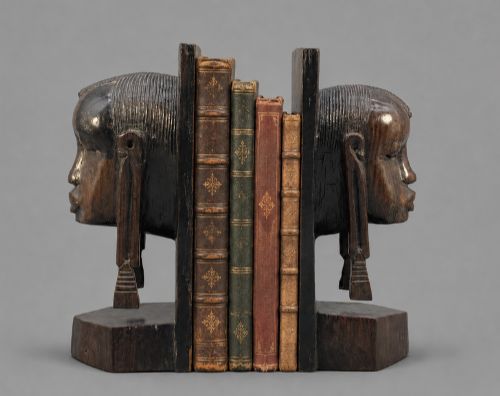
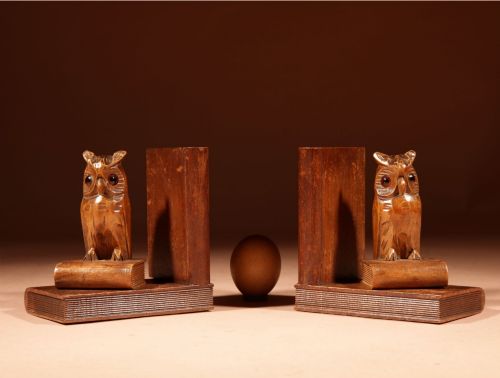
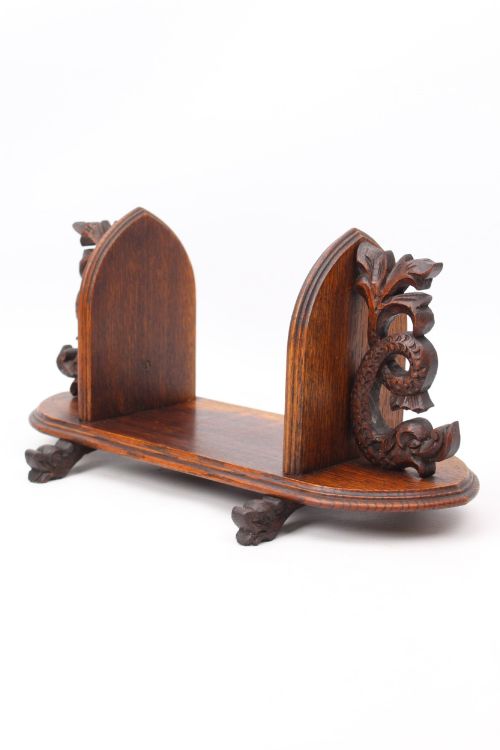
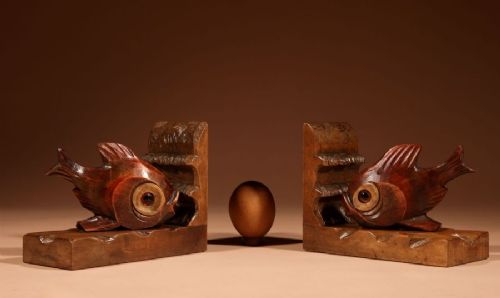


Antique Wood Bookends
Solid antique wood bookends keep heavy libraries in order while bringing carved animals and architectural forms to the desktop.
Antique Wood Bookends
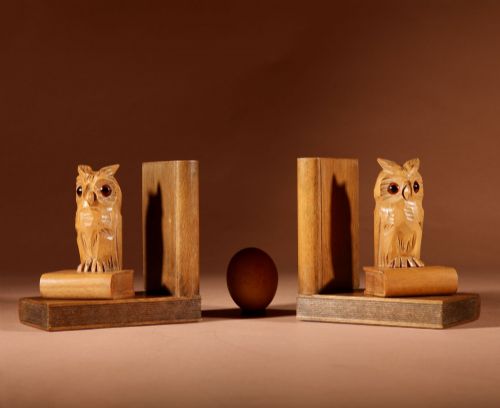
Antique wood bookends bring carved fauna, architectural motifs and extending slides to library shelves. These desktop accessories hold upright volumes using timber platforms and weighted bases.
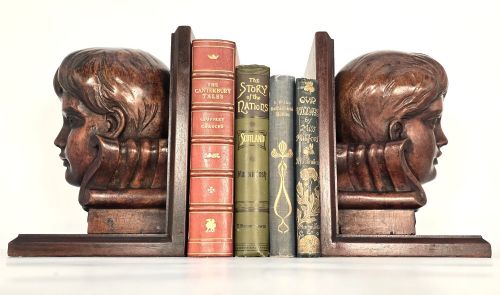
Most examples date from the Victorian and Edwardian eras through to the Art Deco period. Common forms include matched pairs of carved animals, extending book slides and Gothic architectural fragments.
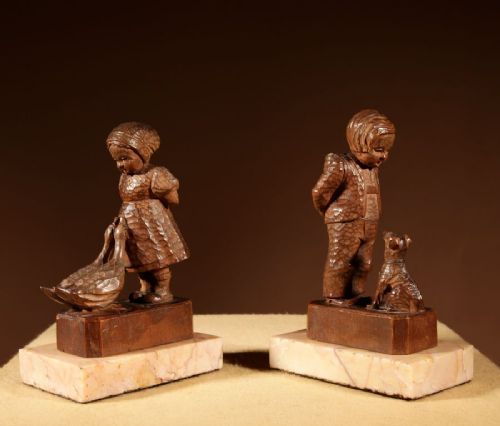
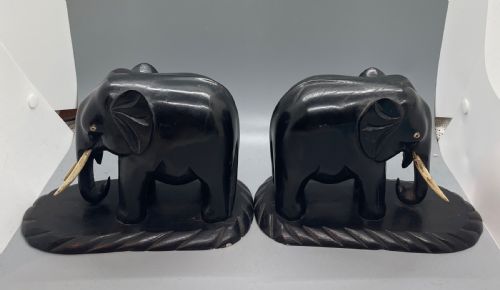
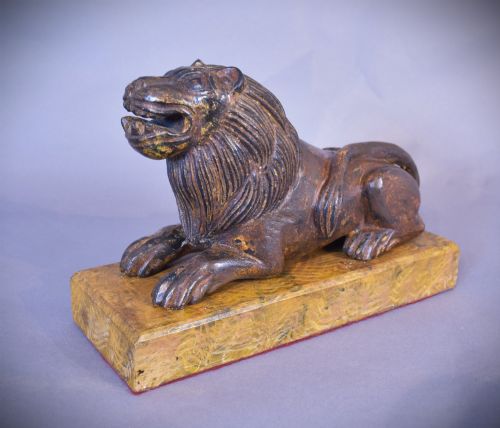
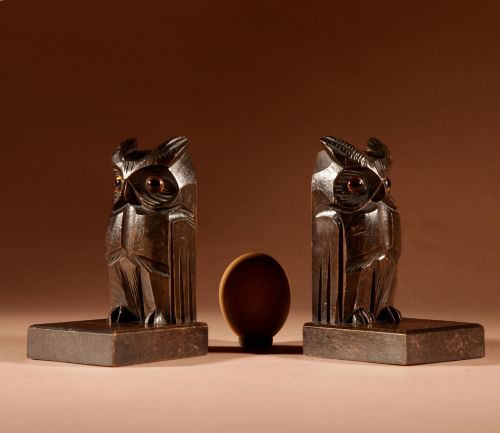
Makers utilised regional timbers to shape subjects ranging from domestic pets to exotic elephants and owls. The selection spans straightforward oak stands to ornate Black Forest carvings.
How they were made
Carvers shaped these items from native and exotic timbers such as oak, mahogany, olive wood, ebony and linden wood. Artisans employed hand chisels to render detailed feathers, fur and architectural tracery.
Extending book slides relied on sliding wooden mechanisms to adjust length across desktop surfaces. Heavier pairs incorporated dense tropical hardwoods or added internal weights to secure heavy folios.
Surface treatments included ebonising, fine penwork in the chinoiserie style and polished natural wood finishes. Metal accents such as brass hinges or gilt bronze mounts occasionally reinforced wooden joints and bases.
Antique Wood Bookends Retail Price Guide 2026
Typical asking prices for wood bookends among the pieces listed under this phrase on Sellingantiques today, from the lower quarter to the upper quarter. They describe what is for sale here now, not the wider market.
Current listings feature hardwood, oak, linden wood and glass across Victorian, Edwardian, Art Deco and nineteenth-century periods.
What varies in quality
The depth of hand carving dictates the visual success of animal and architectural subjects. Sharp detail in feathers, expressions and muscular forms separates masterwork carvings from routine production pieces.
Timber selection and grain matching across a pair govern the integrity of the object. Superior examples utilise dense, well-seasoned hardwoods with stable joints that withstand the lateral pressure of heavy books.
Tiffany and Co
The Antique Wood Bookends Glossary
- Book slide
- An extending desktop rack designed to hold a varying number of volumes between two upright ends. These units often feature accordion mechanisms or sliding wooden channels.
- Black Forest carving
- Woodwork originating from central Europe, particularly associated with realistic animal sculptures such as bears, owls and dogs. These pieces display deep relief and characteristic texturing.
- Anglo-Indian
- Furniture and decorative objects produced in the Indian subcontinent using traditional local carving techniques applied to British forms. Common timbers include coromandel and ebony.
- Gothic Revival
- A nineteenth-century style drawing inspiration from medieval architecture and ecclesiastical design. Pieces often incorporate pointed arches, tracery and heavy oak construction.
Antique Wood Bookends: Frequently Asked Questions
How do I date antique bookends?
Dating relies on stylistic clues, timber choice and mechanical construction methods. Victorian pieces often show Gothic Revival motifs or extendable scissor actions, while Art Deco examples favour stylised animal forms from the early twentieth century.
Examining the underside and fixing methods reveals period-specific joinery and hardware. Comparing the timber species to known regional production eras helps narrow down the decade of manufacture.
What woods were commonly used?
Carvers utilised both local European timbers and dense tropical hardwoods imported through global trade networks. Oak, mahogany, pine and linden wood appear frequently alongside exotic varieties like ebony, olive wood and coromandel.
Softer woods like linden suited intricate Black Forest animal carvings, while dense ebony provided weight and dark polish for sculptural elephant pairs. Grain patterns and natural colour dictate the visual character of each timber.
How do book slides work?
Extending book slides feature interlocking wooden channels that expand or contract to fit a shelf row. Users slide the end supports outward to insert more volumes or inward to clamp the row securely.
This mechanical design allows the accessories to adapt dynamically to changing library sizes on a desk. Brass hinges or felt-lined runners often facilitate smooth movement along the base.
Where should I place wooden bookends?
These pieces function best on desktop surfaces, mantelpieces or sturdy open shelving where their carved details remain visible. Placing them on stable, flat planes prevents tipping when supporting heavy rows of volumes.
Keeping them away from direct heat sources protects the timber from splitting or warping over time. Regular placement near natural light highlights the depth of the hand carving.