


Antique Wood Blanket Trunk
These heavy wooden storage chests and coffers have crossed oceans and held domestic linens for centuries.
Antique Wood Blanket Trunk
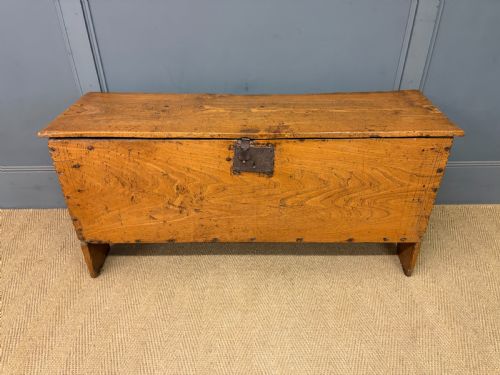
When you search for an antique wood blanket trunk, you encounter a lineage of domestic and travel storage spanning from sparse seventeenth-century coffers to nineteenth-century campaign chests. The forms range from plain joined domestic boxes to heavy colonial transport trunks bound in metal and brass.
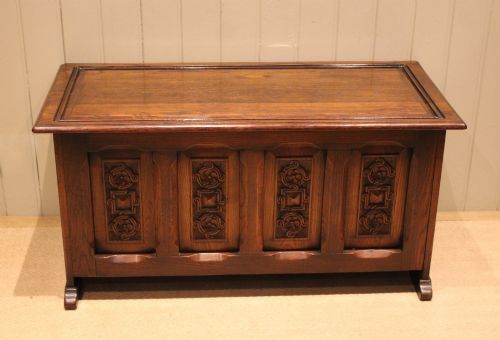
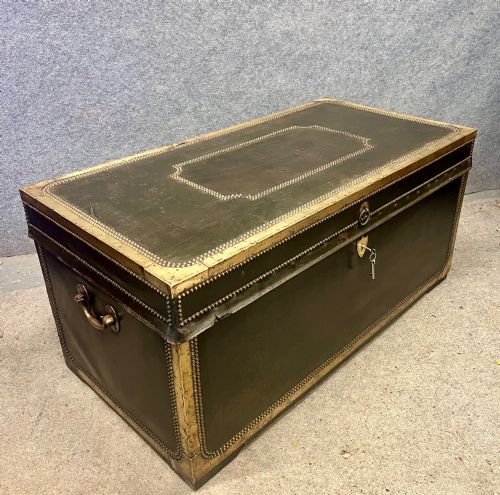
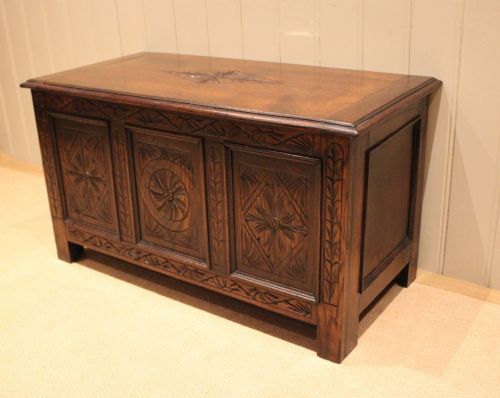
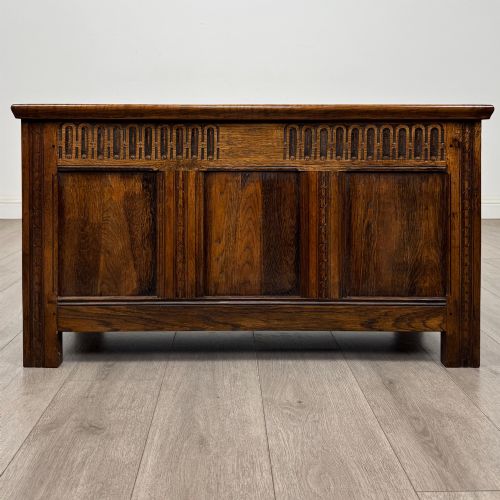
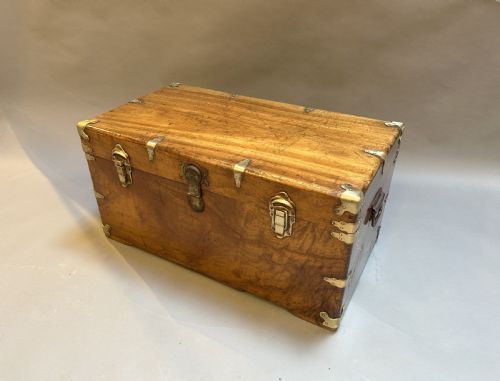
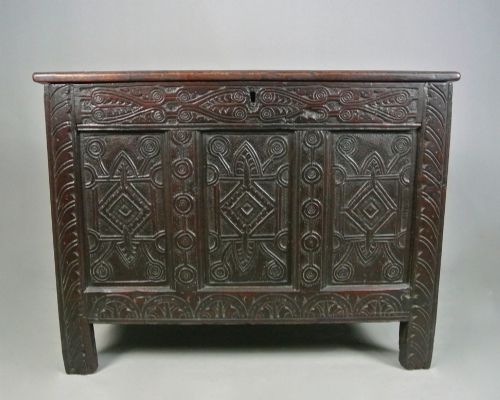
The most common examples on this page are sturdy oak coffers from the seventeenth and eighteenth centuries, alongside camphor wood trunks built for nineteenth-century military campaigns. These pieces served as movable closets and security chests before fitted wardrobes became standard in homes.
Construction and Materials
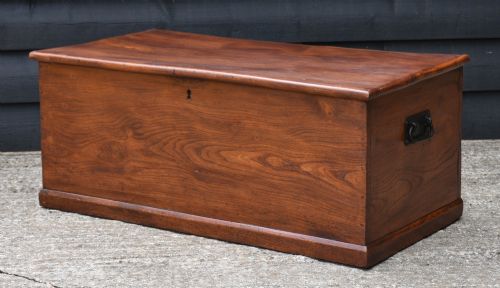
Carpenters built these trunks from native timbers like oak and elm, or exotic imported woods such as camphor, teak, padouk, and mahogany. Early domestic boxes rely on joined panel construction or simple six-plank assemblies secured with wooden pegs.
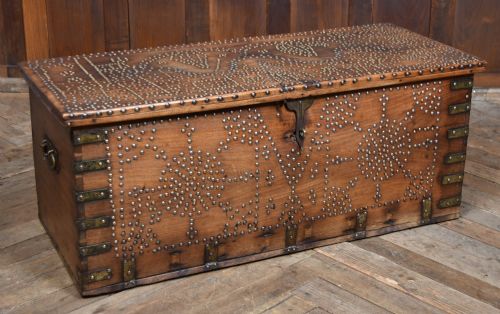
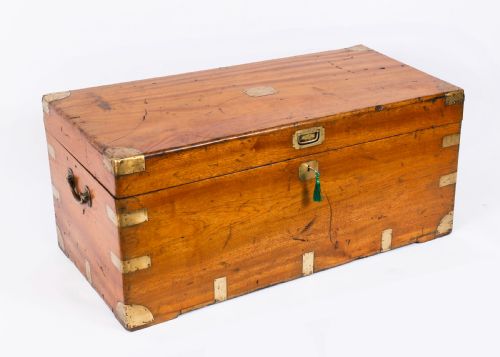
Travel trunks utilise exposed metal hardware, including heavy brass corners, strapwork, and iron banding designed to endure rough transport. Linings often incorporate secondary softwoods, while decorative examples display surface carving, paint, lacquer, or mother-of-pearl inlay.
Listings include seventeenth-century oak coffers alongside nineteenth-century camphor wood campaign trunks and painted metal steamer trunks.
Gradations in Quality
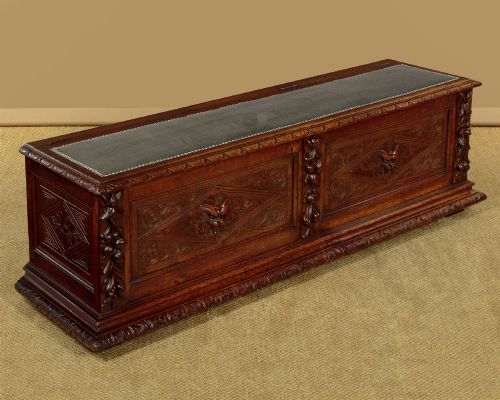
The standard of a trunk depends on the integrity of its timber selection and the retention of original structural surfaces. Trunks carved deeply by hand or fitted with bespoke brass campaign hardware sit at the upper end of the scale.
Patina and originality separate utilitarian survivors from exceptional examples, as replacement hinges, altered bases, or stripped finishes diminish historical weight. The complexity of regional joinery and regional carving marks the distinction between standard workshop output and master cabinet work.
The Antique Wood Blanket Trunk Glossary
- Coffer
- A heavy wooden box with a hinged lid, traditionally used for storing valuables or linens. These pieces form the foundation of early domestic furniture.
- Campaign trunk
- A portable chest built in sections or fitted with carrying handles for military officers on the move. They frequently feature reinforced brass corners to withstand transit.
- Mule chest
- A storage box combining a deep drawer beneath a hinged compartment. This form emerged in the eighteenth century to provide more accessible storage.
- Padouk
- A dense tropical hardwood known for its reddish colour, utilised in overseas trade chests. It resists pests and moisture.
- Six-plank coffer
- A primitive box constructed from six individual boards joined simply at the edges. This method represents early vernacular cabinet making.
Antique Wood Blanket Trunk: Frequently Asked Questions
How do I date an oak coffer?
Dating an oak coffer involves examining the construction methods, tool marks, and style of carving on the panels. Seventeenth-century examples often use pegged frame-and-panel assembly and display geometric or strapwork carving.
Later pieces from the eighteenth and nineteenth centuries show smoother machine sawing and different hinge mechanisms. The presence of original forged iron hardware also helps anchor the piece to a specific era.
Why are campaign trunks made of camphor wood?
Camphor wood was selected for military campaign trunks because its strong natural aroma repels insects and protects stored woolen uniforms from damage in humid climates. The timber is also relatively lightweight yet durable.
These trunks were reinforced with brass bands and flush handles to survive rough handling during overseas transport. British officers relied heavily on them during service in India and the Far East.
How do I use an antique trunk today?
Antique trunks function effectively as living room coffee tables, bedroom blanket chests, or hallway storage for shoes and winter wear. Their sturdy flat lids provide practical surface area.
Placing them in modern interiors adds textural warmth and hidden storage capacity. Care involves keeping them away from direct heat sources to prevent the wood from splitting.