




Antique Wood Angels
Antique wood angels bring devotional presence and sculptural warmth into rooms, spanning centuries of sacred and decorative carving traditions.
Antique Wood Angels
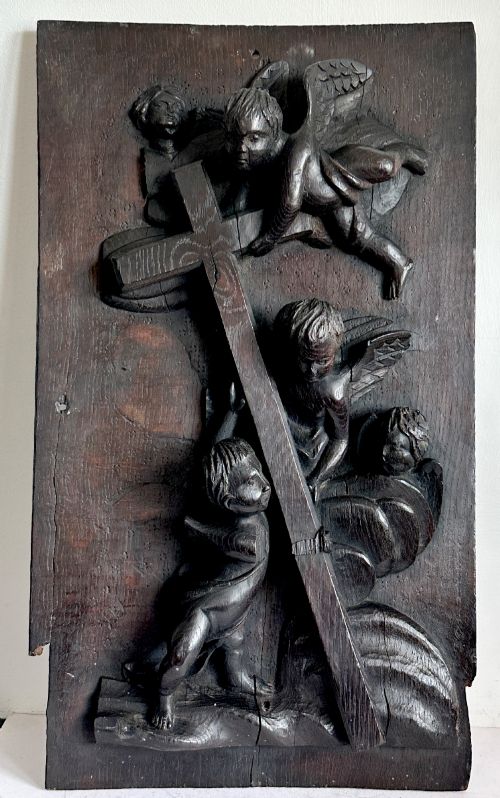
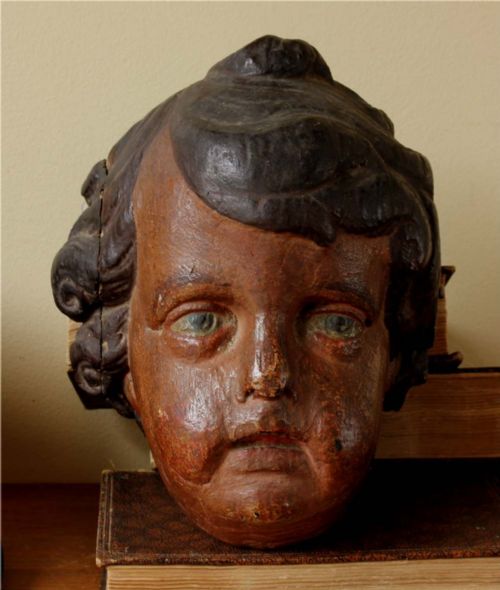
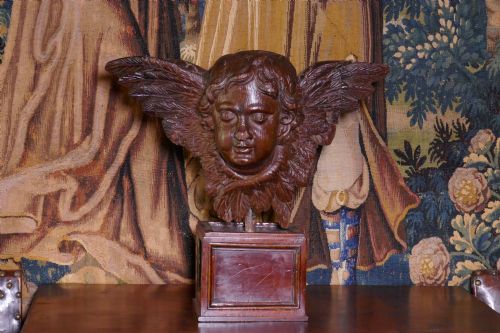
When you search for antique wood angels, you encounter carved representations drawn from religious and decorative traditions across Europe and Asia, ranging from single devotional figures to architectural fragments. The pieces on this page include statues, wall reliefs, wall brackets, and panels originating from the sixteenth century up through the early twentieth century.
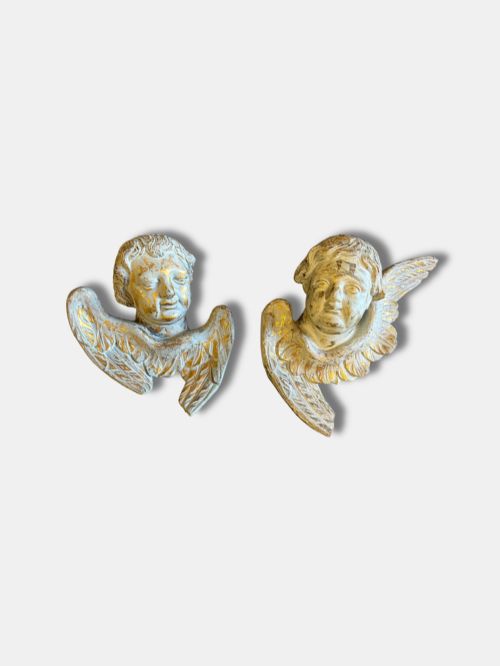
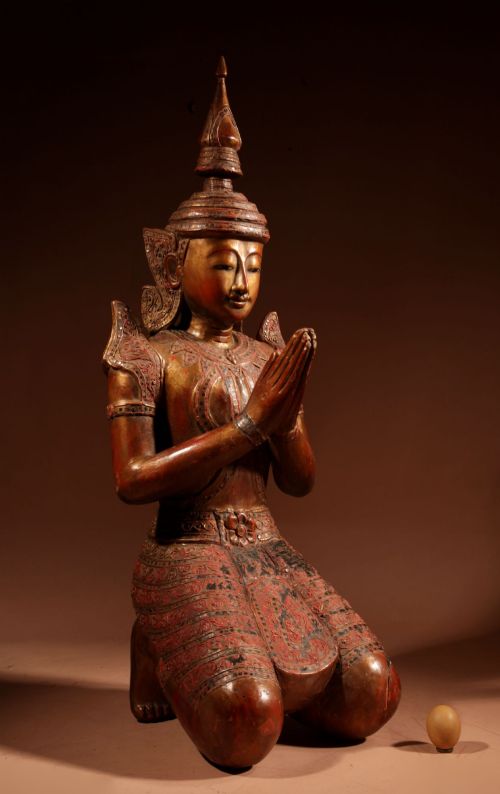
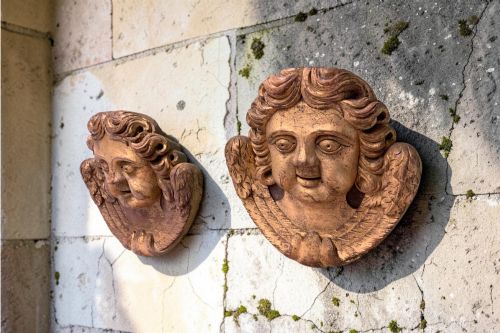
The most common forms you will meet are individual cherubs, putti heads, and pairs of kneeling or winged figures created for ecclesiastical settings or domestic display. These encompass French church carvings, Italian Baroque panels, Thai guardian figures, and heavy oak panels from earlier centuries.
Makers shaped these subjects from solid blocks of timber or assembled them as architectural salvage, adapting them for altars, walls, and private devotional spaces. Their functions shifted over time from active religious veneration in churches and shrines to decorative interior elements in Victorian and later homes.
How they were made
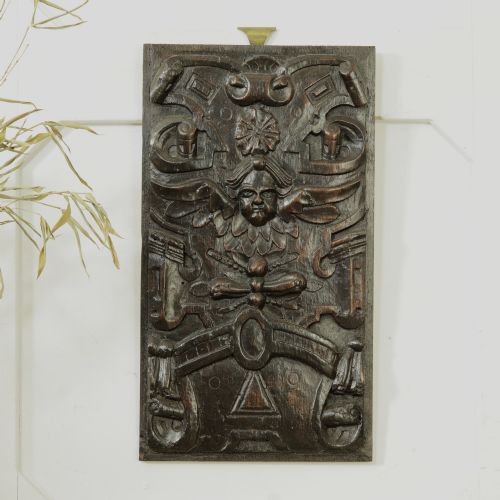
Carvers shaped these figures primarily from dense timbers like oak and mahogany, using hand chisels and gouges to establish the primary volumes and deep drapery folds. Many pieces rely on heavy oak panels where the figures emerge in high relief directly from the background timber.
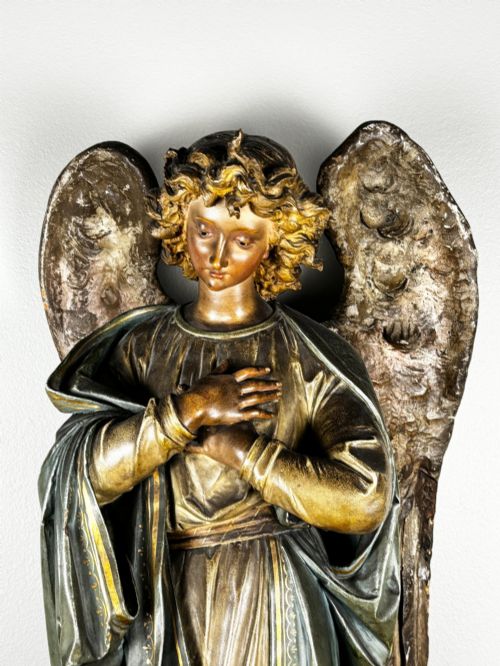
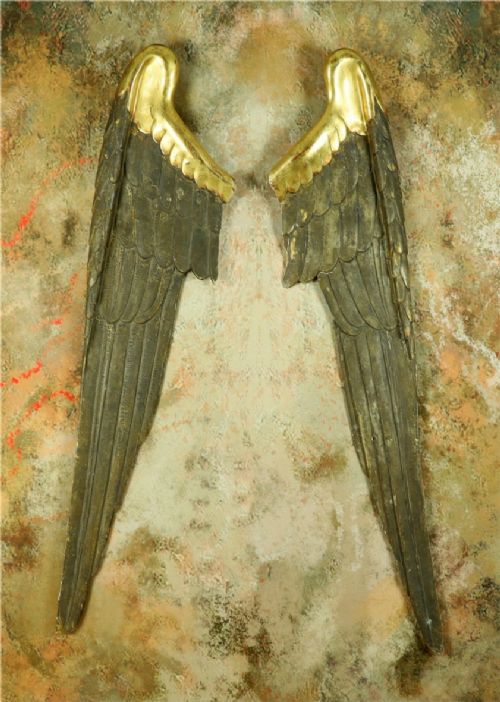
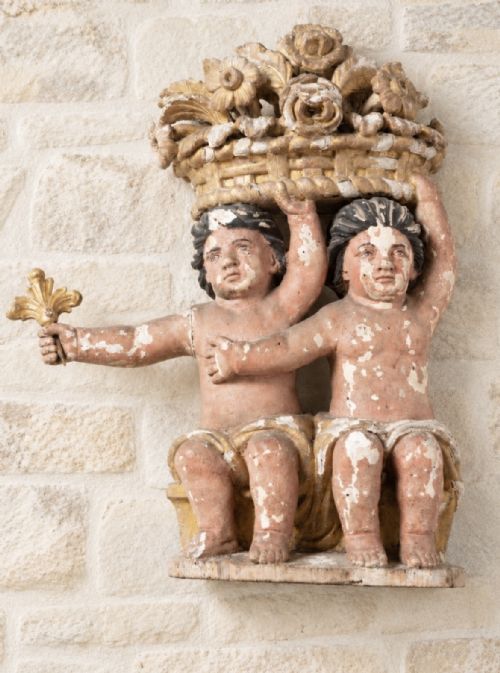
Surface decoration frequently involved layers of gesso applied to the timber, followed by gold leaf or polychrome paint schemes that added colour and divine brilliance to the carved anatomy. Silvered finishes and layered pigments also appear on eighteenth-century figures to simulate rich textiles and flesh tones.
Many items survive as fragments from larger ecclesiastical furnishings, meaning arms, wings, or mounting brackets were joined to main bodies with traditional pegs and adhesives before receiving their final surface finishes.
Antique Wood Angels Retail Price Guide 2026
Typical asking prices for wood angels among the pieces listed under this phrase on Sellingantiques today, from the lower quarter to the upper quarter. They describe what is for sale here now, not the wider market.
Some nineteenth-century Italian angels appear to be moonlighting from choir practice, captured mid-expression with surprisingly cheeky grins.
What varies in quality
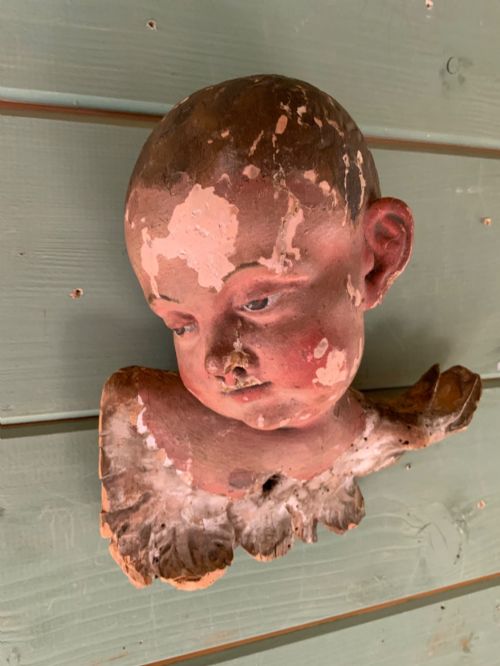
The preservation of original surface treatments, such as untouched polychrome paint or gold leaf over gesso, dictates the visual integrity of an antique wood angel. Later repainting or stripped timber surfaces alter the historic character and alter the visual harmony of the piece.
The integrity of the timber ground itself, including stability against historic woodworm and the retention of original mounting points or structural backing, influences the overall substance of the survival.
The Antique Wood Angels Glossary
- Putto
- A representation of a chubby male child, often winged, found frequently in Renaissance and Baroque art. These figures often act as playful or devotional attendants in religious compositions.
- Polychrome
- Painted in several colours. This surface treatment brings realistic flesh tones and garment hues to carved wooden sculptures.
- Gesso
- A plaster mixture applied to wood surfaces to prepare them for gilding or painting. It provides a smooth base for gold leaf and fine detail work.
- Ecclesiastical
- Relating to the Christian Church or its clergy. These items were originally made for use inside religious buildings rather than private homes.
- High-Relief
- Sculptural elements that project far from their background plane. This technique creates strong shadow and three-dimensional presence on flat panels.
Antique Wood Angels: Frequently Asked Questions
How were antique wood angels used?
These figures originally served devotional functions within churches, domestic shrines, and monastic settings, often mounted near altars or integrated into architectural woodwork.
Over subsequent centuries, many were removed from their original ecclesiastical contexts and repurposed as decorative wall art, brackets, or standalone sculptures in domestic interiors.
Can I hang wall brackets safely?
Wall brackets and panels usually feature integrated hanging fixings or structural ledges designed for wall mounting. You should inspect the rear attachment points to ensure the aged timber and any joined brackets remain stable enough to support the weight.
Using appropriate wall anchors suited to your plaster or masonry ensures the piece hangs securely without straining historic joints.
What is the difference between putti and cherubs?
Putto refers to secular or classical chubby child figures derived from Italian art, while cherubs traditionally denote celestial winged beings of a higher ecclesiastical order.
In antique market terminology, the two terms are often used interchangeably to describe winged child sculptures from the Baroque and later periods.