




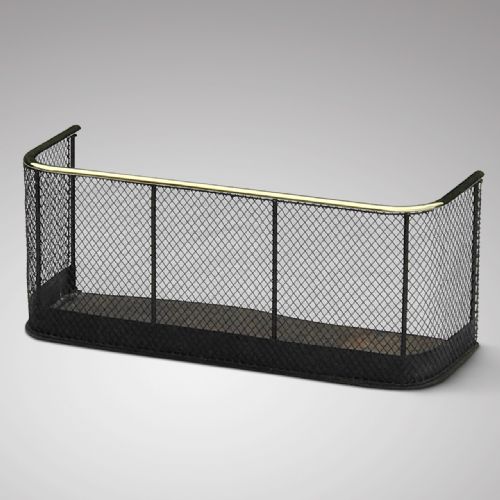
Antique Wire Fender
An antique wire fender protects a room and its occupants with a woven metal barrier framed in brass or iron.
Antique Wire Fender
An antique wire fender is a protective hearth accessory designed to contain sparks and keep children or pets at a safe distance from an open fire. These pieces take the form of low nursery guards or enclosed fire screens, functioning as essential safety items in period domestic spaces.
The versions most commonly met on this page date from the nineteenth century, including Victorian, Edwardian, and Regency examples. They typically combine fine wire mesh with substantial metal frames, creating a semi-transparent barrier that allows heat to circulate freely into the room.
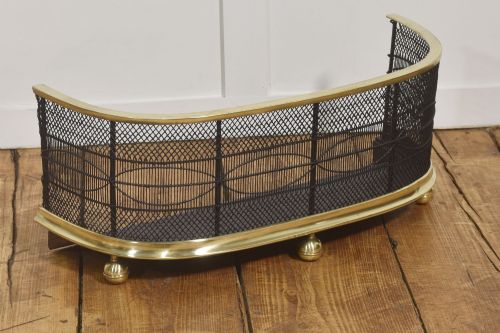
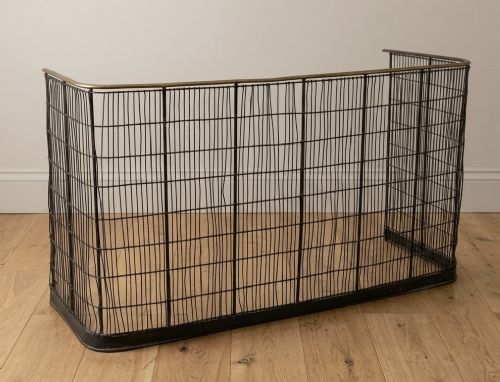
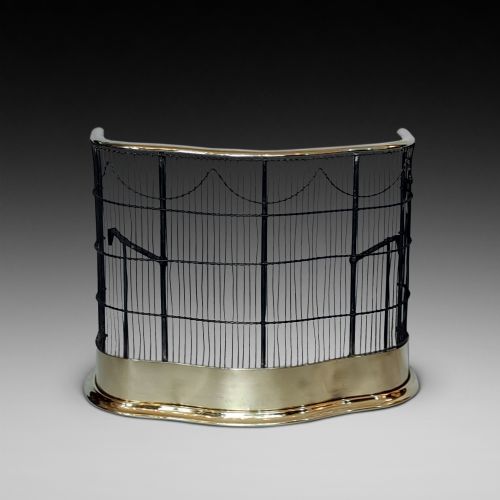
Makers fashioned these guards in various shapes to suit different hearth layouts, ranging from straight fronts to curved, bowed, and serpentine designs. Many incorporate a polished brass top rail or rim, which adds a decorative finish to the functional wirework structure.
How they were made
Makers constructed the primary frames of these pieces using wrought iron, steel, or brass, shaping the metal to form rigid boundaries that could withstand daily hearth use. Iron and steel provided sturdy structural support, while brass was frequently utilised for top rails, rims, and decorative mounts.
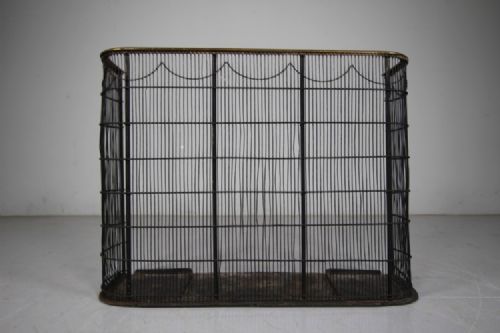
The enclosing panels were formed from woven iron wire, steel wire, or fine wire mesh, secured tightly within the outer metal framework. This mesh work required careful tensioning to ensure the barrier remained firm and even across the entire face of the guard.
Listings feature nineteenth-century and Edwardian pieces constructed from brass, iron, and steel wire mesh in Victorian and Regency styles.
What varies in quality
Quality in an antique wire fender rests primarily on the weight of the frame and the tightness of the wire weaving. Finer examples feature heavier brass top rails and robustly joined metal frames that maintain their rigidity over decades of use.
The refinement of the mesh also distinguishes pieces, with evenly woven wire panels representing higher standards of period craftsmanship than loose or unevenly spaced gridwork.
The Antique Wire Fender Glossary
- Wire mesh
- A woven grid of fine metal wires forming the main protective screen of the fender. This material allows maximum visibility of the fire while blocking stray embers.
- Top rail
- The upper horizontal moulding, frequently cast or polished brass, running along the top of the guard. It provides a convenient handhold and a decorative finish.
- Nursery fender
- An extended protective barrier designed specifically to enclose a hearth completely. These taller guards kept young children safely away from open flames.
- Serpentine
- A gentle curving shape that undulates inward and outward along the front edge of the fender. This contour softened the rigid lines of the hearth.
- Wrought iron
- Iron that has been heated and hammered into shape by hand. It provides durable structural integrity for the frames of older fire guards.
Antique Wire Fender: Frequently Asked Questions
What is an antique wire fender used for?
An antique wire fender is placed around an open fireplace to contain sparks and prevent children or pets from getting too close to the fire. They served as essential domestic safety guards in nineteenth-century homes.
These guards balance protection with practicality by allowing warmth to radiate into the room through the wire mesh while maintaining a secure barrier against the flames.
How do I date an antique wire fender?
Dating relies on observing the materials, construction methods, and stylistic cues present in the frame and wirework. Pieces from the Regency period often show distinct neoclassical framing, whereas Victorian and Edwardian examples incorporate brass rims and specific mesh patterns.
Comparing the construction techniques of the metal frame and the gauge of the wire helps place the piece within the nineteenth or early twentieth century.
What styles of wire fenders exist?
Styles range from simple straight-fronted guards to elaborate serpentine and bowed designs that follow the contours of the hearth. Many feature polished brass top rails combined with iron or brass wire mesh.
Some larger nursery variants include integrated rails or specific frame heights designed to enclose the entire fireplace hearth area securely.
How do I clean a brass and wire fender?
Cleaning requires gentle dusting of the wire mesh using a soft brush to remove accumulated soot and debris without damaging the woven structure. The brass top rail and frame can be polished separately with a suitable metal cleaner, taking care to avoid staining the wirework.
Harsh abrasives should be avoided to preserve the original patina and integrity of the aged metals.