






Antique Windsor Rocker
An antique windsor rocker brings substantial country character and steady movement to a fireside or bedroom.
Antique Windsor Rocker
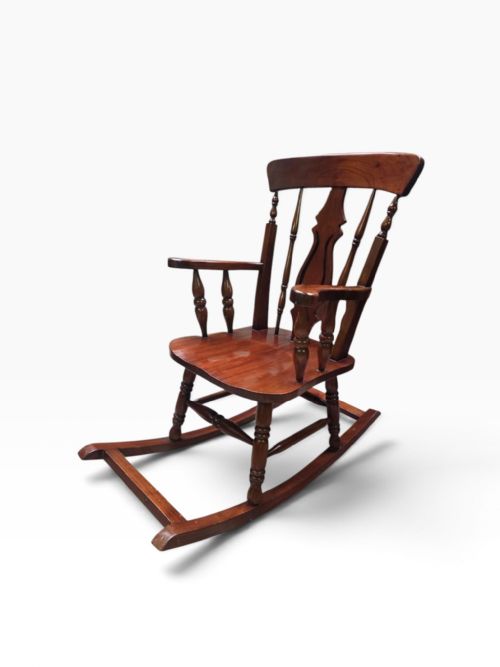
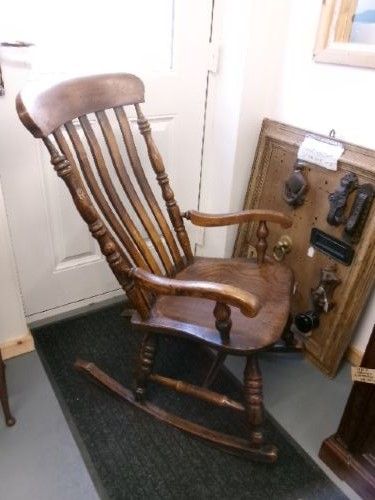
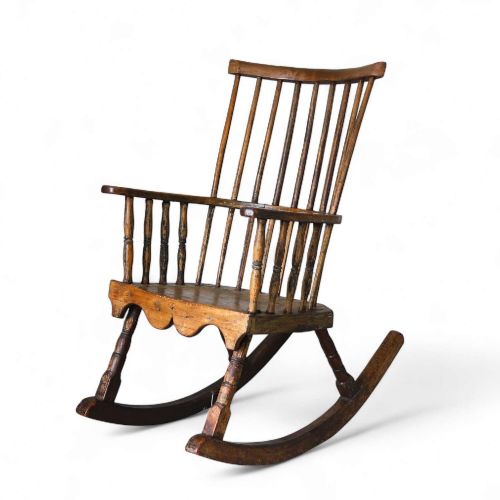
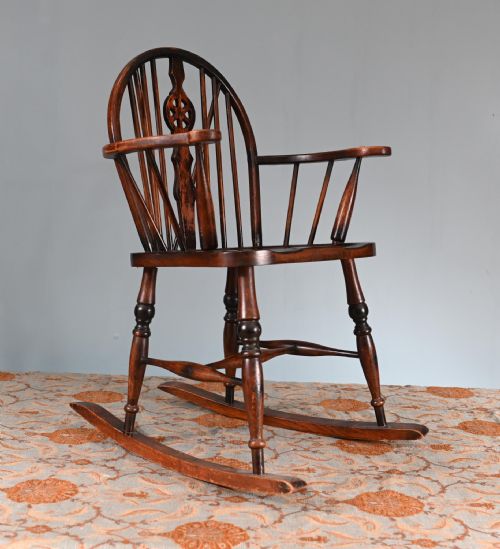
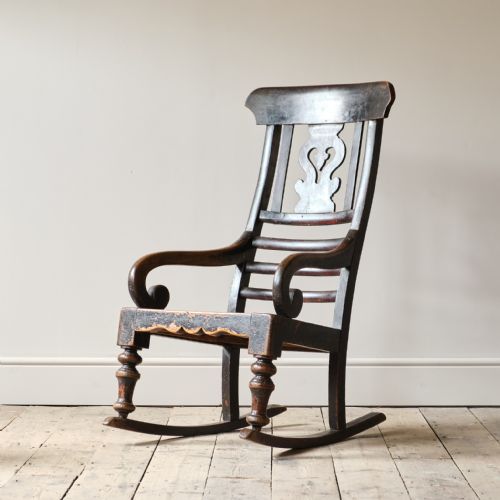
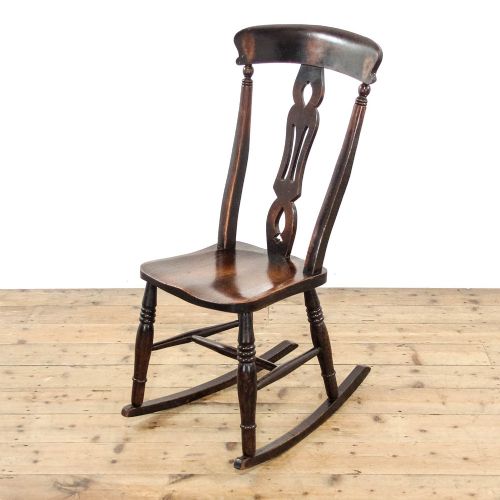
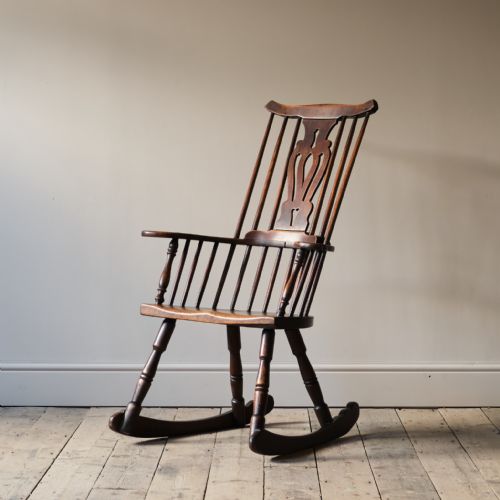
An antique windsor rocker combines the traditional pegged spindle or comb-back construction of a country seating chair with curved wooden rockers fitted beneath. The examples seen here range from early elm childs rocking windsor chairs and Thames Valley pieces to robust Victorian farmhouse and Yorkshire models.
Buyers encounter various vernacular styles, including wheelback, spindle back, and primitive comb-back forms. These chairs serve primarily as fireside seats or nursing chairs, originating from English and Scandinavian country traditions.
The materials span native timbers such as elm, ash, beech, and yew, often paired across a single seat and frame. Most items date from the nineteenth century, though earlier eighteenth-century and later regional variants appear.
How they were made
Maker-joiners built these chairs using distinct timbers for different parts of the frame to balance strength and flexibility. Seats were frequently carved from a single solid block of elm or sycamore, while spindles and legs utilised ash, beech, or oak.
Individual components were turned on a lathe and joined directly into drilled seats using wedged tenons and peg joints. Some regional examples preserve original painted surfaces, while others rely on the natural grain and patina of hardwood.
Listings feature items spanning the eighteenth, nineteenth, and early twentieth centuries, constructed from elm, beech, ash, oak, yew, mahogany, and sycamore.
What varies in quality
Quality rests in the harmony of the timber selection and the retention of original structural components like turned spindles and rockers. Chairs featuring contrasting woods, such as yew or rich mahogany frames paired with elm seats, show greater regional ambition.
The comfort and proportion of the comb-back or spindle back, alongside a well-balanced rocking arc, separate standard utility seating from finer vernacular examples.
The Antique Windsor Rocker Glossary
- Comb-back
- A chair design where the vertical spindles extend upward to support a horizontal top rail resembling the teeth of a comb. This form offers strong back support in primitive vernacular seating.
- Wheelback
- A Windsor chair variation featuring a pierced splat carved or shaped in the outline of a spoked wheel. It became particularly popular during the Victorian period.
- Spindle back
- A style constructed with numerous slender turned wooden uprights forming the backrest. These members are tenoned directly into the seat and top rail.
- Thames Valley
- A geographical attribution for English Windsor chairs known for high-grade construction, often utilising yew wood and refined turning. These pieces represent a distinct regional school of maker craftsmanship.
- Vernacular
- Objects built by local craftspeople following traditional regional patterns rather than strict academic style guidelines. These pieces reflect the specific material availability of their local area.
Antique Windsor Rocker: Frequently Asked Questions
What is a windsor rocker?
A windsor rocker is a traditional wooden seating chair built with a solid carved seat into which legs and back spindles are fitted, mounted on curved rocking pieces. They combine vernacular country chair design with the functional movement of a rocking chair.
Most examples seen on this page originate from nineteenth-century English and Scandinavian workshops, utilising native hardwoods like elm, ash, and beech.
Where were these chairs used?
These chairs served primarily as practical seating in farmhouse kitchens, nurseries, and fireside parlours. Their sturdy construction suited daily domestic life.
Sized variants include standard adult armchairs and smaller childs rocking windsor chairs designed for domestic spaces.
How do I date an antique rocker?
Dating relies on observing construction methods, timber choices, and specific backrest styles such as comb-backs, wheelbacks, or simple spindle arrangements. Eighteenth-century and early nineteenth-century pieces often display distinct Thames Valley or primitive vernacular characteristics.
Victorian examples frequently incorporate heavier proportions and machine-turned components alongside traditional joinery.
Are these chairs comfortable for daily use?
Yes, the sculpted wooden seats and supportive high or low spindle backs provide a solid seating posture. The curved rockers allow a gentle and steady motion.
Placing a small cushion on the elm seat can add extra comfort for prolonged sitting by a fireside.
What woods were used to build them?
Maker-joiners selected different native timbers for specific parts of the chair to ensure structural durability. Elm and sycamore were commonly chosen for carved solid seats because they resist splitting under weight.
Ash, beech, oak, and occasionally yew or mahogany were utilised for the turned legs, arms, and back spindles.