

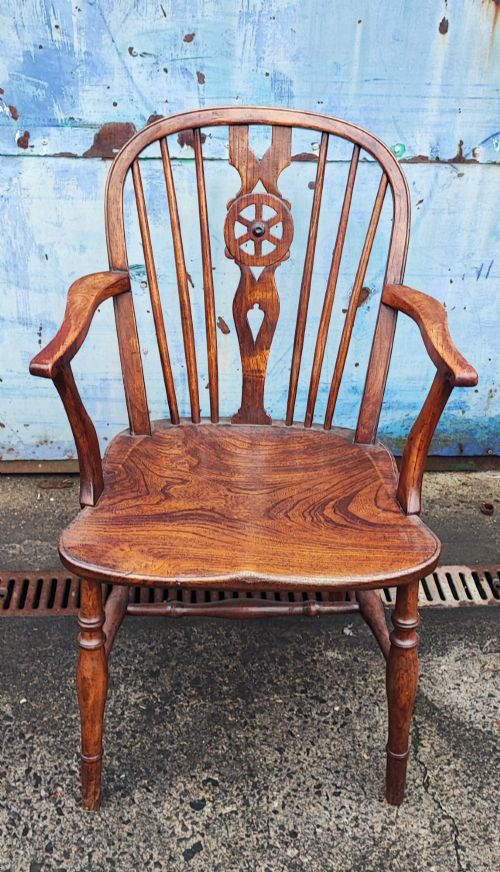
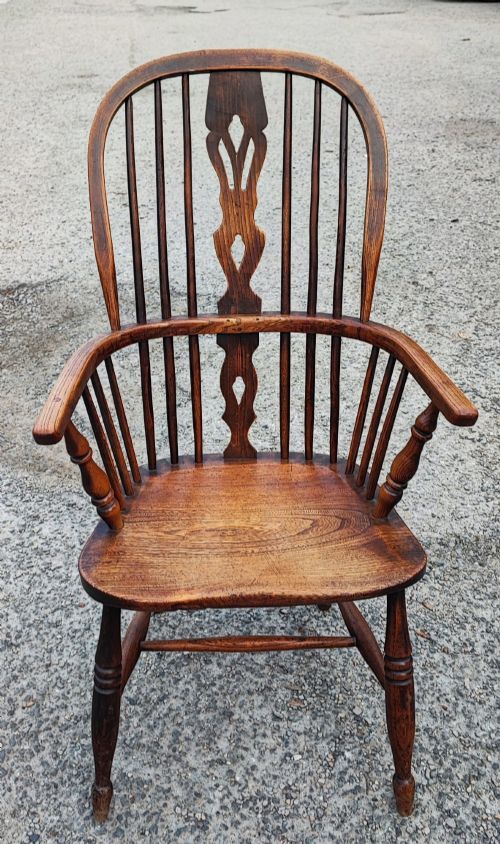
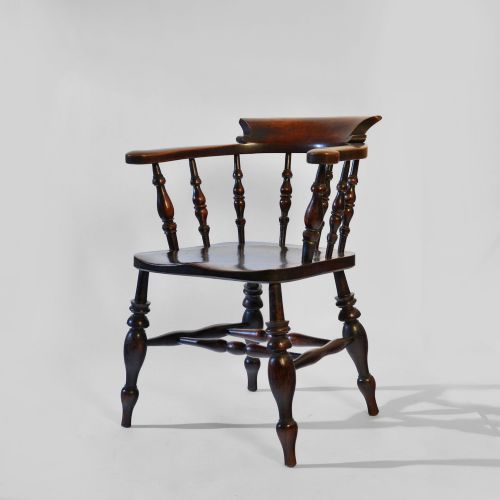
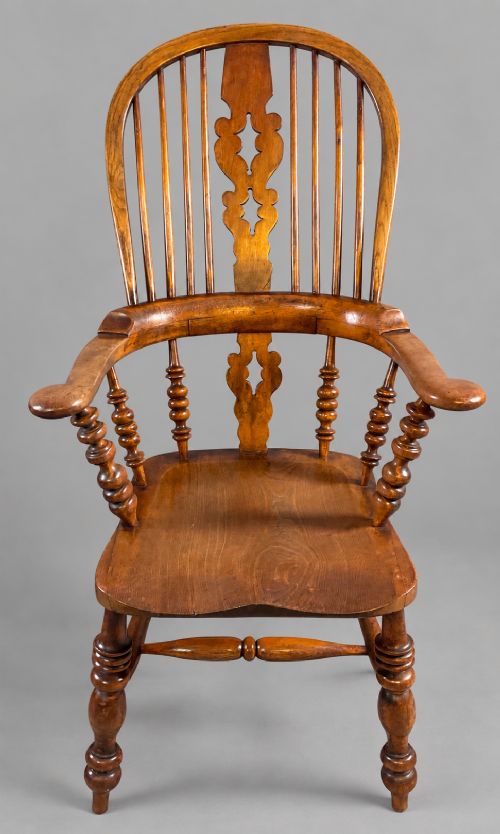
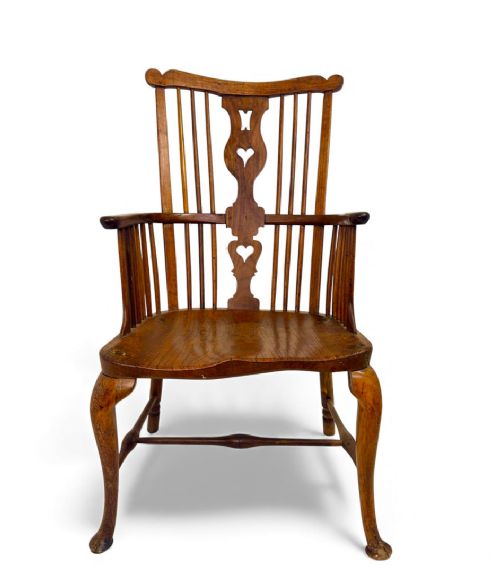
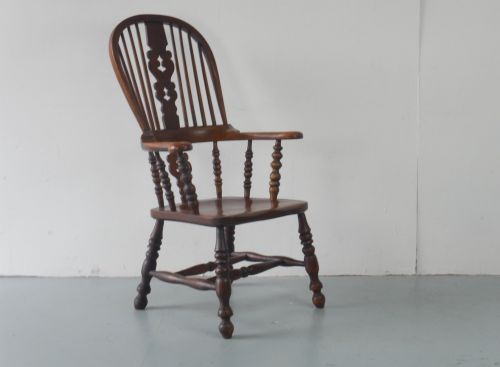
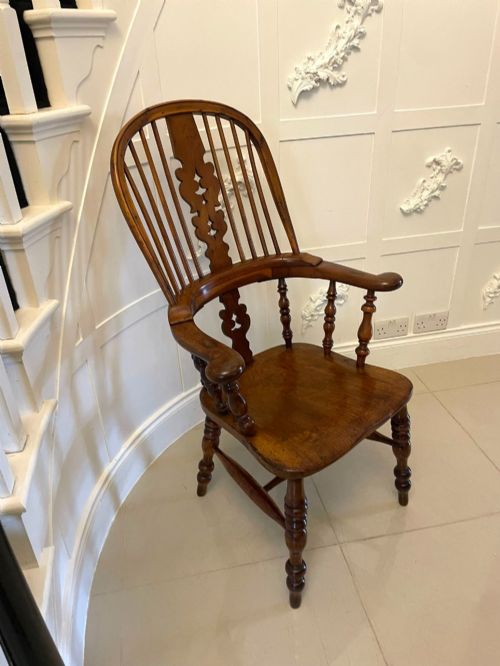
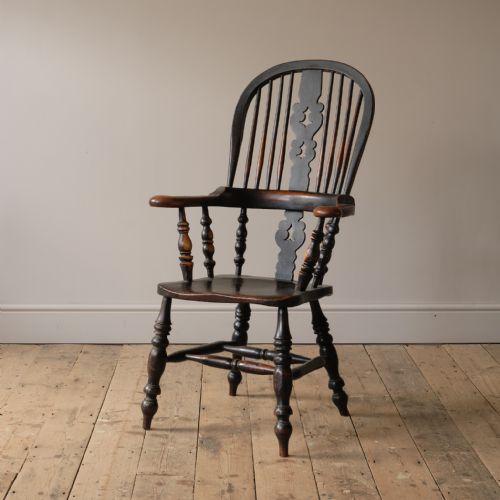


Antique Windsor Arm Chair
These antique windsor arm chair examples offer solid timber construction and honest vernacular design, built for daily use by country makers.
Antique Windsor Arm Chair
An antique windsor arm chair brings robust English country craftsmanship into a room, utilising traditional seating forms shaped by regional makers. You encounter pieces spanning the Georgian, Victorian, and Edwardian eras, with nineteenth-century examples appearing most frequently.
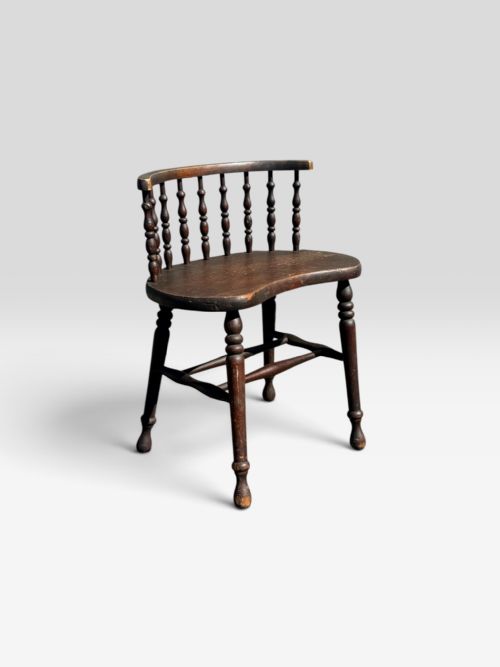
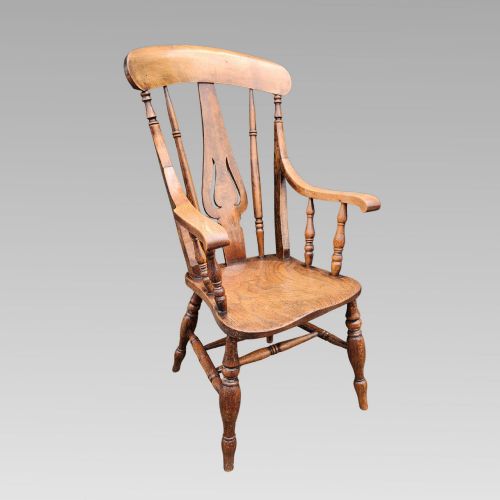
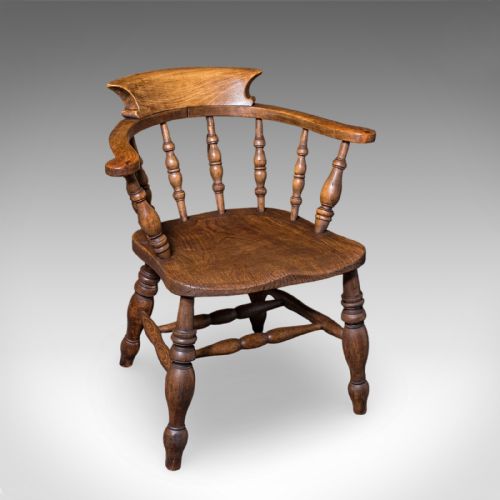
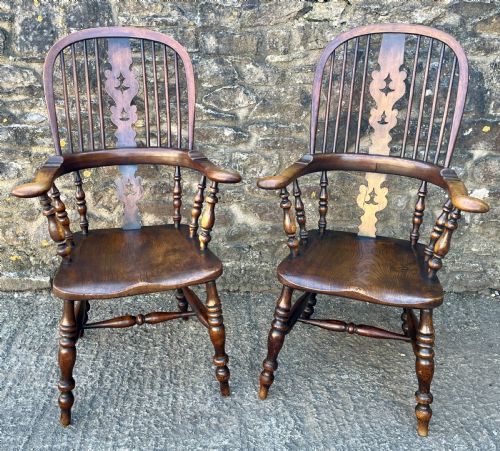
The selection ranges from low back and high back stick designs to broad arm variants and smoker's bow captain's chairs. Regional variations include Thames Valley, Welsh vernacular, and West Country pieces, alongside miniature furniture and rocking chairs.
Makers constructed these seats for utilitarian comfort in farmhouses, cottages, and country houses. Their enduring appeal lies in the combination of sculptural turned spindles, solid plank seats, and steam-bent components.
How They Were Made
Craftsmen built these chairs using a combination of native timbers, pairing solid sculpted elm seats with ash or beech for legs, bows, and spindles. Yew wood appears frequently in finer examples, alongside occasional use of oak, fruitwood, mahogany, brass fittings, and leather.
The construction relies on the Windsor method where legs and back spindles are wedged directly into a thick, saddle-shaped wooden seat plank. Steam-bending techniques allowed makers to shape continuous back rails and armbows from single pieces of green wood.
Antique Windsor Arm Chair Retail Price Guide 2026
Typical asking prices for windsor arm chair among the pieces listed under this phrase on Sellingantiques today, from the lower quarter to the upper quarter. They describe what is for sale here now, not the wider market.
The listings span from the eighteenth century through the Edwardian period, featuring elm, ash, yew, beech, and oak across various regional styles.
What Varies in Quality
The distinction between ordinary and exceptional pieces rests on the selection of timber and the complexity of the turning work. Grain figures in yew wood or burr elm elevate a piece, while crisp, well-defined spindle turnings indicate superior workshop output.
Proportion and structural integrity define the higher end of the range, particularly in broad arm and comb back forms where balanced rake and splay of the legs ensure stability. Original surface patination and minimal timber replacement preserve the historical integrity of the piece.
Allsop Worksop
The Antique Windsor Arm Chair Glossary
- Broad arm
- An armchair featuring wide, flat wooden armrests often integrated into the back bow. These surfaces provided writing or working space.
- Comb back
- A chair design where the central vertical spindles extend upward to support a top rail resembling a traditional hair comb. This style frequently appears in 18th-century Welsh and primitive regional pieces.
- Smoker's bow
- A low-backed Windsor variant also known as a captain's chair, featuring a continuous curved armrail above turned spindles. They were common in Victorian inns and smoking rooms.
- Saddle seat
- A solid wooden seat base sculpted with deep depressions for ergonomic comfort. Makers shaped these thick planks using adzes and travicers.
- Vernacular
- Objects built by regional craftsmen following local traditions rather than strict academic pattern books. These pieces reflect the specific timber supplies and building methods of their geographic origin.
Antique Windsor Arm Chair: Frequently Asked Questions
What is an antique windsor arm chair?
An antique windsor arm chair is a traditional wooden seating form characterised by stick-constructed spindles inserted into a solid carved seat plank. These chairs evolved through regional English traditions, incorporating bentwood bows and varied back heights.
Craftsmen built them using a mix of native timbers like elm, ash, and yew. They served practical roles in domestic and commercial interiors across the Georgian and Victorian periods.
How do I date an antique windsor arm chair?
Dating relies on observing timber choices, construction techniques, and stylistic evolution across different eras. Earlier 18th-century pieces often feature primitive comb backs and regional vernacular traits, while Victorian examples frequently show mass-production turning.
Examining the underside of the seat reveals tool marks and construction methods that help establish age. Undated pieces are categorized by comparing their turning profiles and arm designs with documented examples.
Where were windsor chairs made?
Windsor chairs originated in various regional timber-rich areas across the British countryside. Production centres included the Thames Valley, the West Country, and Wales, each developing distinct local characteristics.
Local bodgers turned parts in forest workshops before final assembly in town or village shops. This regional specialisation created the diverse styles seen in modern collections.
How should I care for a wooden armchair?
Maintain wooden armchairs by placing them away from direct heat sources and sudden temperature fluctuations. This prevents the native timbers from drying out, shrinking, or cracking over time.
Apply traditional furniture wax occasionally to nourish the surface patination and protect the grain. Avoid chemical cleaners that can strip the historic finish accumulated through decades of use.