


Antique White Candleholders
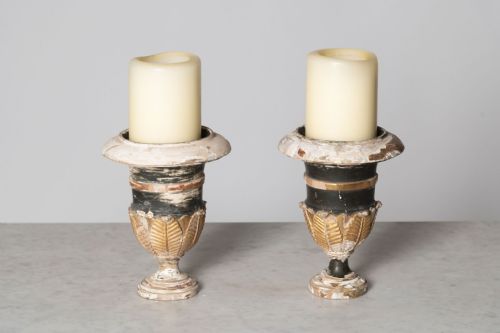
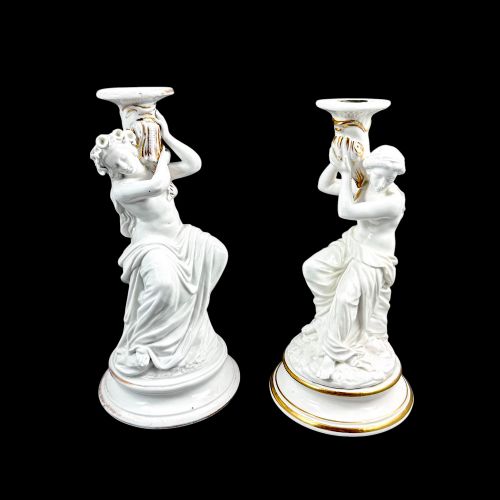
These antique white candleholders bring sculptural presence to a room, offering historic character through porcelain, marble, and gilt bronze forms.
Antique White Candleholders
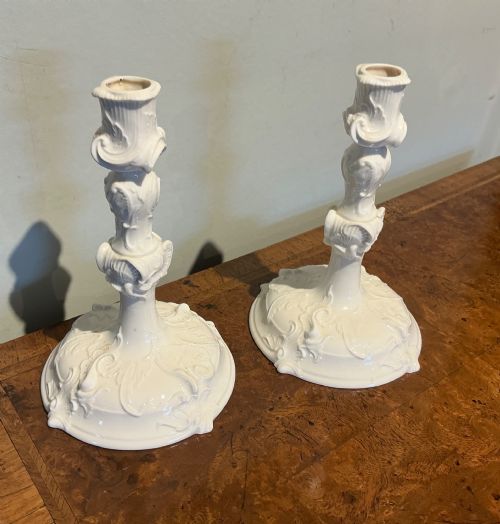
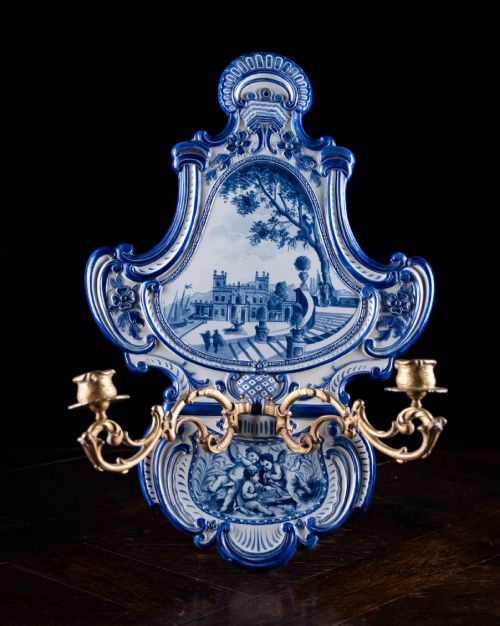
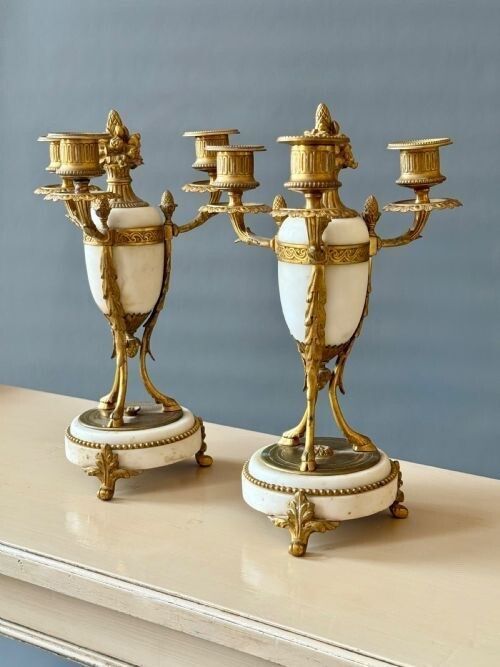
When you search for antique white candleholders, you encounter a varied selection of candlesticks, candelabra, wall sconces, and chambersticks spanning the eighteenth to early twentieth centuries. The pieces on this page lean heavily toward nineteenth-century European production, particularly French, German, and English examples in porcelain, marble, and bronze.
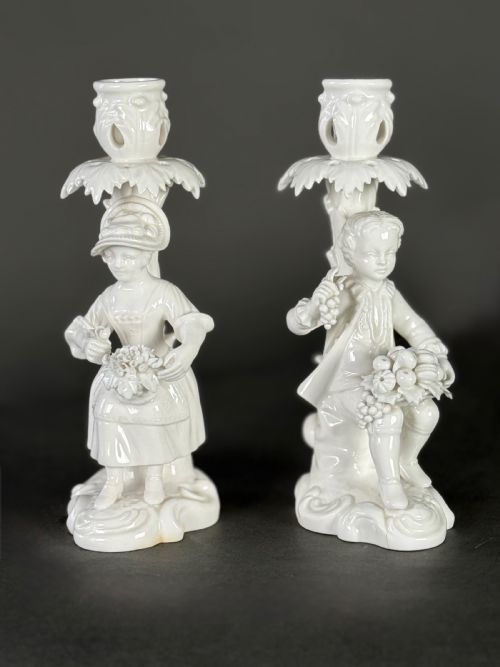
Most items appear as symmetrical pairs designed for mantelpieces or side tables, taking the form of figural groups, neoclassical columns, or rococo scrolls. White surfaces predominate through glazed porcelain, hard paste ceramic, blanc de chine, and polished white marble bases.
Earlier Georgian and eighteenth-century items also emerge, alongside Dutch Delft figurines and Chinese export porcelain pieces adapted for candle use. These objects served functional lighting roles in period interiors before transitioning into purely decorative mantel ornaments.
Materials and Techniques
Potteries shaped white candleholders using hard paste porcelain, ceramic, and delftware, often applying polychrome enamels and gilding over fired glazes. Figural subjects like putti, shepherds, and bishops required detailed hand-modelling and mould-casting before kiln firing.
Metalwork elements combine cast bronze, ormolu, and paktong with white marble plinths, uniting heavy stone bases to slender gilt candle nozzles. Artisans utilised fire-gilding and bronze casting techniques alongside turned marble components to build stable, weighty supports for heavy wax tapers.
Listings feature white candleholders spanning the eighteenth, nineteenth, and early twentieth centuries, incorporating glazed porcelain, marble, and gilt bronze.
Assessing Quality
Quality rests upon the crispness of the modelling in porcelain figures and the precision of the cast mounts in ormolu and bronze. Superior examples display fine hand-painted enamel details and well-chiselled metalwork rather than soft, blurred casting lines.
The integration of mixed media dictates the overall merit of a piece, particularly how cleanly marble is turned and fitted to bronze sockets. Intact original gilding and undamaged porcelain petals or extremities separate standard production from finer cabinet pieces.
Nymphenburg·Villeroy & Boch·Derby·Minton·Meissen·Sitzendorf·Claude Clodion
The Antique White Candleholders Glossary
- Ormolu
- Gilded bronze mounts used extensively on nineteenth-century French and English decorative objects. The technique involves applying a mercury-gold amalgam to cast bronze before heating.
- Blanc de Chine
- A French term for white Chinese porcelain made at Dehua, prized for its ivory-toned glaze. European factories frequently imitated this pure white ceramic body.
- Candelabra
- A multi-branched lighting device designed to hold several candles simultaneously. These often feature central columns rising from heavy marble or bronze bases.
- Chamberstick
- A low, handheld candlestick fitted with a saucer base and a small handle to catch dripping wax. People carried these through dark hallways at night.
- Lustre
- A tabletop ornament hung with cut glass prisms that refract candle flame. The reflective pendants enhance the ambient light of the room.
- Paktong
- A copper, nickel, and zinc alloy originating in China, prized for its bright silver-like appearance. Eighteenth-century makers used this metal for durable chamber candlesticks.
Antique White Candleholders: Frequently Asked Questions
What is the difference between a candlestick and a candelabra?
A candlestick holds a single taper upright on a simple shaft and base. A candelabra branches out into multiple arms to support several candles at once.
Candelabra usually appear larger and heavier, often combining materials like bronze and marble for added stability.
How were chambersticks used in historic homes?
Chambersticks featured a shallow pan to catch melting wax and a small loop handle for carrying by hand. People used them to light their way to bed before electric lighting existed.
The attached saucer protected fingers and clothing from hot wax drips while walking through drafty corridors.
How do I identify a nineteenth-century porcelain candlestick?
Nineteenth-century porcelain pieces often display factory marks, impressed numbers, or painted blue underglaze symbols on the base. Stylistic clues like rococo revival scrolls or classical revival columns also point to this era.
Handling reveals the weight and texture of the hard paste ceramic body, distinguishing older pieces from modern reproductions.
Can I still burn candles in these antique holders?
Most antique candleholders accommodate standard taper candles, though older hand-shaped sockets can vary slightly in diameter. You should check the fit carefully before lighting any taper.
Using a small piece of beeswax or foil helps secure loose candles safely inside older metal or porcelain nozzles.