



Antique What Not Shelf Stand
When you look for an antique what not shelf stand, you find tiered open shelving designed to display ornaments and books.
Antique What Not Shelf Stand
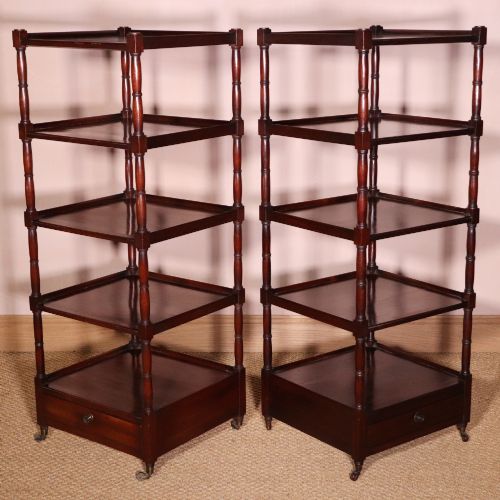
An antique what not shelf stand serves as a tiered storage unit designed for displaying decorative objects, books, and collections in domestic rooms. These multi-shelf pieces appear predominantly in nineteenth-century and Georgian designs, ranging from compact corner units to tall multi-tier stands.
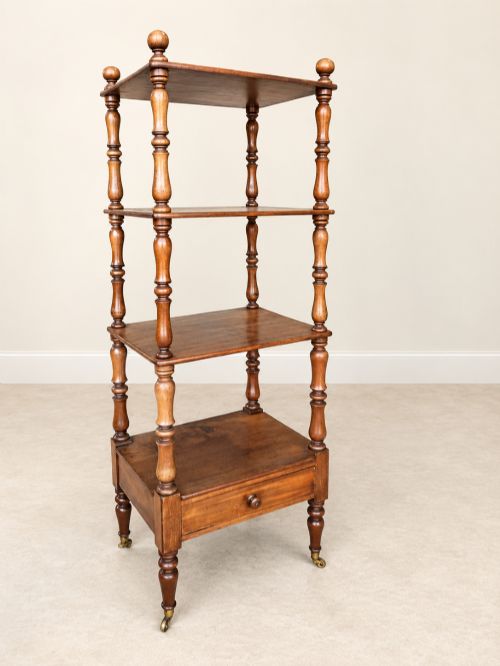
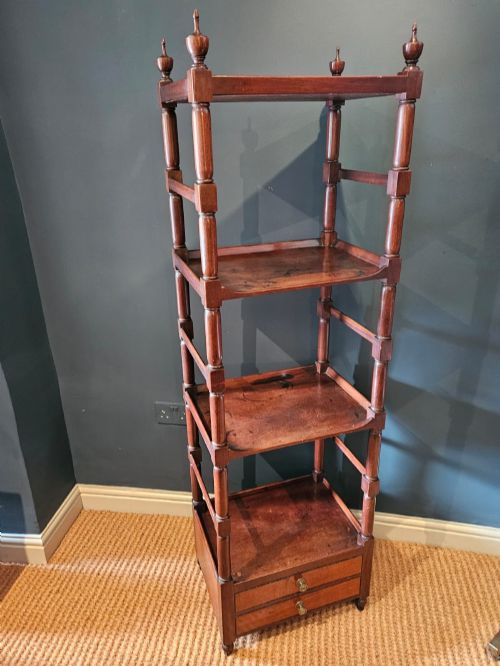
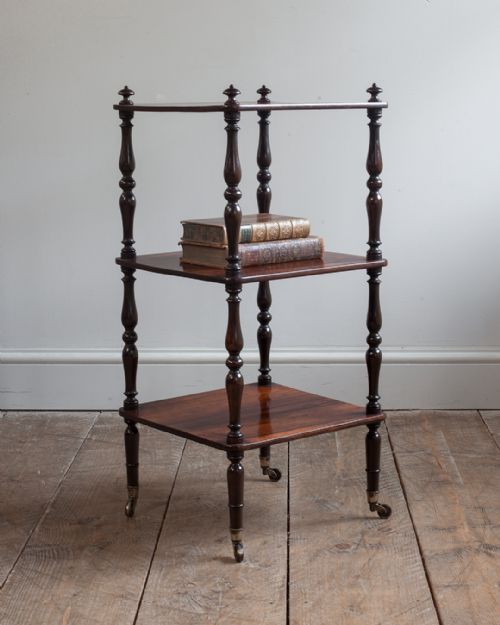
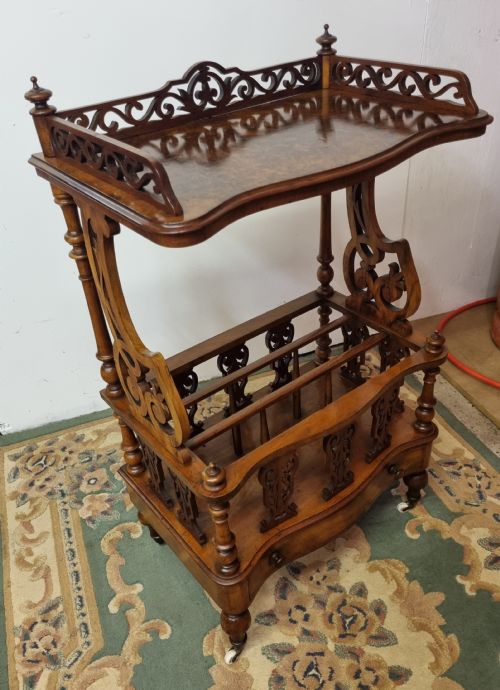
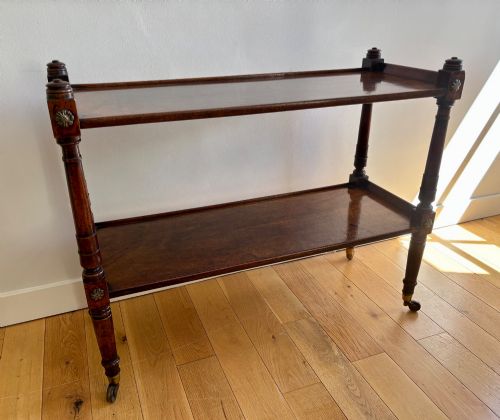
The version met most often on this page is the mahogany or walnut multi-tier whatnot, frequently built with three or four open shelves supported by turned columns. Variants include corner shelves, etageres, and pieces combined with side cabinets, drawers, or music storage compartments.
How they were made
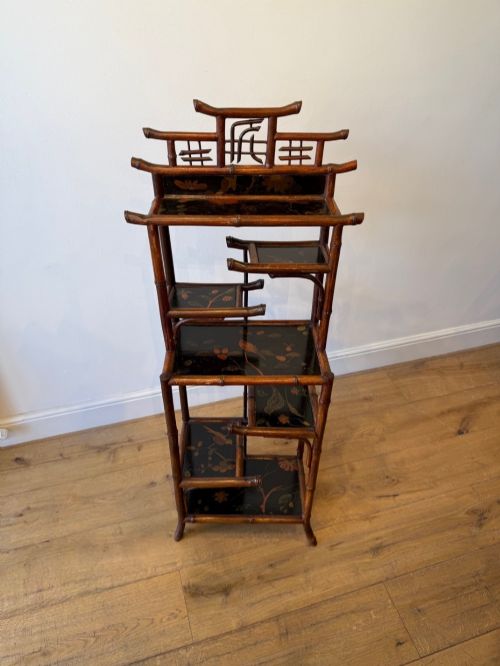
Cabinetmakers constructed these tiered stands primarily using dense hardwoods such as mahogany, rosewood, walnut, and burr walnut, alongside alternative materials like bamboo, ebonised wood, and brass fittings. Surfaces often incorporate fine details such as marquetry inlay, ceramic accents, and lacquer work.
Joinery techniques focus on supporting multiple open tiers securely, utilising turned or carved upright supports and delicate corner posts. Many examples integrate functional additions like single drawers or drop-down compartments beneath the open display shelves.
Listings feature items built from mahogany, walnut, rosewood, burr walnut, bamboo, and brass across the nineteenth and Georgian periods.
What varies in quality
Structural refinement in the turning of the upright supports and the integration of specialised elements, such as inlaid marquetry or multi-functional cabinetry, separate ordinary tiered shelving from exceptional furniture.
Gillows·Holland & Sons
The Antique What Not Shelf Stand Glossary
- Whatnot
- An open-tiered piece of furniture with multiple shelves designed for displaying ornaments or holding books. It evolved during the eighteenth century and remained popular through the Victorian period.
- Etagere
- A set of open shelves for displaying small objects or ornaments, closely related in form to the whatnot. French examples often display lighter proportions and decorative wood choices.
- Canterbury
- A low stand featuring partitioned sections for sheet music or folios, frequently combined with open display tiers or drawers above. These pieces serve both storage and display functions.
- Marquetry
- Decorative veneer work formed by fitting pieces of contrasting wood and other materials into a patterned surface. It appears on finer Victorian and Georgian display furniture.
- Corner Unit
- A shelving stand shaped to fit snugly into the angle of a room. These pieces maximise floor space while offering multiple tiers for display.
Antique What Not Shelf Stand: Frequently Asked Questions
What is an antique what not?
An antique what not is an open-tiered shelving unit designed for displaying decorative objects, ornaments, and books in principal rooms.
These versatile stands range from compact corner units and three-tier tables to tall multi-shelf pieces produced across the Georgian and Victorian periods.
How were these stands used?
They served primarily as display furniture for ceramics, small sculptures, and bound volumes in drawing rooms and parlours.
Some variations incorporated specialised lower sections, such as drawers, cupboards, or compartments for sheet music and portfolios.
Where should I place a whatnot?
These open-shelf units suit living rooms, studies, or hallways where vertical display space is needed without blocking light.
Corner versions fit neatly into unused room angles, while freestanding multi-tier stands work effectively against panelled or papered walls.
How do I date an etagere?
Dating relies on timber selection, structural proportions, and decorative details like inlay, turning styles, and edge mouldings.
Earlier Georgian and Regency examples often feature clean lines and solid mahogany, whereas Victorian pieces frequently display burr walnut or marquetry.