



Antique Watering Can
An antique watering can brings functional horticultural heritage indoors or onto the terrace, combining practical utility with lasting metalwork craftsmanship.
Antique Watering Can
An antique watering can represents a utilitarian vessel designed for garden or greenhouse use, evolving through the nineteenth and early twentieth centuries into decorative domestic accessories. When you search for an antique watering can, you encounter survivors from the Victorian and Edwardian eras forged from durable metals rather than modern plastics.
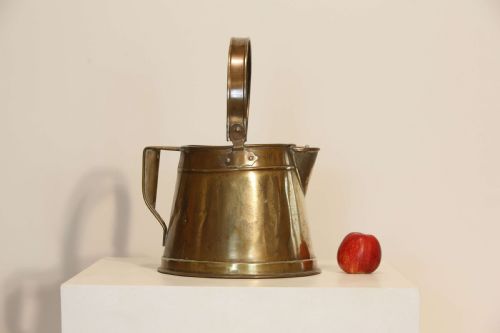
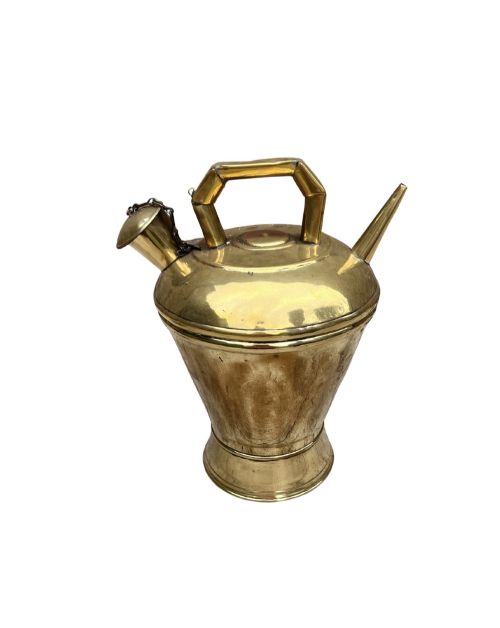
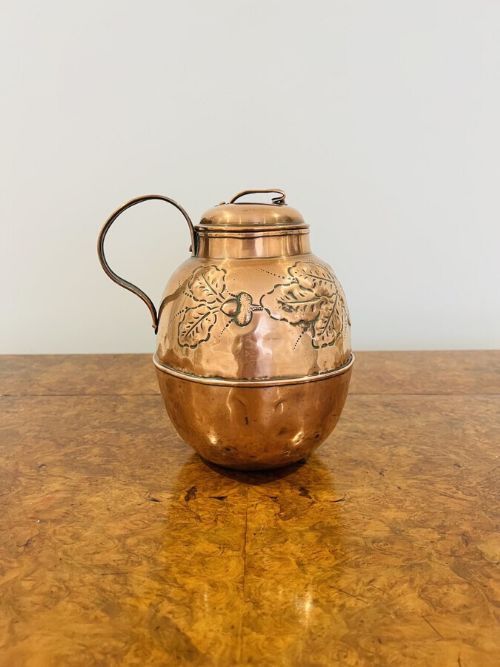
The versions most commonly met on this page span brass and copper constructions from the eighteen-eighties to nineteen-ten, often taking the form of indoor vessels, Jersey cans, or hot water carriers. These objects range from heavy country house brass utilitarian items to delicate sterling silver table pieces and miniature ironstone examples.
The form encompasses specialised regional designs like the Jersey can alongside traditional long-spout gardening vessels and silver-plated indoor variants. Each piece reveals the domestic and horticultural priorities of past households through its capacity, handle placement, and spout configuration.
How they were made
Coppersmiths and brass founders shaped these vessels using sheet metals joined with visible solder seams, beaten finishes, and riveted handles. Many pieces utilise heavy-gauge copper or polished brass, while others employ tinned iron or toleware painted surfaces.
Makers shaped spouts and bodies by hand, attaching brass mounts and cane-wrapped handles for insulation or comfort during carrying. Surface decoration ranges from plain utilitarian polish to embossed motifs and manufacturer stamps pressed directly into the metal.
Antique Watering Can Retail Price Guide 2026
Typical asking prices for watering can among the pieces listed under this phrase on Sellingantiques today, from the lower quarter to the upper quarter. They describe what is for sale here now, not the wider market.
Some nineteenth-century makers applied crocodile embossed patterns to sheet copper, turning a simple garden tool into an exotic reptile.
What varies in quality
The distinction between ordinary utility items and superior examples rests on the weight of the metal, the grace of the spout curve, and the refinement of the handle attachments. Heavier gauge copper and brass retain their structural integrity better over generations of use.
Orme Evans And Co·Joseph Sankey
The Antique Watering Can Glossary
- Jersey can
- A traditional tall, narrow metal jug with a long spout, originally used in the Channel Islands for dairy or water tasks. These cylindrical vessels often feature an inscribed brass body and sturdy carrying handle.
- Toleware
- Japanned or painted tinplate items popular during the nineteenth century for domestic utility and decoration. The painted surfaces often mimic oriental lacquer or feature floral motifs.
- Hot water can
- A large metal vessel designed for carrying heated water to bedrooms in large country houses before modern plumbing. They share similar forms with watering cans but lack the fine rose sprinkler head.
- Solder
- A low-melting alloy used to join metal pieces together along seams and joints. Visible solder lines on older pieces indicate traditional hand assembly methods.
- Miniature
- A small-scale decorative version of a full-sized object, often produced in ceramics or metal as a cabinet piece or salesman sample. These items replicate the proportions of larger utilitarian vessels in a reduced format.
Antique Watering Can: Frequently Asked Questions
What is an antique watering can made of?
These vessels are constructed primarily from sheet copper and brass, joined with solder and occasionally fitted with cane handle grips. Some examples utilise silver plating, sterling silver, or painted tinplate known as toleware.
Metal thickness and joining techniques reflect the manufacturing standards of the nineteenth and early twentieth centuries, distinguishing utilitarian garden tools from indoor decorative jugs.
How were antique watering cans used?
Gardeners utilised large copper and brass cans for tending greenhouse plants and delicate garden beds, relying on long spouts for targeted watering. Smaller brass vessels and silver-plated examples served indoors for watering potted parlor plants.
Certain forms like hot water cans doubled as carriers for domestic washing water before the widespread installation of household plumbing.
How do I date an antique watering can?
Dating relies on material choices, manufacturing marks, and stylistic indicators associated with the Victorian and Edwardian periods. Copper construction with heavy riveting often points to the nineteenth century, while stamped maker details frequently narrow production to specific decades.
Design shifts from plain utilitarian brass toward ornate Art Nouveau styling also help place a piece within a specific era.
Can I use an antique watering can for plants?
Many metal vessels remain structurally sound and watertight, making them suitable for watering indoor plants or greenhouse collections. Inspection of interior solder seams determines whether a piece holds water effectively without leaking.
Careful drying after use prevents corrosion and preserves the historic metal finish over time.