


Antique Water Colour
These antique water colour paintings bring the quiet light of the nineteenth and early twentieth centuries directly into a room.
Antique Water Colour
An antique water colour is a paper-based painting created with water-soluble pigments, capturing landscapes, portraits, and maritime scenes across the nineteenth and twentieth centuries. Buyers seeking an antique water colour encounter framed works signed by named artists alongside intimate views of European and British subjects.
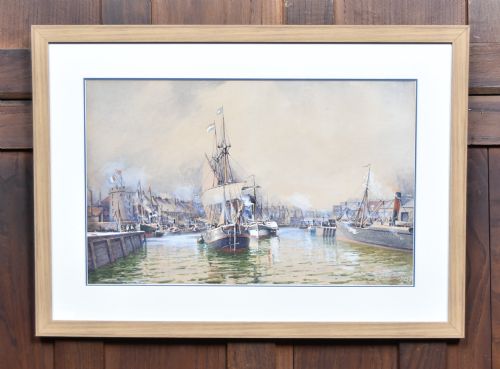
The selection ranges from large-scale nineteenth-century topographical studies to charming Edwardian depictions of lakes and Mediterranean architecture. Smaller sets of botanical water fowl and caricatures also appear, often framed behind glass in period mounts.
Victorian examples dominate the selection, spanning classical revivals, Dutch school influences, and maritime views. Later works push into the interwar period and mid-century French modernism, reflecting a wide geographic spread from British country churches to Japanese subjects.
Materials and technique
These works are executed in watercolour pigment applied to paper sheets, relying on the white of the paper to supply luminosity rather than opaque white paint. Artists built up transparent washes to capture atmospheric effects in landscapes and architectural studies.
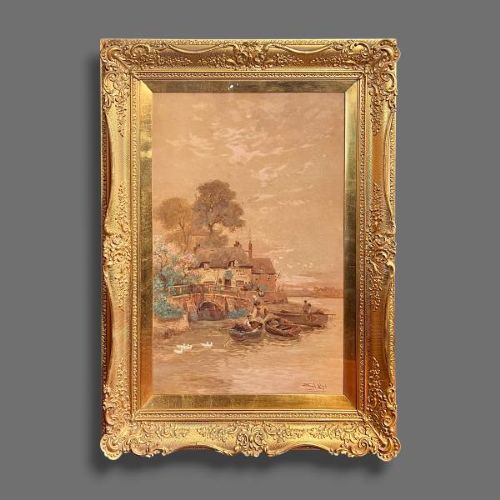
Framing is an integral part of survival for these pieces, utilising wood frames, gilded wood, and giltwood mouldings paired with protective glass. Many retain period mats that separate the delicate paper surface from the glazing.
Listings feature works spanning the 1800s to the 1960s, utilising paper, watercolour, glass, and gilded wood.
Assessing quality and execution
The preservation of pigment vibrancy distinguishes superior sheets from those faded by prolonged exposure to sunlight. Original framing and signed attribution to recorded artists further elevate the standing of a piece within its period.
William Woolard·Stuart Lloyd·Jan van Couver·Edith E Caswall·Charles H Poingdestre·Lobmeyr·Belisario Gioja·Yves Brayer
The Antique Water Colour Glossary
- Watercolour
- A painting method where natural pigments are suspended in a water-soluble binder and applied to paper. This technique allows for delicate washes and luminous effects.
- Giltwood
- Wood that has been coated with a thin layer of gold leaf or gilt. It provides a bright, reflective border to traditional picture frames.
- Topographical
- Representing specific physical locations, buildings, or landscapes with descriptive accuracy. Many nineteenth-century water colours served this recording function.
- Wash
- A thin, transparent layer of diluted watercolour pigment spread evenly across paper. It forms the background skies and broad lighting effects in traditional painting.
Antique Water Colour: Frequently Asked Questions
How should I hang an antique water colour?
Protect these paper-based works by placing them away from direct sunlight and high humidity. UV-filtering glass helps prevent the delicate pigments from fading over time.
Ensure the hanging wall remains stable and secure to protect the original wood or gilt frames. Professional framing backing boards also keep atmospheric moisture from damaging the paper.
Are these water colours always signed?
Signatures appear on many pieces, either in the artist's hand within the image area or noted on the original mount. Monograms and studio attributions also help identify the creator.
Unsigned works frequently rely on stylistic markers, period context, and subject matter to indicate their origin and approximate date of creation.
What framing is typical for these paintings?
Period frames generally consist of moulded wood, gilded wood, or giltwood that complements the domestic interiors of the nineteenth and early twentieth centuries. Original glass often remains in place over the paper surface.
Mount boards inside the frame separate the delicate watercolour surface from direct contact with the glass pane.
How do I date an antique water colour?
Dating relies on stylistic evidence, artist working periods, and framing materials such as giltwood mouldings or early paper supports. Inscribed titles, dates written on the reverse, and subject matter also offer clear chronological clues.
Victorian and Edwardian pieces frequently carry specific compositional tropes and palette choices distinct from later twentieth-century modernist works.