


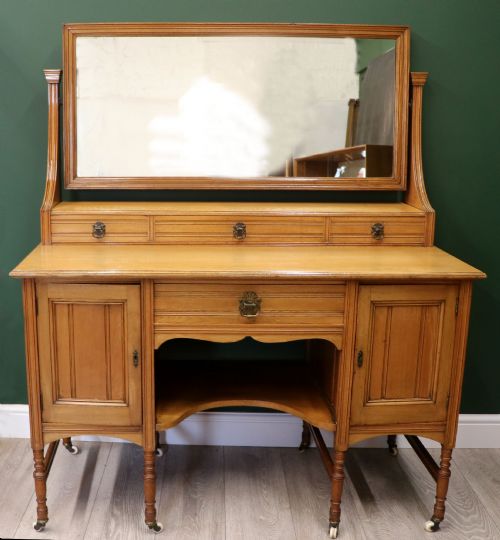


Antique Walnut Pedestal Chests
These antique walnut pedestal chests offer rich grain and compact proportions, bringing warmth and character to traditional and modern interiors alike.
Antique Walnut Pedestal Chests
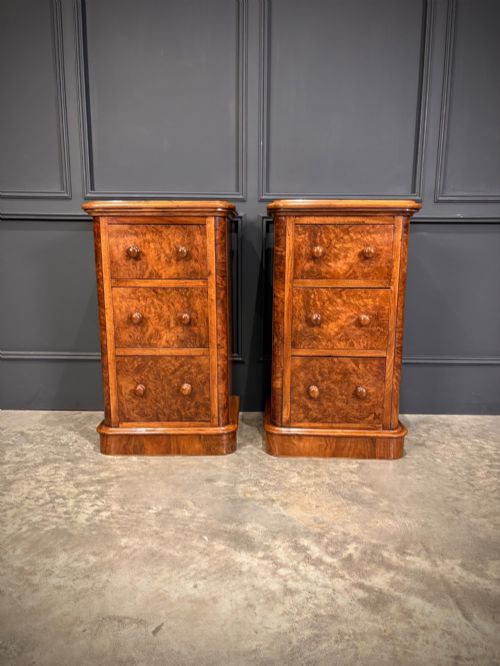
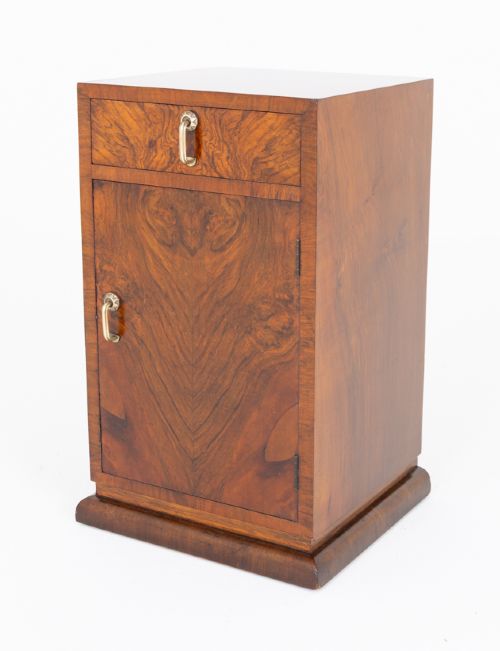
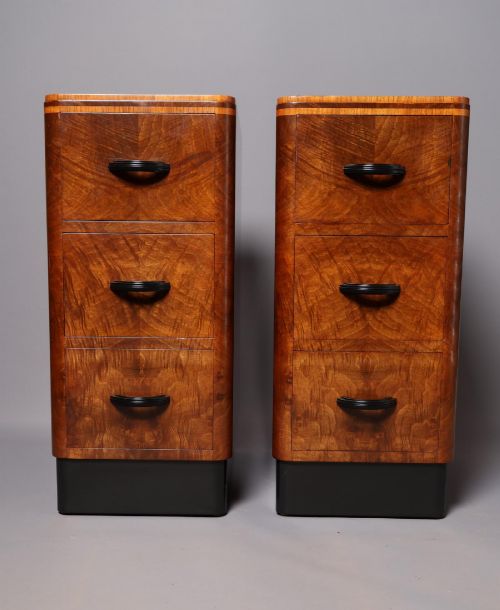
When you search for antique walnut pedestal chests, you encounter a varied selection of case furniture, including bedside cabinets, bedside lockers, and kneehole dressing chests. The pieces span several centuries and design movements, reaching from early Georgian examples through to Victorian and Art Deco creations.
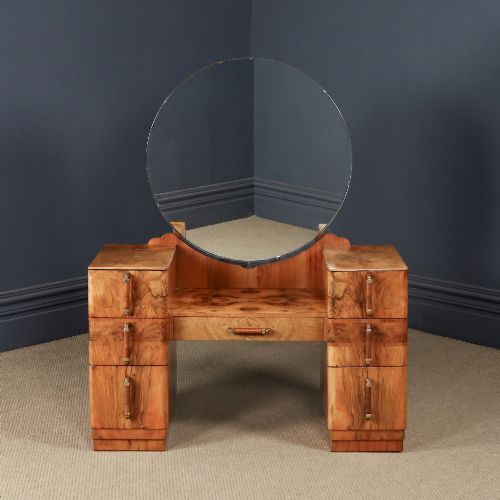
The most common forms on this page include pairs of bedside cabinets from the Victorian and Art Deco periods, alongside kneehole dressing tables and desks in figured and burr walnut. These items combine practical storage with decorative presence, utilising pedestal configurations and multi-drawer layouts.
Origins range across English, Continental, and American workshops, incorporating diverse stylistic revivals such as Queen Anne and George II. Buyers select these items for their compact footprints and distinctive timber figuring, which suits both intimate sleeping quarters and principal reception rooms.
How they were made
Cabinet makers utilised solid walnut and burr walnut veneer applied over secondary timbers such as oak, pine, and satin birch. The application of highly figured veneers created striking symmetrical patterns across drawer fronts and top surfaces.
Construction techniques involved traditional dovetail joints for drawer construction and precise internal framing to support pedestal configurations. Secondary materials like brass provided structural hardware, handles, and escutcheons, while glass occasionally topped dressing surfaces.
Object forms include bedside cabinets, kneehole desks, teapoys, and dressing tables originating from English, Continental, and American makers.
What varies in quality
Quality rests primarily in the choice and matching of timber veneers, where expert book-matching elevates the visual impact of burr walnut surfaces. The depth of colour and the preservation of the original patina distinguish superior examples from heavily refinished pieces.
Joinery execution defines the upper tier of production, visible in the snugness of drawer fits and the integrity of secondary framing timbers. The sophistication of period details, such as cross-banding, feather-banding, and original brass fittings, separates standard utilitarian items from exceptional cabinet work.
The Antique Walnut Pedestal Chests Glossary
- Burr walnut
- A specialised wood cut from the burl growth of a walnut tree, yielding swirling, highly decorative grain patterns prized by cabinet makers. It is frequently applied as a veneer over stable secondary woods.
- Kneehole desk
- A writing table or dressing chest featuring a recessed central space for the user's knees, flanked by pedestals containing multiple small drawers. This form became popular during the early eighteenth century.
- Pedestal chest
- A case piece supported by vertical drawer stacks or pedestals, raising the main body off the floor and offering structured storage. Examples range from bedside lockers to dressing chests.
- Teapoy
- A small pedestal table originally designed to hold tea canisters, often equipped with internal compartments and fitted interiors. Victorian makers adapted them into occasional tables and lamp stands.
- Cross-banding
- A decorative border technique where narrow strips of veneer are laid across the grain of the primary surface. This frames the central panel and provides a neat geometric edge.
Antique Walnut Pedestal Chests: Frequently Asked Questions
How do I care for walnut veneer?
Keep wooden furniture away from direct sunlight and heat sources to prevent the underlying veneer from drying or lifting.
Apply a traditional wax polish occasionally and buff gently with a soft cloth to maintain the natural sheen.
Are bedside cabinets sold as pairs?
Many bedside pieces on this page appear as matched pairs, particularly Victorian and Art Deco variants.
Single cabinets also occur frequently, offering flexible placement options for smaller rooms.
What is a kneehole dressing chest?
A kneehole dressing chest combines a writing or grooming surface with drawers arranged in two side pedestals.
These pieces often include integrated mirrors and small compartments for personal items.
How can I tell a Georgian piece from a Victorian revival?
Early pieces from the Georgian era display hand-cut joinery details and specific timber thicknesses characteristic of eighteenth-century workshops.
Victorian revivals often incorporate machine-cut elements and distinct secondary woods while imitating earlier styles.