


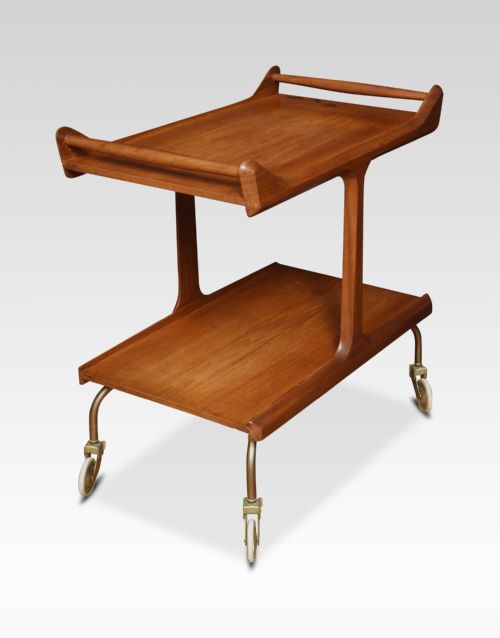
Antique Walnut Cart
An antique walnut cart is a serving piece or drinks trolley built for hospitality, bringing warmth and mobility to a room.
Antique Walnut Cart
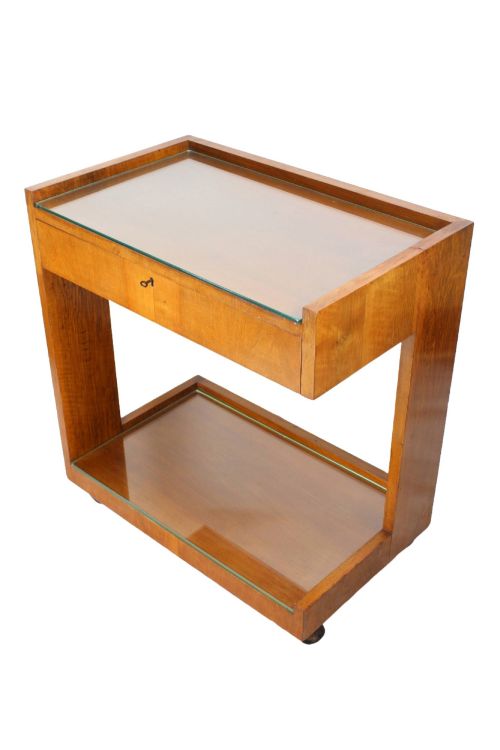
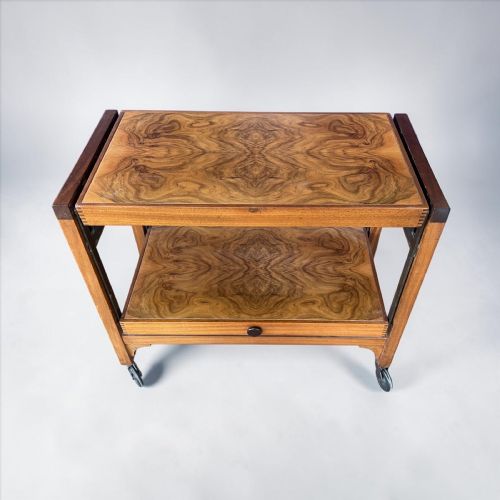
When you search for an antique walnut cart, you are looking at practical serving pieces and drinks trolleys made from rich timbers. The selections span the Victorian, Edwardian, and Art Deco periods, capturing shifts in domestic entertaining over several decades. Most examples you will encounter take the form of multi-tiered serving trolleys and bar carts designed for mobility.
The objects include circular drinks trolleys, metamorphic serving tables, and two-tier serving carts alongside occasional framed artwork. Art Deco designs from the nineteen thirties dominate the selection, bringing streamlined silhouettes and figured veneers to the forefront. Earlier Victorian pieces lean towards functional utility with butler trolleys and whatnot bookshelves.
How they were made
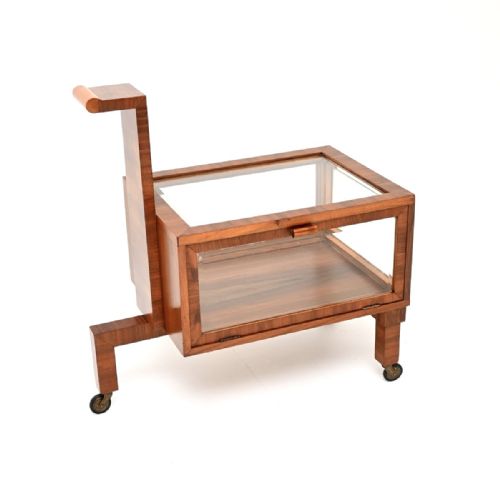
Makers utilised solid walnut and burr walnut veneer to cover structural frames, creating rich grain patterns across flat surfaces and curved tiers. Brass fittings, castors, and handles provided both structural support and smooth movement for these heavy timber serving vessels. Glass inserts and metal components occasionally appeared in drinks trolleys to add functional surfaces for glassware and bottles.
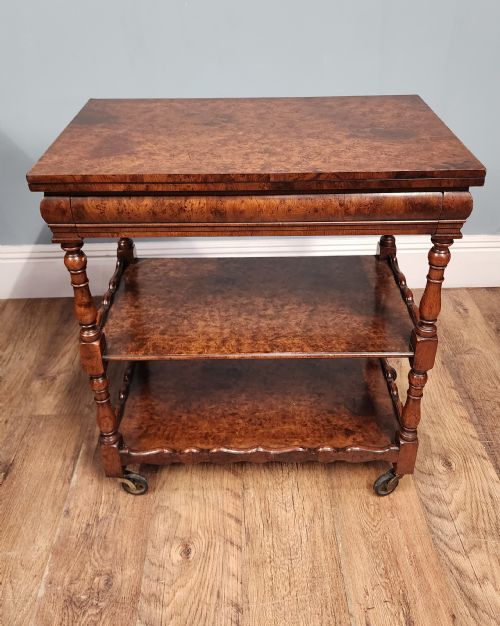
Art Deco examples relied on steam-bent elements and precise geometry to achieve streamlined circular and rectangular silhouettes. Victorian pieces depended on traditional joinery, turning solid timber into sturdy legs and tiered shelving units designed to bear weight.
Even trotting horses harnessed to lightweight trap carts find a place here, immortalised in a walnut-framed chalk drawing.
What varies in quality
The quality of an antique walnut cart rests largely on the choice of timber and the handling of the veneer. Figured walnut and burr walnut display dramatic, symmetrical grain patterns that separate standard production pieces from finer commissions. Edge banding, the neatness of brass mounts, and the solidity of the castor fixings dictate the structural integrity of each trolley.
Design ambition also separates the ordinary from the exceptional, as seen in metamorphic mechanisms and circular Savoy-style frames. Pieces that integrate glass, metal, and polished timber with balanced proportions demonstrate a higher level of cabinetmaking skill.
Thomas Cartwright
The Antique Walnut Cart Glossary
- Burr walnut
- A decorative timber veneer taken from the wart-like growths on walnut trees. It yields complex, swirling grain patterns highly prized by cabinetmakers.
- Metamorphic
- Describing furniture designed to transform into different forms or functions. In these carts, surfaces fold out or adjust to create larger serving spaces.
- Savoy
- A style descriptor often associated with circular Art Deco drinks trolleys. It references luxury hotel hospitality and streamlined nineteen-thirties design.
- Whatnot
- A piece of open shelving furniture used for displaying or storing small items. Victorian examples combined this open format with sturdy wheeled frames.
- Cartouche
- An ornamental panel or tablet with a scroll-like frame. It appears on decorative accessories and wooden boxes to frame ciphers or marquetry.
Antique Walnut Cart: Frequently Asked Questions
What is an antique walnut cart used for?
These pieces served primarily as mobile serving stations for food, tea, and alcoholic drinks during the Edwardian and Art Deco periods. Their tiered shelving allowed hosts to wheel refreshments easily between rooms.
In modern spaces, they function effectively as standalone home bars or decorative display surfaces for glassware and bottles.
How do I identify Art Deco carts?
Art Deco walnut carts typically feature streamlined silhouettes, geometric circular frames, and highly figured burr walnut veneers. They date predominantly from the nineteen twenties and nineteen thirties.
Unlike heavier Victorian pieces, these trolleys emphasise curved lines, polished metal details, and efficient multi-tiered structures.
Are these carts fitted with wheels?
Most serving trolleys and bar carts feature small wheels or castors to allow smooth movement across carpets and wooden floors. These mobility aids were essential for serving guests without making multiple trips to the kitchen.
Some stationary display cases and writing slopes share similar terminology in archives but lack the wheeled undercarriages.
What materials are used in these carts?
Walnut is the primary timber, appearing as both solid wood and decorative burr veneer across the surfaces of the carts. Brass fittings, glass trays, and metal accents are common secondary materials that add durability and contrast.
Victorian iterations rely more heavily on dense solid timber and simple turned supports without decorative veneers.