

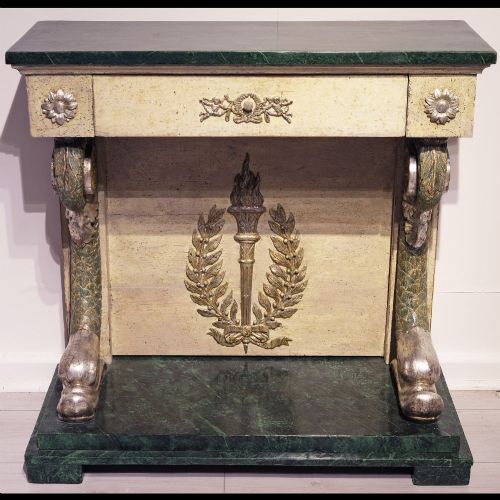
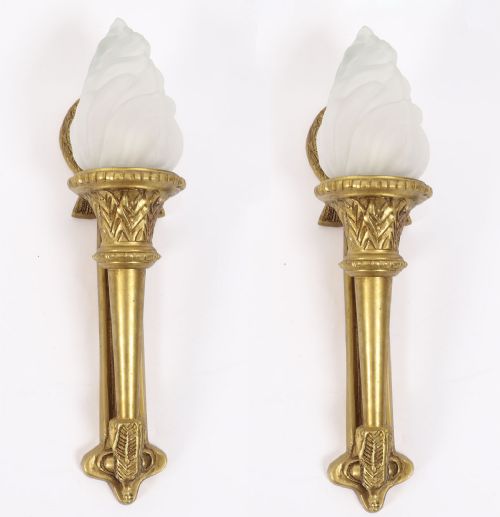
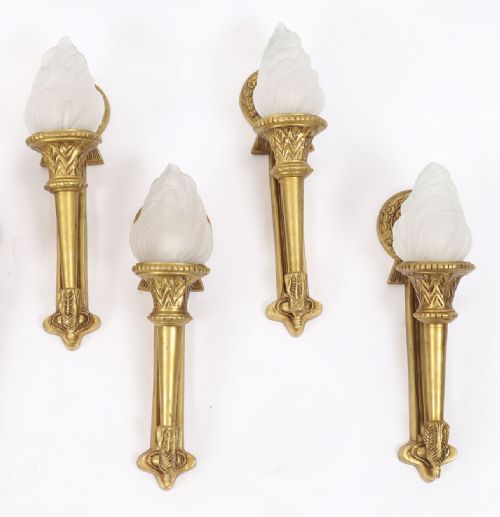


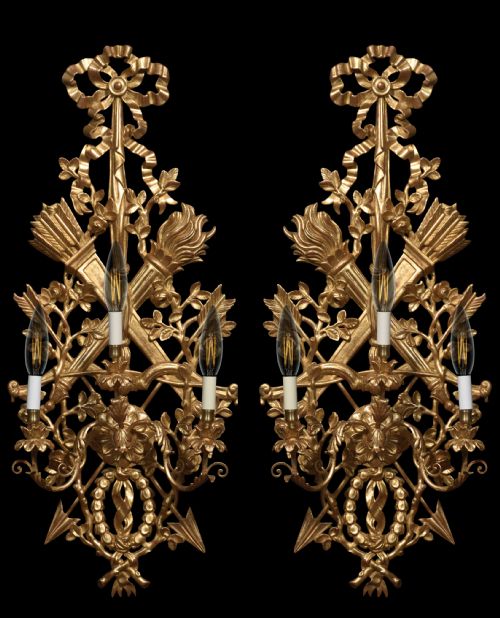


Antique Wall Torch
An antique wall torch brings dramatic illumination and sculptural presence to a room, channelling classical grandeur into practical lighting.
Antique Wall Torch
An antique wall torch is a lighting fixture designed to mount directly onto a vertical surface, mimicking the appearance of a handheld flaming torch from antiquity. Buyers seeking an antique wall torch will encounter various interpretations spanning several centuries and design movements.
The selections available here range from elaborate Neo-Classical ormolu and glass flaming torch designs to heavy Gothic iron castle wall lights and streamlined Art Deco flame fittings. These pieces function primarily as wall lights, wall sconces, and wall appliqués, often appearing in matched pairs or larger sets.
Origins represented in these pieces stretch from the late eighteenth century through the Victorian era into the early decades of the twentieth century, encompassing French, Gothic Revival, and Arts and Crafts aesthetics. The most frequent iteration is the classical ormolu and glass torch from around nineteen-twenty.
Assessing quality and craftsmanship
The calibre of an antique wall torch rests upon the crispness of its metal casting and the depth of its chasing or surface finishing. Superior ormolu and bronze mounts display sharp relief work and secure joins, whereas lesser examples lose definition in ornamental details like ribbon bows or acanthus leaves.
Material integrity distinguishes the upper tier of pieces, seen in heavy gauge metals, genuine period gilding, and thick, well-formed glass rather than thin substitutes. The cohesion of the design, whether adhering to a strict Neo-Classical symmetry or an Arts and Crafts execution, determines the overall visual weight.
The listings demonstrate a strong presence of nineteenth-century and nineteen-twenty fixtures, with materials ranging from wrought iron to delicate frosted glass.
The Antique Wall Torch Glossary
- Ormolu
- Gilded bronze produced by applying a mercury and gold amalgam to a bronze base, commonly found on decorative mounts. This technique creates a rich, durable golden surface.
- Toleware
- Painted or lacquered sheet metal items, often gilded to imitate more expensive materials. It appears on decorative wall lights and sconces from various periods.
- Giltwood
- Timber that has been coated with a thin layer of gold leaf or gold paint. This finish enhances carved mirrors and wall appliqués with reflective warmth.
- Gustavian
- The Swedish interpretation of French Neo-Classical style, characterised by restrained carving and pale painted finishes. It emerged during the late eighteenth century.
- Catalin
- A cast phenolic formaldehyde resin developed in the twentieth century, valued for its translucent colourful qualities. It is utilised in Art Deco electrical fixtures.
- Appliqué
- A decorative wall-mounted lighting fixture or sconce that sits flat against the surface. The term derives from French decorative arts.
Antique Wall Torch: Frequently Asked Questions
How do I install an antique wall torch?
Most antique wall torches require professional hardwiring into your home's electrical system by a qualified electrician. They mount directly to wall studs or electrical junction boxes using internal brackets or backplates.
Because many pieces date from the early twentieth century or earlier, rewiring with modern cabling is standard practice. Ensure your wall construction can support the weight of heavier cast bronze or iron fixtures.
Can I use these wall lights outdoors?
These pieces are designed primarily for interior use in hallways, entrance halls, and living spaces. Placing them outside exposes delicate materials like ormolu, giltwood, and vintage electrical components to moisture.
Indoor placement preserves the original finishes, such as frosted glass and painted surfaces, which do not withstand weathering. Consult an electrician if exterior placement is strictly desired.
How do I clean giltwood and ormolu?
Dust giltwood and ormolu gently with a dry, soft feather duster or microfiber cloth to remove surface particles. Avoid liquid cleaners, chemical solvents, or abrasive cloths that can strip gold leaf or damage the underlying metal.
If deeper cleaning is necessary, consult a professional conservator to prevent irreversible harm to the antique finishes. Regular, gentle maintenance keeps the metallic lustre intact.
How do I distinguish Neo-Classical from Art Deco styles?
Neo-Classical pieces draw inspiration from ancient Greek and Roman motifs, featuring symmetrical arrangements, ormolu flames, urns, and acanthus leaves. They frequently date to the nineteenth and early twentieth centuries, echoing eighteenth-century French design.
Art Deco fixtures, originating around nineteen-thirty, favour geometric lines, streamlined forms, and modern industrial materials like chrome and Catalin bakelite. The distinction lies between classical ornamentation and modern industrial minimalism.