





Antique Wall Shelf Pair
An antique wall shelf pair brings symmetry and layered display space to a room, working best when mounted symmetrically.
Antique Wall Shelf Pair
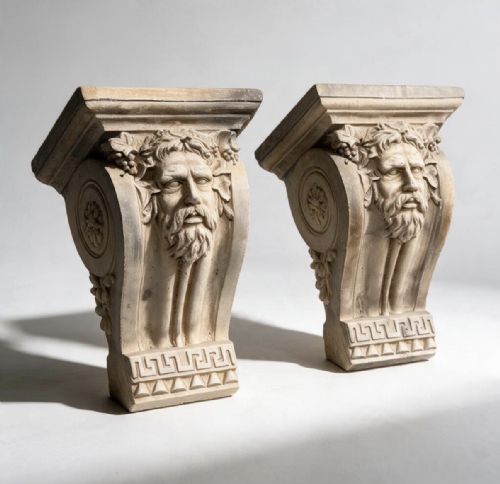
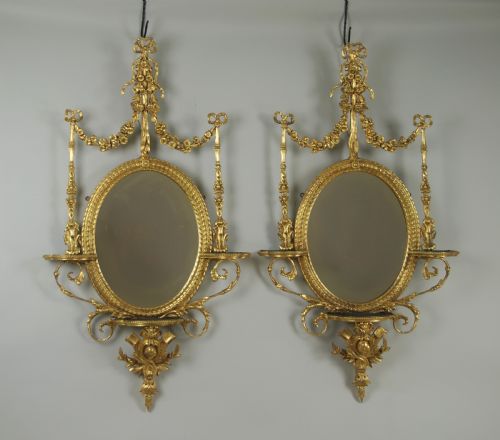
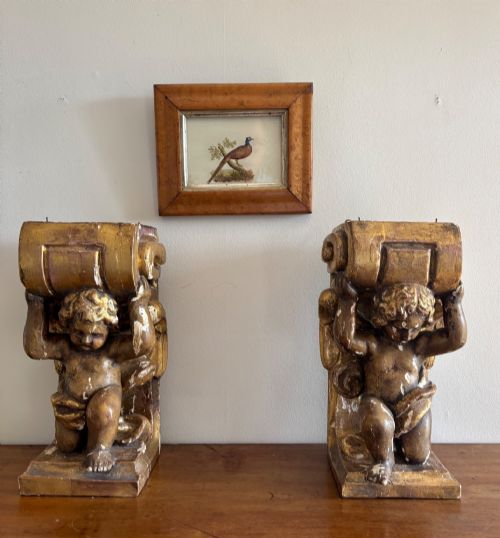
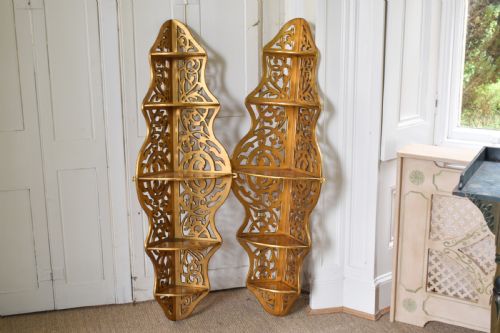
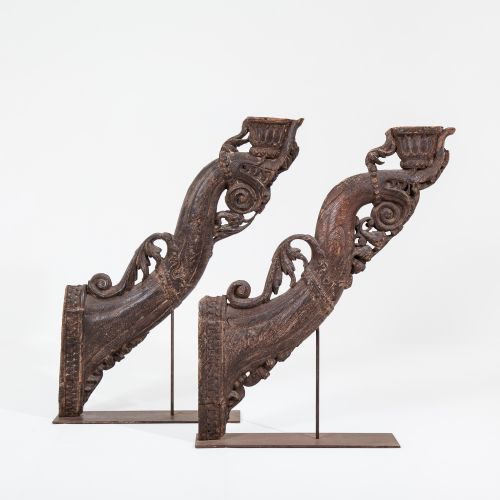
An antique wall shelf pair comprises matched hanging ledges, brackets, or small consoles designed for symmetrical display upon a vertical surface. These items appear across the nineteenth century and into the nineteen-thirties, taking forms such as corner shelves, pier mirrors with display brackets, and carved wooden wall brackets.
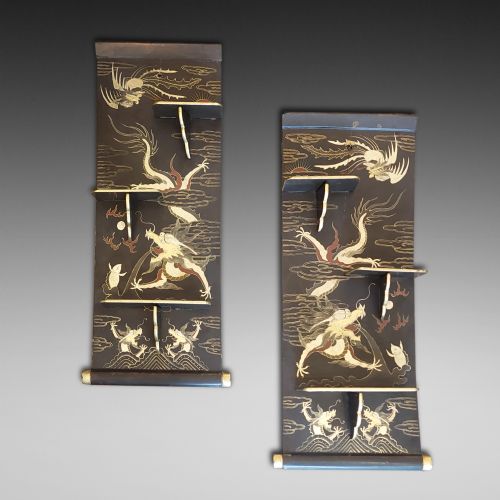
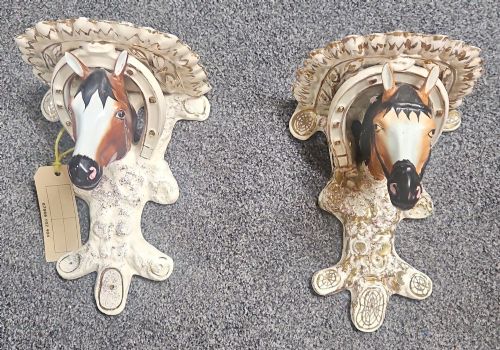
The pieces on this page emerge from Victorian, Rococo Revival, Baroque Revival, and Aesthetic Movement traditions. Buyers frequently encounter giltwood and carved wood brackets alongside porcelain corbels and painted display shelves originating from English, French, and Italian makers.
Materials and construction methods
Maker workshops utilised solid timbers including mahogany, pine, walnut, limewood, yew wood, and padouk, often shaping them through hand-carving. Many examples incorporate applied gesso finished with gold leaf, gilt, or an antique white paint layer.
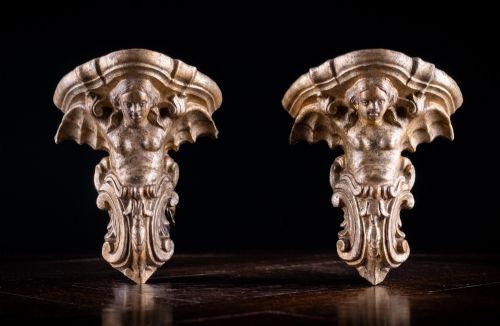
Glass integration appears in mirrored backs and hanging wall mirrors paired with display ledges. Certain regional varieties employ terracotta or Staffordshire pottery for sculptural forms such as cherubs, horses heads, and winged sirens.
Antique Wall Shelf Pair Retail Price Guide 2026
Typical asking prices for wall shelf pair among the pieces listed under this phrase on Sellingantiques today, from the lower quarter to the upper quarter. They describe what is for sale here now, not the wider market.
Listings feature items from the 18th century, 19th century, Victorian era, and 1930s, utilising giltwood, porcelain, iron, and carved wood.
Assessing quality in matched pairs
Quality rests upon the crispness of the hand-carving and the fidelity of the period style, whether executed in intricate Rococo Revival scrolls or restrained George IV lines. Superior examples display balanced proportions between the two matching pieces and clean articulation of decorative elements like cherubs, foliage, or architectural moulding.
The integrity of the surface finish dictates visual success, distinguishing genuine period gilding, gesso work, and aged timber patination from later decorative interventions. Matching architectural salvage or console tables maintain uniform wear and consistent structural joinery across both items.
Cottier and Co·Strahan of Dublin·Town and Emanuel
The Antique Wall Shelf Pair Glossary
- Wall bracket
- A projecting support fixed to a wall to hold an ornament, clock, or bust. These frequently occur in matched pairs featuring carved wood or gilt finishes.
- Girandole
- An ornamented branching wall bracket or sconce holding candles, often incorporating a mirrored backplate to reflect light. Late nineteenth-century examples frequently adopt elaborate Revival styling.
- Corbel
- A structural or decorative projection from a wall acting as a bracket to support a weight. Porcelain and carved timber versions serve as decorative display ledges.
- Giltwood
- Timber that has been coated with gold leaf or a gold-coloured metallic preparation. This finish characterises many Victorian and continental wall fixtures.
- Demi lune
- Half-moon shaped, describing console tables and shelves designed to sit flush against a flat wall. These provide shallow display surfaces in narrow hallways or reception rooms.
Antique Wall Shelf Pair: Frequently Asked Questions
How do I hang a heavy antique wall shelf pair safely?
Heavy carved wood and giltwood pieces require secure wall fixings suited to the specific masonry or studwork behind your plaster. Distribute the weight evenly between both brackets to maintain structural balance.
Check that the hanging loops or rear mounting points are secure before placing any objects on the display ledges.
What rooms suit an antique wall shelf pair best?
These matched fixtures suit hallways, drawing rooms, and dining spaces where symmetry frames a central mirror, doorway, or fireplace. Their projecting ledges offer compact display areas for small ceramics, clocks, or framed items without occupying floor space.
Corner shelves make efficient use of difficult angles in smaller rooms.
How do I tell Victorian pieces from later revivals?
Victorian items typically exhibit denser timber selections, hand-applied gesso, and heavier carving styles such as Baroque Revival or Rococo Revival. Examining the rear construction, screw types, and wood ageing helps clarify the period of manufacture.
Later twentieth-century interpretations often feature cleaner painted finishes or lighter softwood cores.
Can I use these shelves to hold heavy items?
Most antique wall brackets and shelves were built to display light decorative ornaments, porcelain figures, or small clocks rather than heavy volumes. Assess the depth of the ledge and the strength of the backplate before placing substantial objects upon them.
Utilising corner brackets can sometimes provide greater inherent stability due to the wall support angles.