





Antique Wall Locker
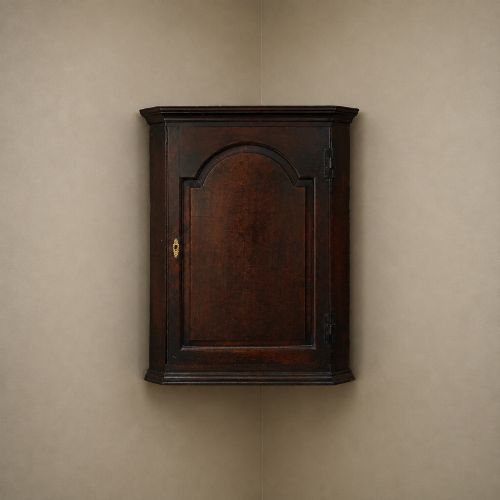
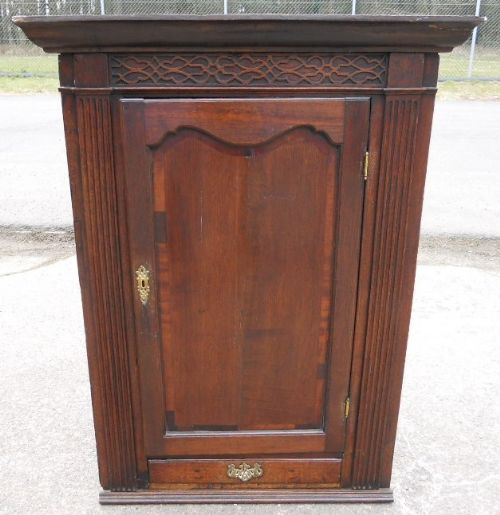
An antique wall locker offers practical storage with period character, taking the form of hanging corner cupboards and wall cabinets crafted from solid timbers.
Antique Wall Locker
An antique wall locker most commonly presents as an oak corner cupboard or wall cabinet designed to utilise room junctions efficiently. These pieces originate across Georgian, Victorian, and earlier eras, spanning the seventeenth to nineteenth centuries.
The inventory on this page relies heavily on Georgian oak hanging corner cupboards, alongside examples in mahogany and walnut. Buyers also encounter rustic French provincial wall cupboards and Chippendale revival pieces.
Most items function as wall-hanging storage units with single or double doors, frequently featuring panelled construction and internal shelving.
How they were made
Joiners constructed these wall lockers primarily using solid oak, mahogany, and walnut, often pairing the primary timber with secondary woods for internal elements. Cabinetmakers shaped doors with traditional panel and frame techniques to accommodate seasonal wood movement.
Metalwork played a structural and decorative role, with brass hinges and escutcheons fitted alongside wrought iron hardware. Surface finishing relied on hand-applied waxes and oils that developed patination over centuries of use.
Antique Wall Locker Retail Price Guide 2026
Typical asking prices for wall locker among the pieces listed under this phrase on Sellingantiques today, from the lower quarter to the upper quarter. They describe what is for sale here now, not the wider market.
Some seventeenth-century French cellar cupboards still carry the faint, sweet scent of old wine spilled long before the French Revolution.
What varies in quality
Quality rests on the selection of timber and the precision of the joinery, particularly in the dovetailing of cornices and the hanging of doors. Pieces featuring finely figured mahogany or well-grained oak display superior craftsmanship compared to utility items.
The integrity of the original hardware and the degree of surface patination further distinguish finer examples. Cabinets retaining original brass fittings and untouched timber surfaces hold greater fidelity to their period of origin.
The Antique Wall Locker Glossary
- Bow front
- A convex curved cabinet front that projects outward. This form adds visual depth and requires advanced woodworking skill to shape.
- Hanging corner cupboard
- A wall-mounted storage unit built with a right-angled back to fit into a room corner. These pieces save floor space while providing secure enclosed shelving.
- Chippendale revival
- A style period inspired by the mid-eighteenth-century designs of Thomas Chippendale. Makers during the Victorian era and later reproduced these classical proportions.
- French provincial
- A descriptor for furniture originating from the regions of France outside Paris. These items often display simpler, heavier rustic charm compared to court furniture.
Antique Wall Locker: Frequently Asked Questions
How do I hang a heavy antique wall locker?
These cupboards require secure fixing directly into wall studs or masonry using appropriate weight-bearing brackets. The considerable weight of solid oak and mahogany demands professional wall anchoring.
Distributing the load across multiple structural points prevents strain on the original antique timber frame and historical fixings.
What is the difference between an alcove cupboard and a corner cupboard?
An alcove cupboard is built to fit into a wall recess or niche. A corner cupboard specifically utilises the ninety-degree angle where two walls meet.
Both forms served domestic storage needs in period homes, but their footprint and door configurations differ according to architectural placement.
Are these cabinets suitable for modern kitchens?
Many buyers repurpose these wall cabinets for kitchen storage of dried goods, glassware, or spices. The historical timber adds warmth to contemporary interiors.
Care should be taken to avoid placing them near excessive moisture or heat sources that could damage the antique wood and historical finishes.
How can I identify a Georgian corner cupboard?
Georgian pieces typically exhibit classical proportions, brass H-hinges or butterfly hinges, and solid oak or mahogany construction. Stylistic details often reflect eighteenth-century cabinet-making traditions.
Examination of the internal construction, timber shrinkage, and nail types helps confirm the eighteenth or early nineteenth-century timeline.