

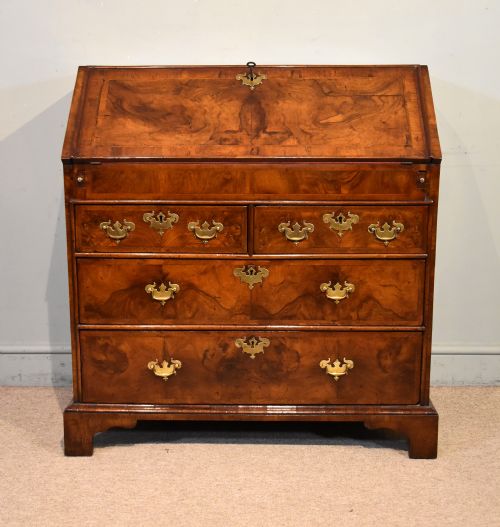
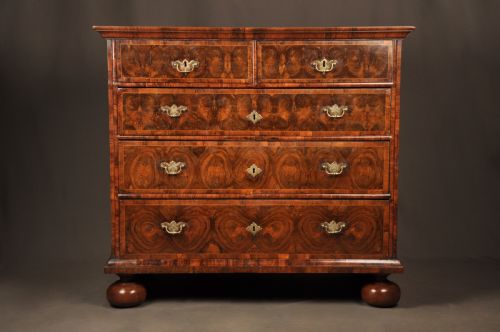
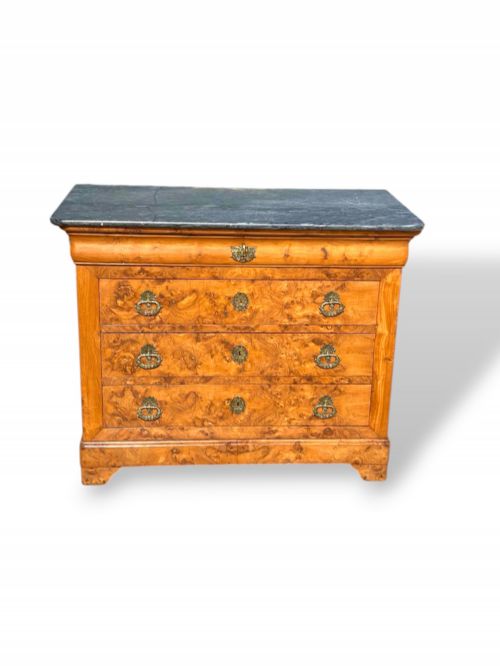
Antique Veneer Chest Drawers
An antique veneer chest drawers delivers rich timber figure and practical storage across centuries of cabinet making.
Antique Veneer Chest Drawers
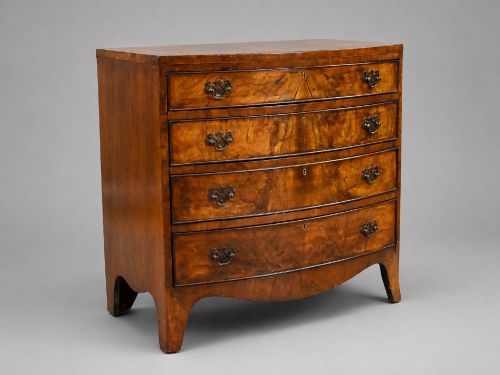
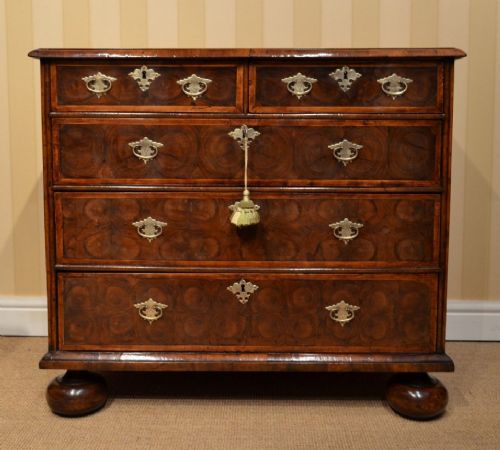
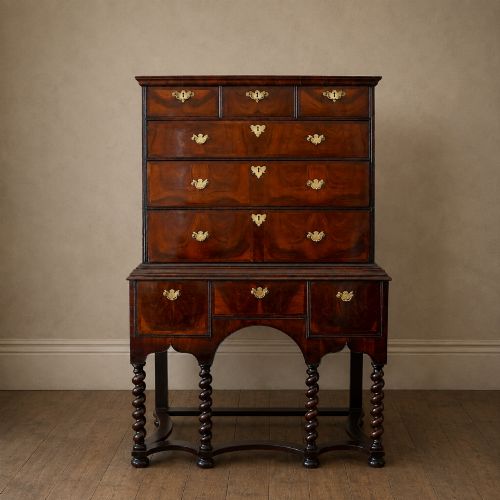
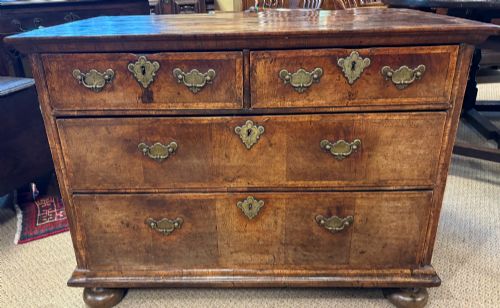
An antique veneer chest drawers brings together centuries of timber craftsmanship, ranging from seventeenth century William and Mary oyster pieces to nineteenth century Victorian mahogany designs. Buyers searching this phrase meet everything from tall chests on stands to compact bedside cabinets and larger commodes.
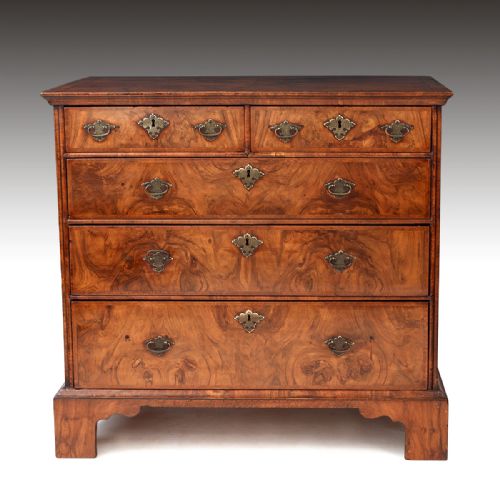
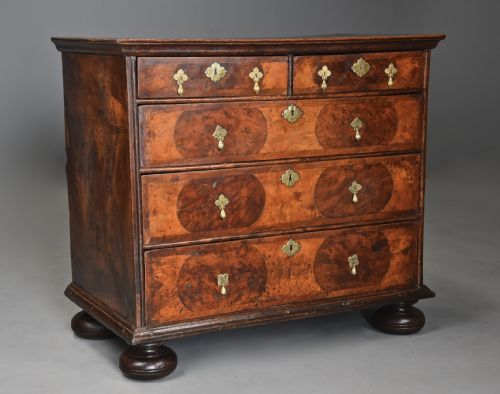
The seventeenth century examples often display intricate oyster cutting in walnut, olive, laburnum or yew. Later eighteenth and nineteenth century versions lean towards flame mahogany and burr ash finishes, whilst twentieth century pieces introduce Art Deco satinwood and walnut.
The fundamental form remains a stack of horizontal drawers designed for domestic storage, yet the surface decoration elevates each piece into a study of decorative timber grain. Most examples found on this page span the seventeenth to the twentieth centuries, utilising oak or pine carcases beneath decorative surface veneers.
Materials and Construction
Cabinet makers constructed these pieces by applying thin slices of decorative timber veneer onto stable secondary carcase woods such as oak and pine. This technique allowed craftsmen to utilise richly figured timbers like walnut, flame mahogany and laburnum efficiently whilst preventing the solid wood from warping.
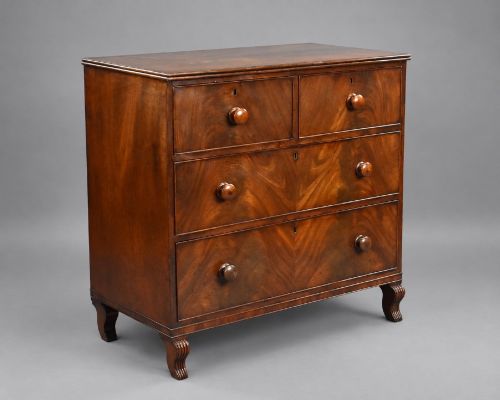
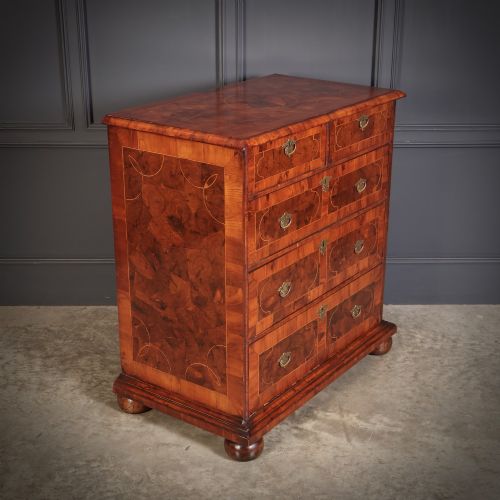
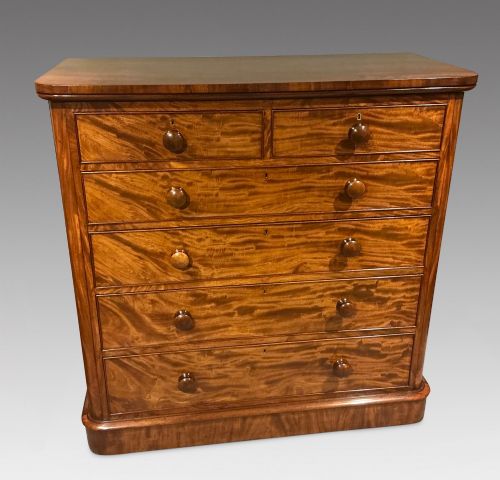
Early periods relied on intricate cross-banding and oyster cutting, where small branch sections were sliced across the grain to create circular patterns. Later nineteenth and twentieth century pieces favoured bookmatched flame mahogany and burr ash veneers to create symmetrical patterns across the drawer fronts.
Listings feature carcase woods including oak and pine, surfaced with decorative veneers of walnut, mahogany, laburnum, yew and satinwood.
Assessing the Craftsmanship
Quality in these pieces rests primarily on the integrity of the timber veneer and the precision of the underlying carcase construction. Superior examples maintain tight joints and smooth drawer movement, whereas lesser items show lifting veneer or heavy restoration.
The choice of secondary woods and the complexity of the grain patterning also dictate standard. Pieces featuring continuous oyster cutting or bookmatched flame mahogany across multiple drawers reflect higher workshop skill than simpler, unfigured surfaces.
The Antique Veneer Chest Drawers Glossary
- Oyster cutting
- A method of slicing small branches transversely to produce circular or oval wooden discs. Cabinet makers arranged these patterns closely across seventeenth century drawer fronts.
- Chest on stand
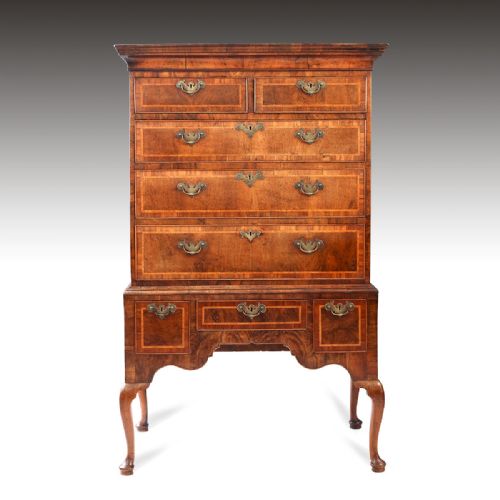
- A form consisting of a main drawer chest elevated upon a separate support base with legs. This configuration was particularly popular during the William and Mary and George I periods.
- Commode
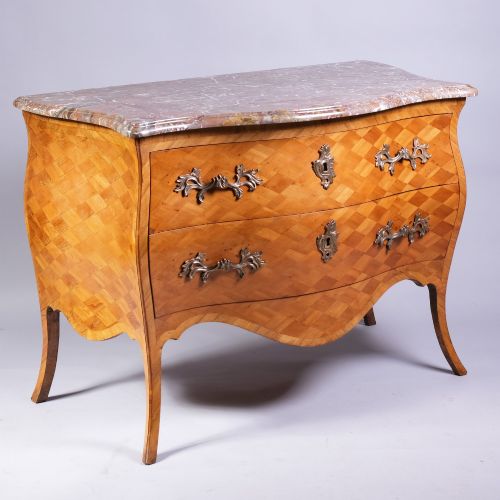
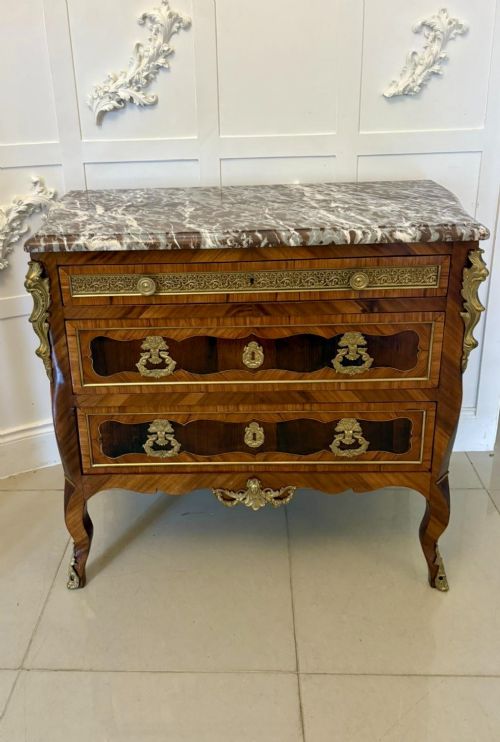
- A decorative set of drawers or a low cabinet originating from French design vocabulary. These pieces frequently feature marble tops and sophisticated nineteenth century veneering.
Antique Veneer Chest Drawers: Frequently Asked Questions
How do I care for my veneer chest?
Keep wooden surfaces away from direct sunlight and extreme temperature fluctuations to prevent the adhesive beneath the veneer from drying out.
Apply a traditional wax polish occasionally and buff gently with a soft cloth to maintain the natural lustre of the timber.
Are these drawers suitable for daily use?
Most antique chests offer robust storage capacity and sturdy carcase construction built to handle everyday domestic organisation.
Drawer runners and internal depths vary by period, so check internal dimensions if you plan to store bulky modern items.
How can I tell a seventeenth century piece apart from a Victorian one?
Seventeenth century examples frequently feature oyster cutting in walnut, olive or laburnum combined with oak carcases and geometric mouldings.
Victorian versions generally rely on thick flame mahogany veneers over pine carcases, displaying heavier proportions and simpler structural lines.
What is the difference between a chest of drawers and a commode?
A standard chest of drawers focuses purely on stacked horizontal storage drawers within a straightforward timber frame.
Commodes often incorporate continental styling, occasionally featuring marble tops and more decorative, bombé or serpentine shaping.