


Antique Velvet Parlour Armchair
An antique velvet parlour armchair brings warmth and texture to a room, offering deep-sprung comfort wrapped in period upholstery.
Antique Velvet Parlour Armchair
These seats are parlour and salon chairs designed for formal reception rooms during the Victorian and Edwardian periods.
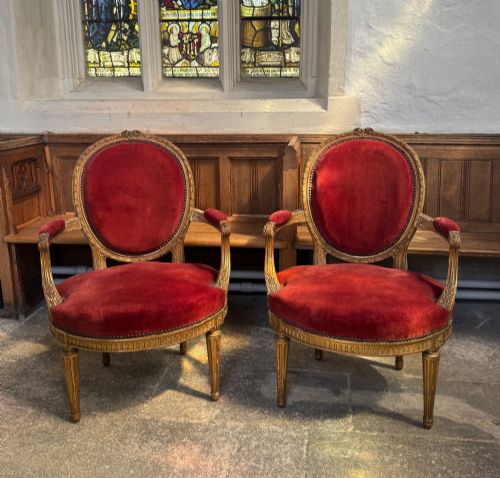
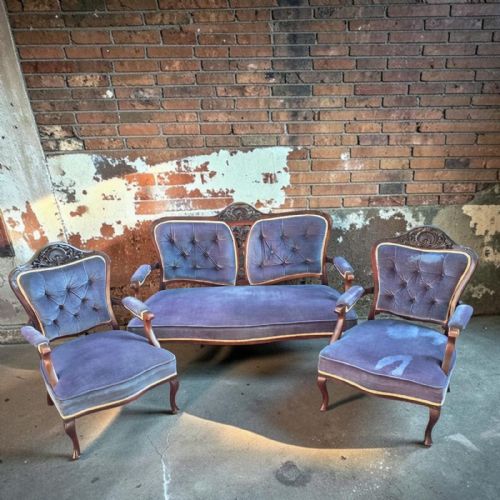
The selections span various forms, including open armchairs, elbow chairs, and matching salon suites featuring velvet upholstery.
Originating largely from the nineteenth and early twentieth centuries, these pieces reflect the revival styles popular in British and continental drawing rooms.
Materials and construction
Frames are constructed from dense timbers such as walnut, mahogany, and rosewood, occasionally finished with giltwood or ebonised surfaces.
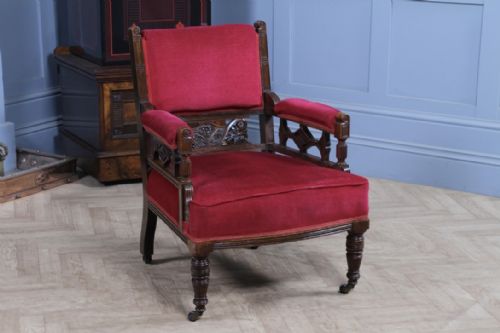
Upholstery relies on traditional textiles, predominantly velvet in rich red tones, paired with exposed wooden frames and brass castors.
Listings feature walnut, mahogany, rosewood, and giltwood frames upholstered in velvet fabrics across Victorian and Edwardian eras.
Assessing quality and finish
The distinction lies in the depth of timber carving and the architectural sharpness of revival details, ranging from plain frames to intricate Louis XVI style ornaments.
Proportion and scale dictate the visual presence of the chair, with well-balanced frames providing both structural integrity and refined presence in a modern interior.
James Shoolbred·Jenks and Wood
The Antique Velvet Parlour Armchair Glossary
- Parlour armchair
- A seated piece intended for a formal reception room, combining decorative woodwork with upholstered comfort.
- Giltwood
- Timber treated with gold leaf or gilt preparation to create a lustrous surface finish.
- Aesthetic Movement
- A late nineteenth-century design style emphasising artistic visual qualities over heavy historical revivalism.
- Salon suite
- A matched set of seating furniture, typically comprising a settee and multiple armchairs for a drawing room.
Antique Velvet Parlour Armchair: Frequently Asked Questions
How do I date an armchair?
Dating relies on timber choice, carved ornamentation, and structural proportions typical of Victorian or Edwardian workshop practices.
Changes in revival styles, from French Louis influences to Aesthetic Movement lines, also help narrow the decade of production.
Where were these chairs used?
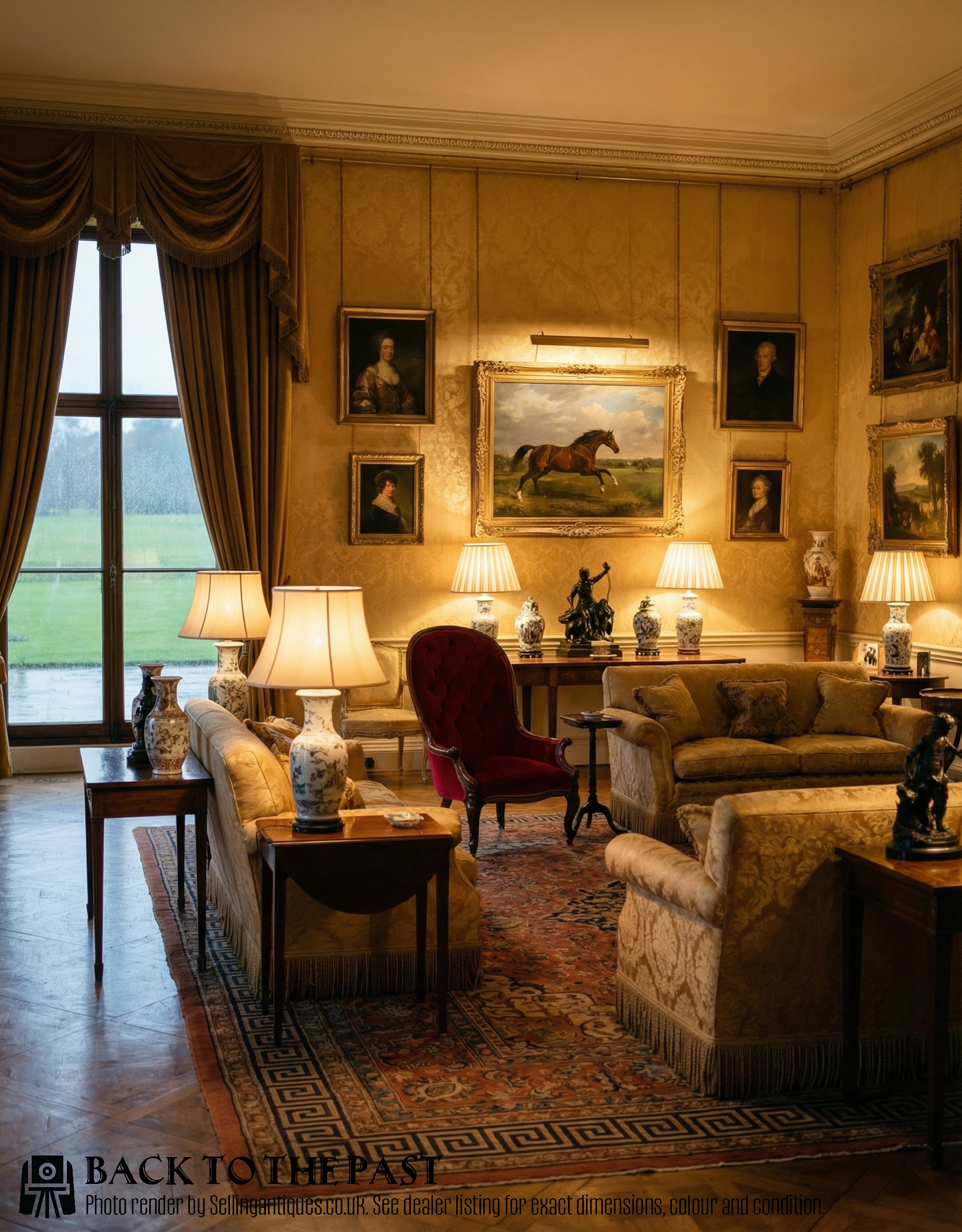
These chairs sat in formal Victorian and Edwardian drawing rooms, parlours, and private sitting rooms for entertaining guests.
They often formed part of larger salon suites alongside matching settees and smaller occasional seats.
Are velvet chairs difficult to maintain?
Velvet requires gentle brushing to maintain the pile and protect the textile from direct sunlight and heavy friction.
Routine care keeps the rich texture and deep colour of the upholstery intact over decades of domestic use.