


Antique Two Seat Couch
An antique two seat couch brings compact comfort and formal elegance to a room, spanning styles from Edwardian drawing rooms to Victorian parlours.
Antique Two Seat Couch
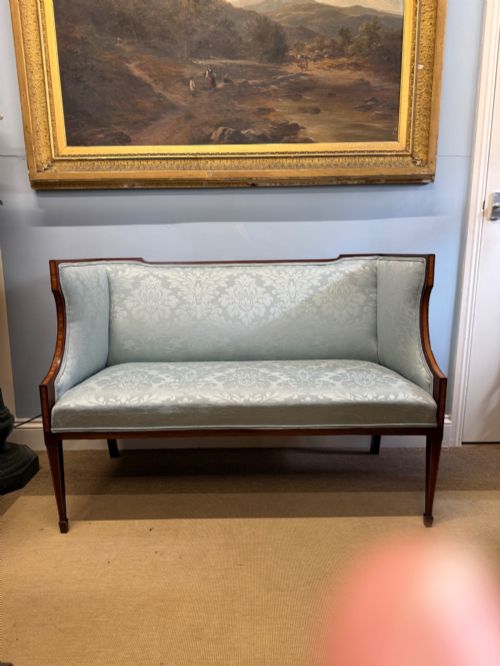
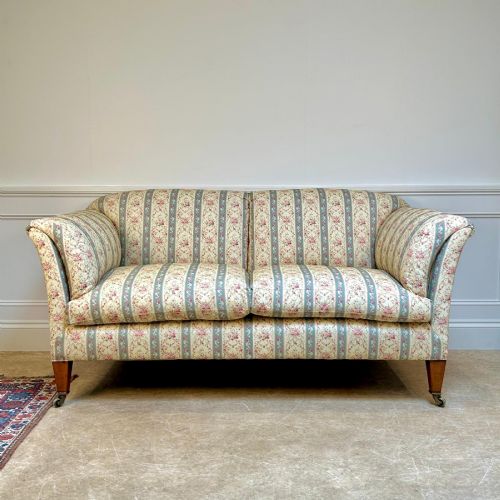
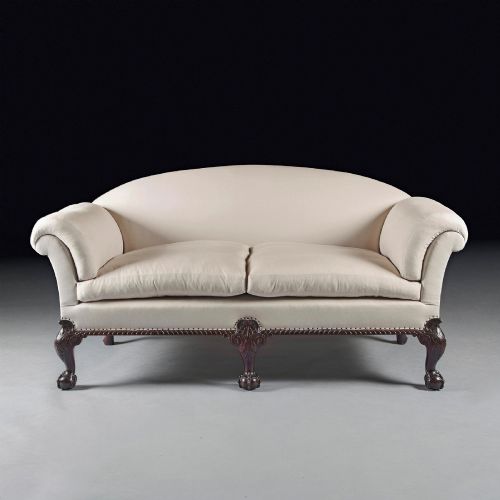
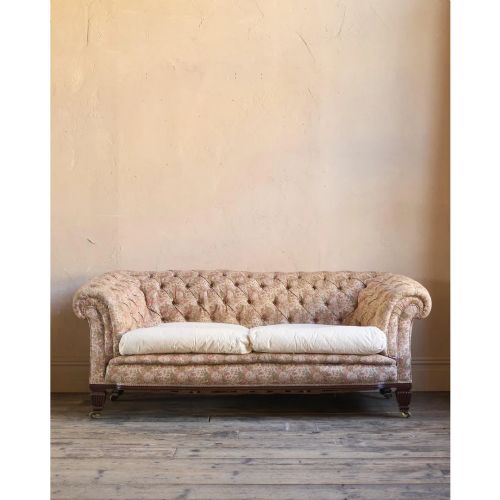
When you search for an antique two seat couch, you find smaller settees, love seats, and compact sofas designed for intimate seating. The evidence shows these pieces appearing across the Georgian, Victorian, and Edwardian periods, frequently taking forms such as the camel back, salon settee, and window seat.
You meet Edwardian mahogany and satinwood models alongside 19th-century rosewood and walnut frames. English country house pieces and French revival styles also populate the selections, offering low-slung deep seating or upright show-frame arrangements.
How they were made
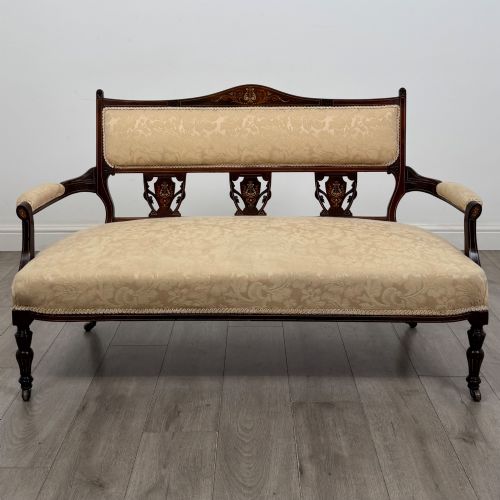
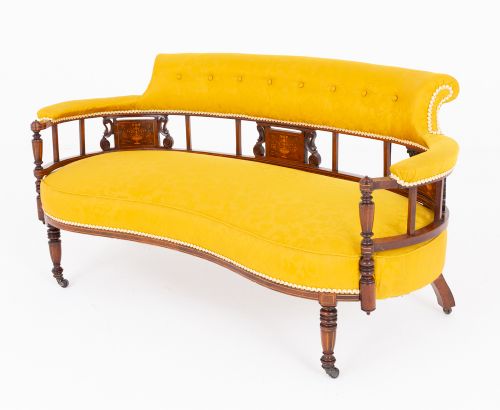
Cabinet makers utilised dense timbers like mahogany, walnut, and rosewood for structural frames, often enriching surfaces with marquetry inlay, satinwood banding, or ormolu mounts. Brass castors support many of the heavier wooden legs, while exposed show-frames display polished grain.
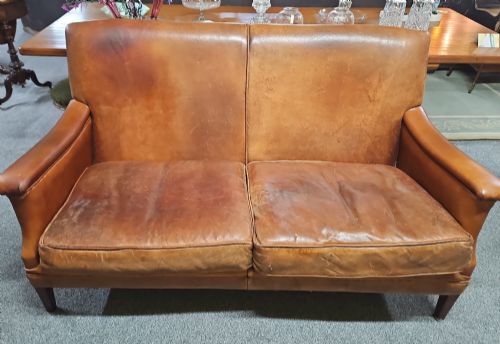
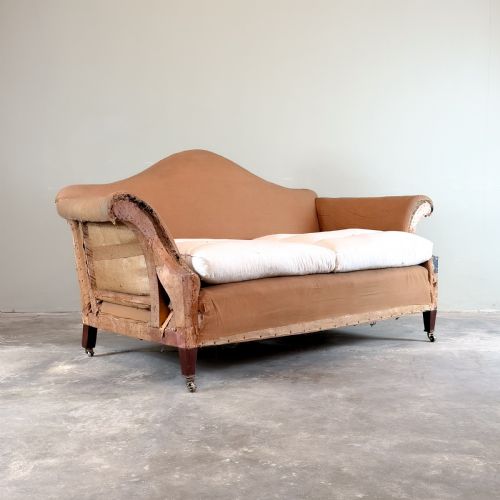
Upholstery relies on traditional stuffing secured within fabric, silk, or leather coverings. Canework appears on French-inspired and light salon frames, combining woven cane panels with carved wooden structures.
Some Edwardian window seats doubled as daytime resting spots for reading by the light.
What varies in quality
The distinction between standard production and top-tier work rests on the crispness of timber carving and the subtlety of inlay details. Finer pieces display select veneers, precise marquetry, and substantial brass mounts rather than pressed metal or plain timber.
Frame integrity dictates longevity, separating sturdy hardwood joinery from looser constructions. Maker attribution, particularly associated with established workshops, elevates the standing of a couch within the broader range of surviving examples.
Howard and Sons
The Antique Two Seat Couch Glossary
- Marquetry
- Decorative patterns formed by fitting together small pieces of veneer into wooden surfaces. This technique creates floral or geometric motifs across mahogany and rosewood frames.
- Ormolu
- Gilt bronze mounts applied to furniture for decorative effect. These metallic ornaments frequently accent French revival and neoclassical salon pieces.
- Show-frame
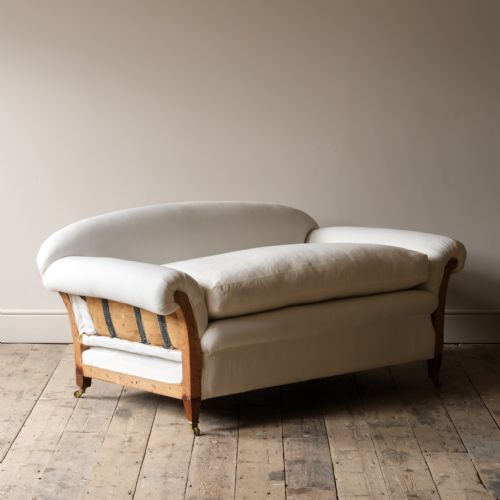
- A wooden structural frame left partially visible around the upholstered padding. It allows the carved or polished timber to form part of the visual design.
- Canework
- Woven cane panels utilised for seats or backrests. This technique provides a lightweight, resilient surface often seen on Edwardian and French-influenced couches.
- Camel back
- A curved upper backrest profile that rises in gentle humps resembling a camel. This traditional silhouette appears on various Edwardian and Georgian style sofas.
Antique Two Seat Couch: Frequently Asked Questions
How do I date an antique two seat couch?
Dating relies on identifying the prevailing style, timber choices, and construction methods associated with specific decades. Georgian, Victorian, and Edwardian pieces each exhibit distinct design traits.
Secondary indicators include the type of upholstery foundation, the presence of inlay, and any maker stamps or workshop labels found on the wooden frame.
Where were these couches placed originally?
These compact seats found homes in drawing rooms, private boudoirs, and bedroom window alcoves. Their smaller proportions suited more intimate domestic spaces.
Larger country house models served in reception halls, while salon settees provided formal seating for guests during afternoon visits.
Can I use an antique couch every day?
Many sturdy Victorian and Edwardian frames withstand daily use, provided the internal webbing and padding remain secure. Solid timber construction offers lasting structural support.
Original silk or delicate fabrics require gentle treatment, whereas leather and robust upholstery fabrics handle regular sitting more comfortably.
What is the difference between a settee and a couch?
Historically, settees featured upholstered seats and backs with rigid wooden arms, often designed for upright formal sitting. Couches typically offered a more relaxed, inclined posture.
Over time, the terms became interchangeable in marketplace descriptions, both referring to multi-seater upholstered wooden seating.