



Antique Turquoise Drop Jewellery
Antique turquoise drop jewellery brings together vivid robin's egg blue stones and warm gold or silver settings to create wearable Victorian, Edwardian, and Arts and Crafts pieces.
Antique Turquoise Drop Jewellery
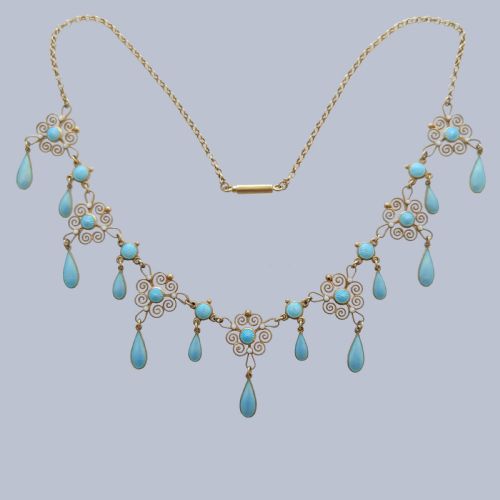
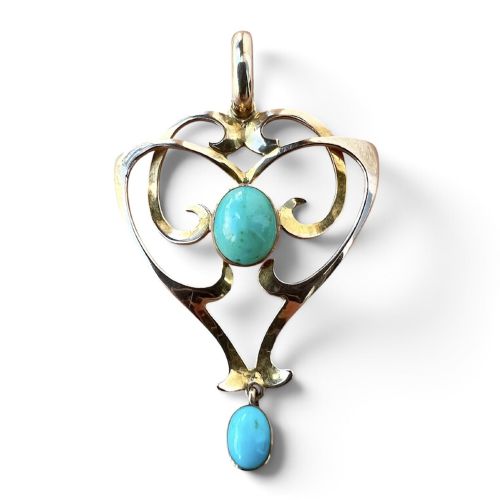
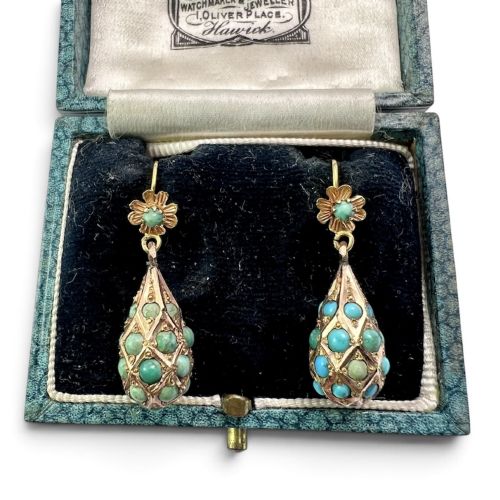
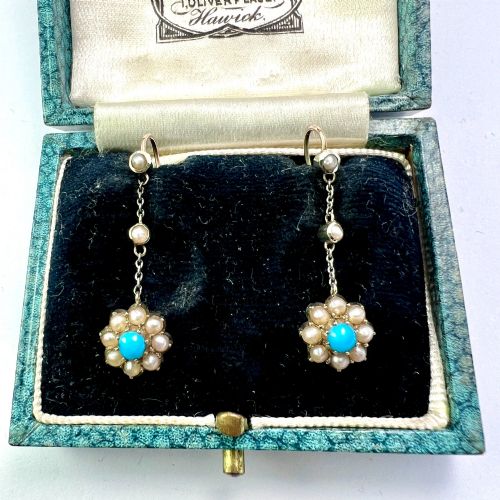
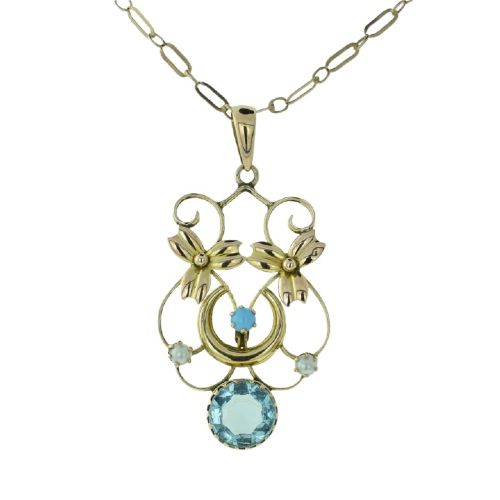
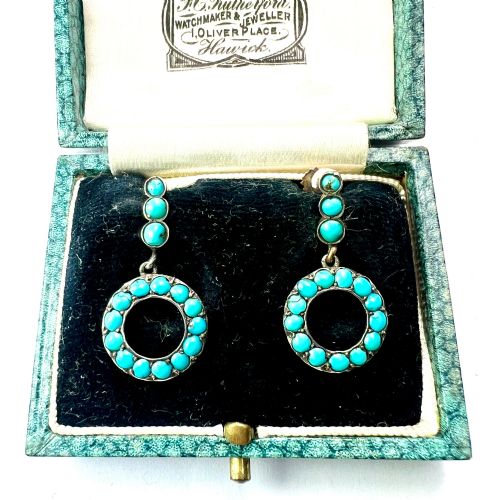
Antique turquoise drop jewellery encompasses earrings, pendants, necklaces, and brooches featuring dangling elements set with turquoise stones. The pieces encountered on this page span the Victorian, Edwardian, and Art Nouveau periods, alongside Arts and Crafts and Mid-Century examples.
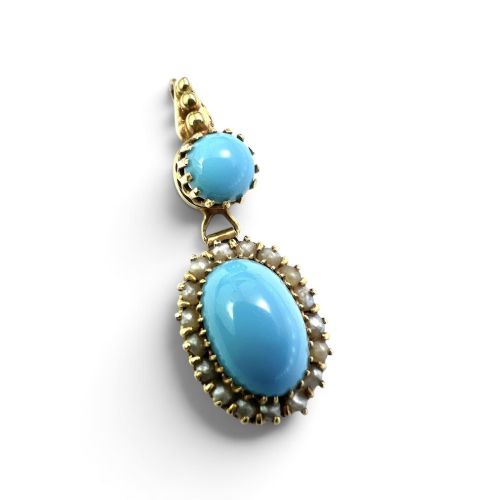
Earrings and pendants form the bulk of the selection, often incorporating seed pearls, enamel, or blue topaz alongside the central turquoise. Settings range from delicate 9ct and 15ct rose gold to silver, reflecting the shifting tastes of the nineteenth and early twentieth centuries.
Materials and construction techniques
Craftsmen utilised both gold and silver, casting or hammering precious metals into intricate floral, geometric, and filigreed frames. Natural turquoise stones and matrix turquoise were cut en cabochon and mounted securely within claw or bezel settings.
Pearls, enamel, and occasionally blue topaz were integrated alongside the turquoise using traditional jeweler's soldering and setting methods. Makers of the Arts and Crafts and Etruscan Revival movements favoured hand-wrought gold and silver work that highlighted the natural variations in the stones.
Antique Turquoise Drop Jewellery Retail Price Guide 2026
Typical asking prices for turquoise drop jewellery among the pieces listed under this phrase on Sellingantiques today, from the lower quarter to the upper quarter. They describe what is for sale here now, not the wider market.
The listings feature Victorian, Edwardian, Arts and Crafts, and Mid-Century periods, utilising materials including turquoise, 9ct and 15ct gold, silver, pearls, and enamel.
Distinctions in craftsmanship and design
Quality in antique turquoise drop jewellery rests on the integration of the stones with the metalwork and the complexity of the design. Superior pieces display substantial gold weight, such as 15ct gold settings, paired with well-matched natural turquoise and secure stone retention.
Artisanal distinction separates standard production from pieces bearing the marks of known makers like Deakin & Francis, Murrle Bennett, or Dorrie Nossiter. Finer examples exhibit meticulous hand-finishing, balanced proportions in dangling drops, and thoughtful combinations of secondary gems like seed pearls and enamel.
Deakin & Francis·Murrle Bennett·Dorrie Nossiter·Liberty & Co
The Antique Turquoise Drop Jewellery Glossary
- Cabochon
- A gemstone shaped and polished with a smooth, convex top rather than faceted. This cut preserves the robin's egg blue colour and natural matrix of turquoise.
- Matrix
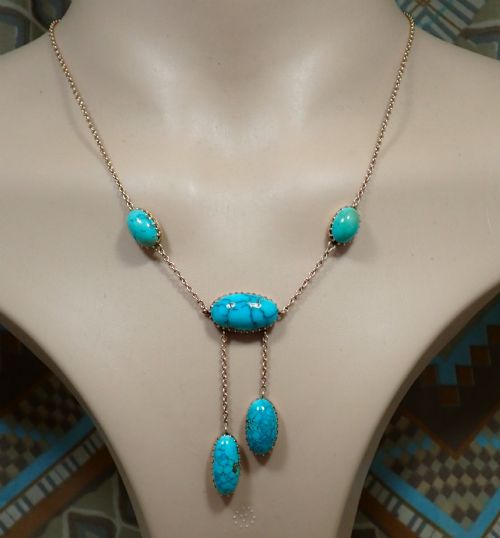
- The host rock material remaining within or embedded on the turquoise stone. It appears as dark web-like veins running through the blue gem.
- Negligee necklace
- A style of pendant necklace featuring two dangling drops suspended at slightly different lengths from a central festoon. Popular during the Edwardian and Arts and Crafts eras.
- Parure
- A matched set of jewellery designed to be worn together, typically including earrings, a necklace, and a brooch or ring. These coordinated suites share materials and design motifs.
- Seed pearl
- A very small, naturally occurring pearl, often fractionally drilled and sewn or pegged into clusters. They frequently accompany turquoise in Victorian and Edwardian drop designs.
Antique Turquoise Drop Jewellery: Frequently Asked Questions
What is antique turquoise drop jewellery?
Antique turquoise drop jewellery refers to earrings, pendants, and necklaces created during the Victorian, Edwardian, and Arts and Crafts periods that incorporate suspended turquoise stones. These items typically feature blue gems set in gold or silver, often accompanied by pearls or enamel.
The category spans delicate floral earrings, dangling teardrop pendants, and elaborate parure sets. Each piece highlights the distinctive robin's egg blue colour prized by jewellers of the nineteenth and early twentieth centuries.
How should I wear these pieces?
These items suit both formal evening wear and everyday attire, depending on the scale of the drop earrings or pendant. Pairing a single pendant necklace with a simple neckline allows the intricate gold or silver work to stand out.
How do I care for antique turquoise?
Turquoise is a relatively soft and porous gemstone that absorbs oils, cosmetics, and water easily. Clean pieces gently with a dry, soft cloth and avoid immersion in liquids or exposure to harsh chemicals.
How can I tell the period of a piece?
Dating relies on stylistic clues, metal purity marks, and construction techniques specific to eras like the Victorian or Edwardian periods. For instance, Etruscan Revival pieces display granulation and classical motifs, while Art Nouveau items feature flowing, organic lines.