



Antique Trombone Chain
An antique trombone chain offers a distinctive tubular link design that brings robust elegance and historical character to any jewellery collection.
Antique Trombone Chain
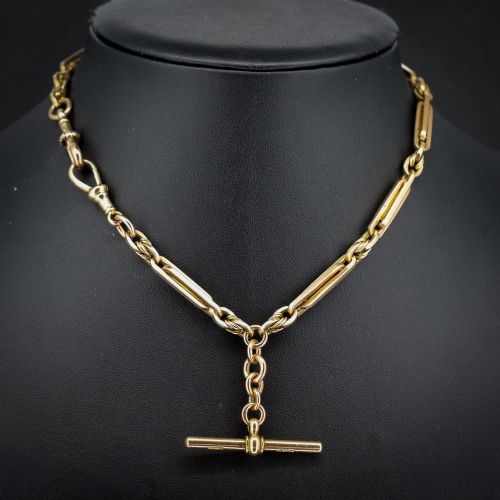
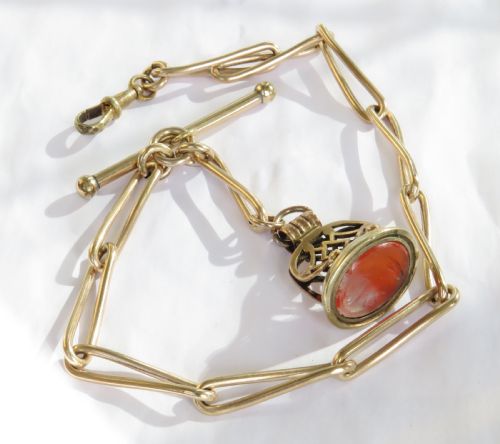
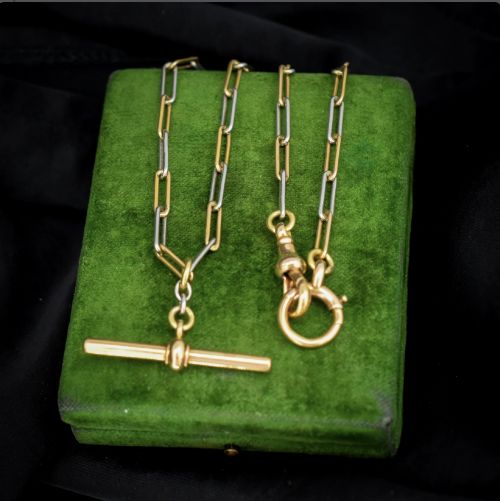
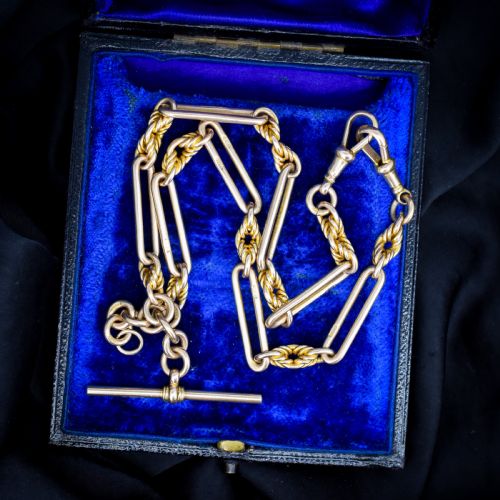
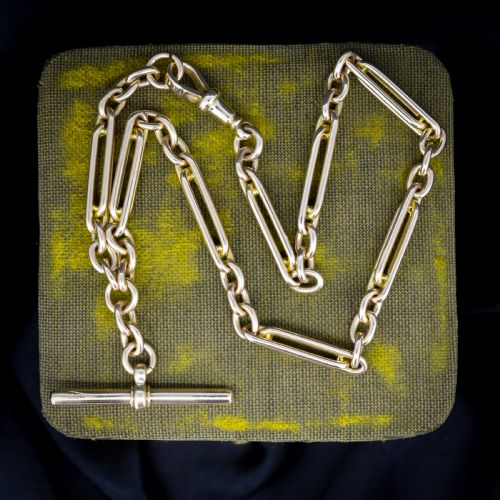
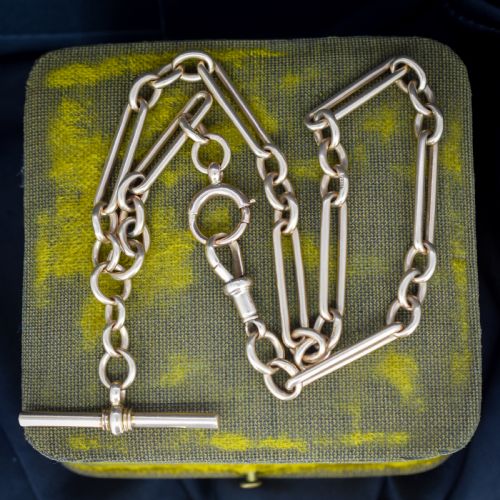
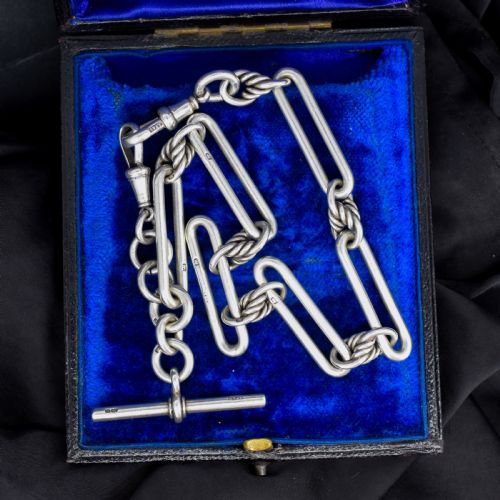
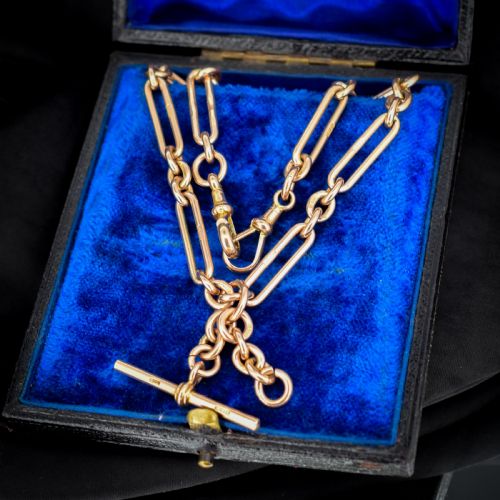
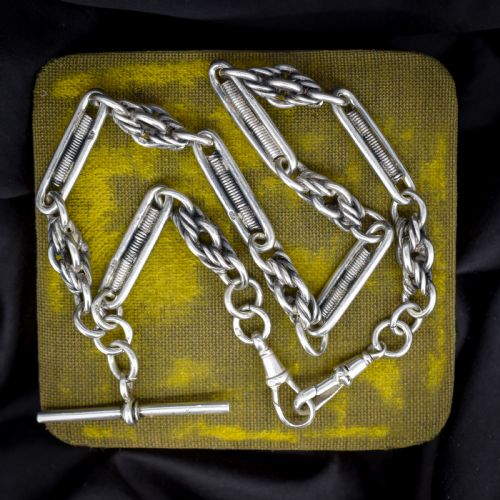
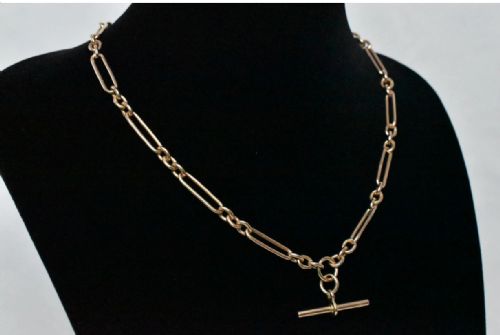
The versions most commonly met on this page include watch chains, albert chains, and converted necklaces fashioned from sterling silver, yellow gold, and rose gold. Many examples incorporate traditional fittings such as dog clips, T-bars, and love knot links, reflecting their original purpose as pocket watch attachments.
Makers utilised various metals including 9ct gold, 18ct gold, and rolled gold, occasionally combining them with materials like platinum, carnelian, or turquoise. These versatile items function equally well worn today as substantial necklaces or layered guard chains.
How these chains were made
Goldsmiths and silversmiths constructed these pieces using durable precious metals, shaping sterling silver, 9ct gold, 18ct gold, and rolled gold into distinct structural components. Individual trombone links were formed and joined securely with smaller connecting rings or fetter links to ensure flexibility and strength.
Craftsmen incorporated functional elements such as swivel dog clips, bolt rings, and T-bars, often securing them with jump rings that integrated seamlessly into the overall design. Decorative additions like love knot motifs and gemstone accents such as carnelian or turquoise were hand-assembled into the broader chain structure.
Antique Trombone Chain Retail Price Guide 2026
Typical asking prices for trombone chain among the pieces listed under this phrase on Sellingantiques today, from the lower quarter to the upper quarter. They describe what is for sale here now, not the wider market.
Some chains incorporate tiny love knots that look like miniature metal pretzels holding the trombone links together.
What varies in quality
The choice of material heavily influences the overall quality, distinguishing solid precious metals like 18ct gold and sterling silver from rolled gold or lower karat alternatives. Heavier gauge wire and robust link construction denote superior durability and substance in daily wear.
The presence of original hallmarking, intact maker marks, and complete period fittings such as matching dog clips and T-bars elevates the integrity of a piece. Precision in the geometric assembly of the trombone links and the tightness of the connecting knots separate standard examples from finer specimens.
The Antique Trombone Chain Glossary
- Trombone link
- A jewellery link shaped like an elongated rectangle or tube, resembling the slide of a trombone. These links form the characteristic repeating pattern of the chain.
- Albert chain
- A short watch chain designed to secure a pocket watch in a waistcoat pocket, typically featuring a T-bar at one end and a swivel clip at the other. Many survive today converted into necklaces.
- Dog clip
- A spring-loaded swivel clasp attached to the end of a watch chain, originally used to secure a pocket watch or fob. It remains a practical fastening for modern necklace wear.
- T-bar
- A short transverse bar attached to the centre of an albert chain, used to anchor the chain through a buttonhole. In contemporary use, it often hangs as a decorative pendant feature.
- Love knot
- A decorative motif formed by intertwined strands of metal, frequently interspersed between trombone links to add texture and visual interest. This motif dates back centuries as a symbol of attachment.
Antique Trombone Chain: Frequently Asked Questions
How do you wear an antique albert chain?
An antique albert chain can be worn around the neck by fastening the dog clip to a jump ring or directly to the opposing end of the chain. Many pieces retain their original T-bars and dog clips, which hang as decorative front accents.
Longer guard chains can be doubled over the head for a layered appearance. Shorter lengths sit neatly on the collarbone as statement necklaces.
What metals were used for these chains?
These chains appear in a variety of precious metals reflecting the period of their manufacture. Sterling silver is common in nineteenth-century examples, while gold variations include nine carat, ten carat, eighteen carat, and rose gold.
Rolled gold was also utilised as an accessible alternative during the early twentieth century. Occasionally, makers combined white metals like platinum with yellow gold for contrast.
How can you date an antique chain?
Dating an antique chain relies on examining hallmarks stamped onto the metal links, dog clips, or T-bars. These assay marks often reveal the year of manufacture, city of origin, and metal purity.
Stylistic cues such as the inclusion of love knot links or specific clasp types also help place a piece within the Victorian, Edwardian, or Art Deco eras.