





Antique Triple Chandelier
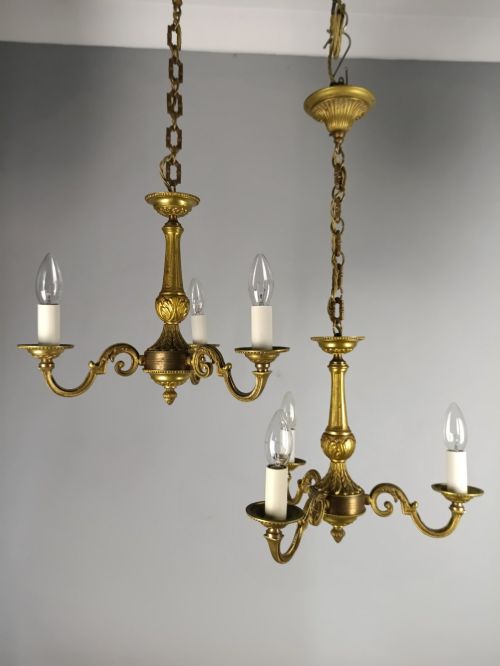
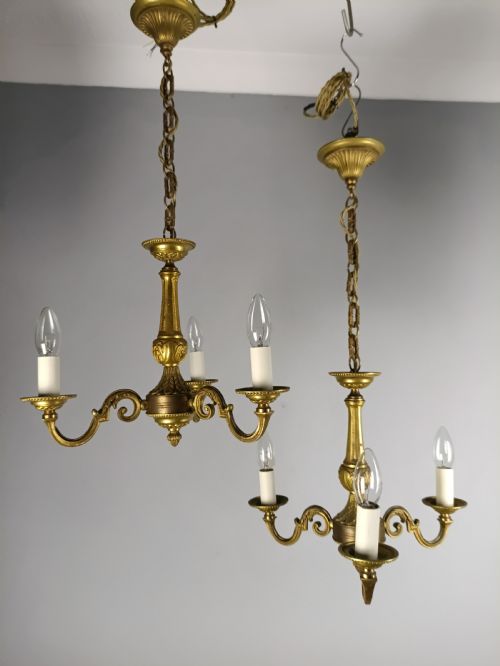
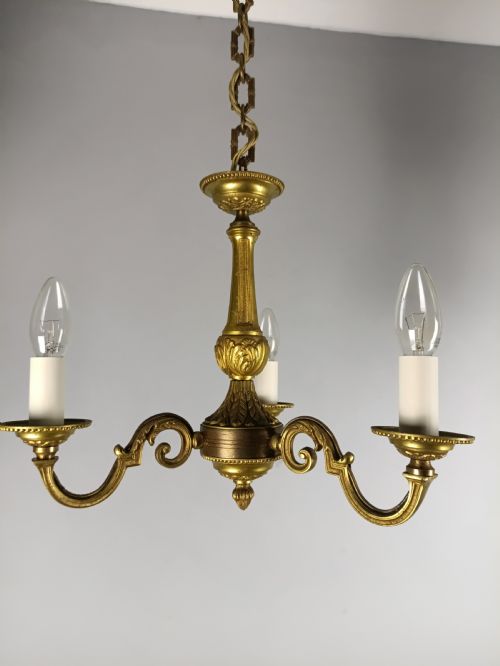
An antique triple chandelier brings focused three-bulb illumination and classic proportion to a hall or room, rooted in French and Edwardian design.
Antique Triple Chandelier
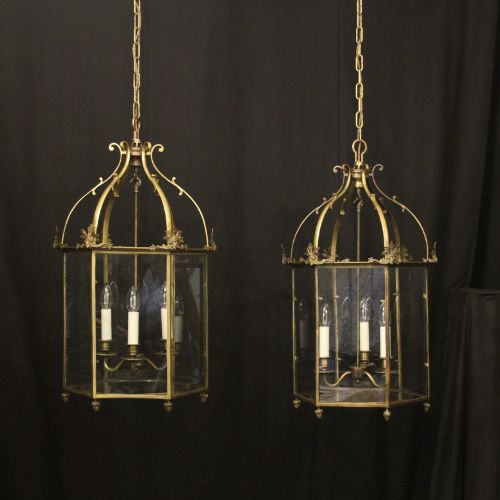
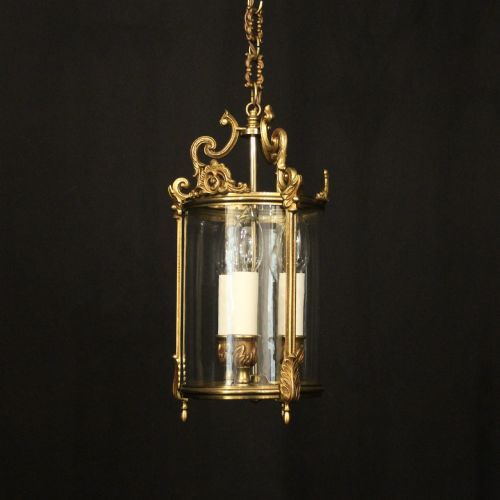
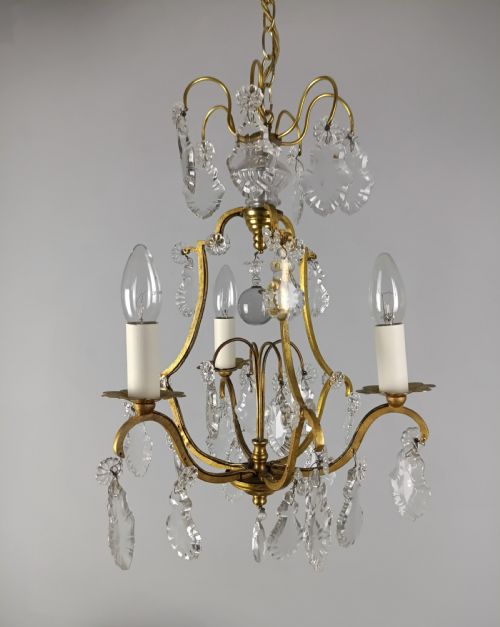
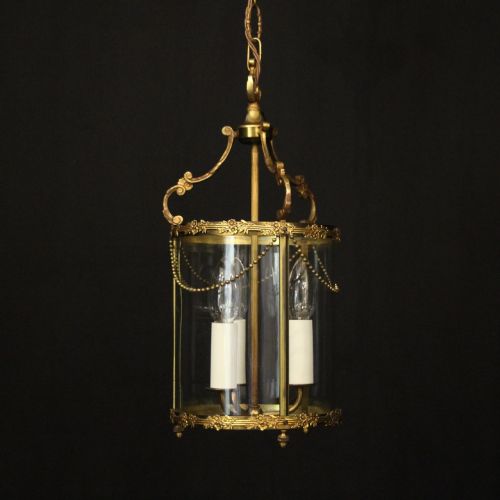
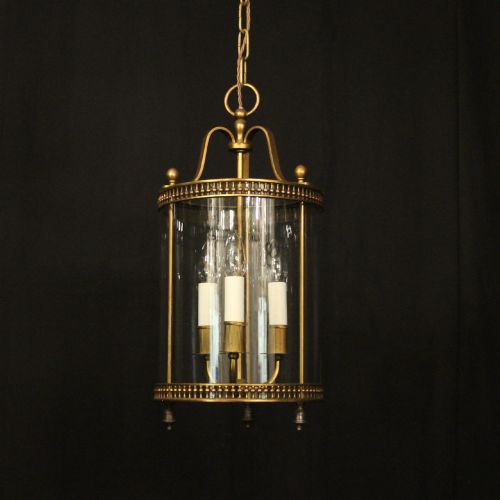
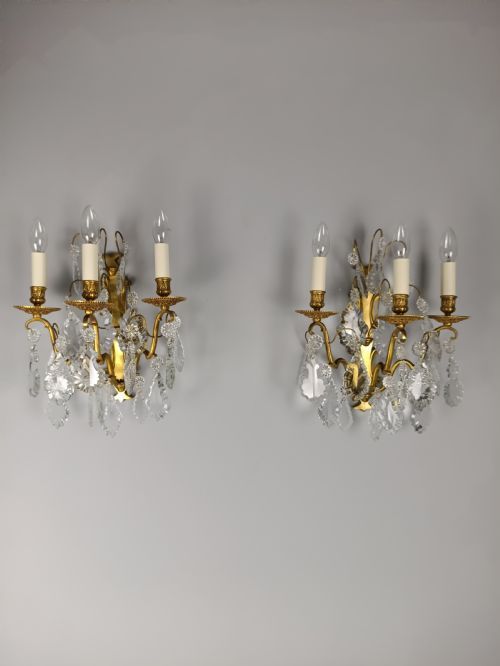
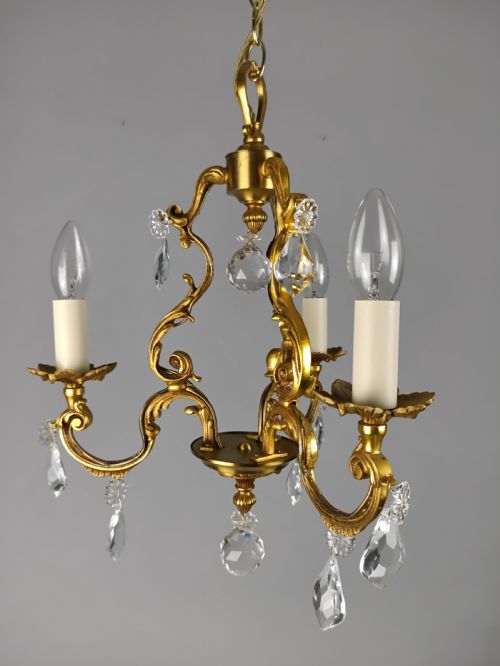
An antique triple chandelier comprises three-light ceiling fixtures and hanging lanterns originating mainly from the 19th century up to 1930. The selections here centre on French forms, including birdcage frames, empire styles, and baroque wall lights alongside Edwardian brass examples.
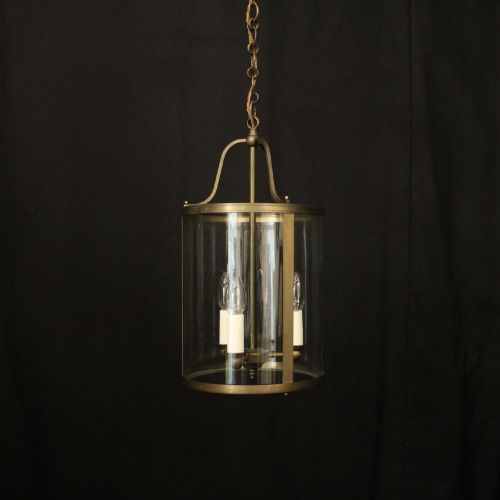
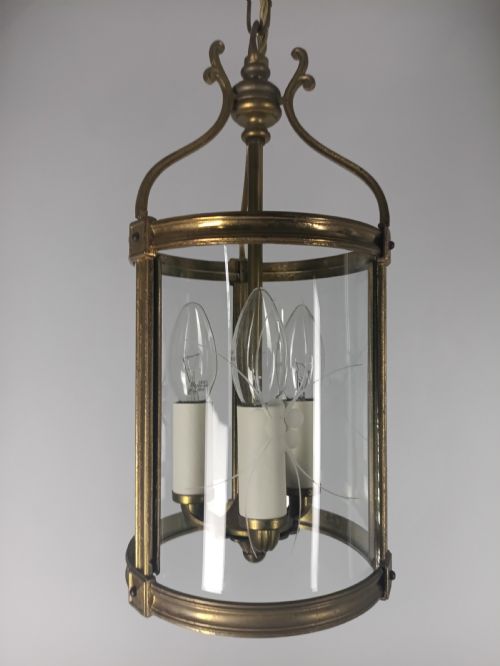
Buyers seeking an antique triple chandelier encounter pieces designed to hold three distinct light sources within compact or elongated brass, bronze, and gilt frames. The inventory spans hall lanterns, ceiling lights, and matching wall sconces built for smaller or medium spaces.
How they were made
Makers constructed these fixtures using cast brass, gilt bronze, and gilt brass frames, often incorporating shaped or etched glass panels and convex glass. Crystal drops and cut crystal elements add reflective weight to the metal structures.
The construction relies on mechanical assembly of cast components, hand-cut glass fitting, and applied gilding. Lanterns and birdcage chandeliers utilise secure metal framing to support internal lamp holders and glass enclosures.
Antique Triple Chandelier Retail Price Guide 2026
Typical asking prices for triple chandelier among the pieces listed under this phrase on Sellingantiques today, from the lower quarter to the upper quarter. They describe what is for sale here now, not the wider market.
Some lanterns feature convex glass designed to make the interior candles look delightfully rounder.
What varies in quality
The refinement of the casting and the crispness of the gilt work define the upper tier of these pieces. Heavier bronze and brass foundations combined with genuine cut crystal rather than plain glass separate sophisticated examples from simpler utility lighting.
Proportion and decorative detail dictate distinction, particularly in the chasing of the gilt metal and the clarity of etched glass panels. Intricate stylistic elements like baroque scrolling or empire motifs elevate the visual weight of the fixture.
The Antique Triple Chandelier Glossary
- Birdcage chandelier
- A lighting form featuring a metal framework shaped like an open cage to hold crystal drops and lights.
- Gilt bronze
- Bronze metal treated with a thin layer of gold or gold-coloured wash to create a bright metallic finish.
- Convex lantern
- A hanging light fixture utilising curved glass panels that bulge outward to diffuse the internal glow.
- Empire style
- A neoclassical design language characterised by symmetry, military motifs, and classical architectural proportions.
Antique Triple Chandelier: Frequently Asked Questions
Where should I hang a triple chandelier?
These fixtures suit hallways, landings, and smaller rooms where a single-bulb light lacks presence but a large multi-arm chandelier overwhelms the ceiling height.
Their compact three-light configuration provides balanced illumination without dominating the floor space below.
How do I identify French empire style?
French empire pieces typically display classical symmetry, geometric lines, and restrained ornamentation drawn from ancient Roman and Greek architecture.
They rely on clean architectural forms rather than the heavy scrolling seen in baroque or rococo designs.
Are these lights rewired for modern use?
Many surviving examples have been updated with modern wiring to meet contemporary electrical standards while retaining their original metal and glass bodies.
Checking the listing details confirms whether rewiring has been carried out on a specific piece.
What is the difference between a lantern and a chandelier?
Chandeliers typically feature exposed arms and lights branching outward, whereas lanterns enclose the light source within a framed glass case or cage.
Lanterns were traditionally hung in entryways and corridors to protect the flame or bulb from drafts.