



Antique Travel Furniture
Antique travel furniture is practical officer equipment made to fold, pack and journey across empires, offering clever storage for the modern home.
Antique Travel Furniture
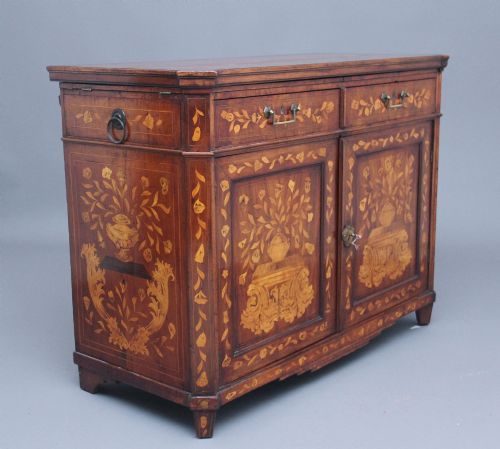
When you search for antique travel furniture, you encounter sturdy utilitarian pieces designed for officers on the move during the Georgian, Victorian and 19th-century periods. These items allowed people to pack up household goods quickly when embarking on long journeys.
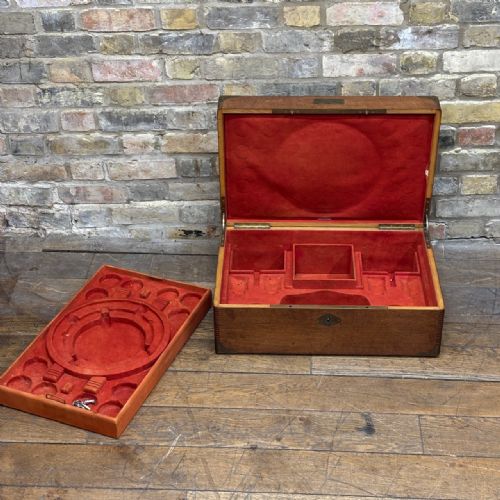
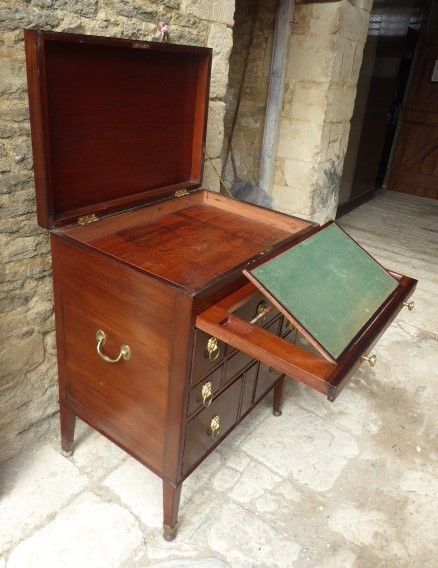
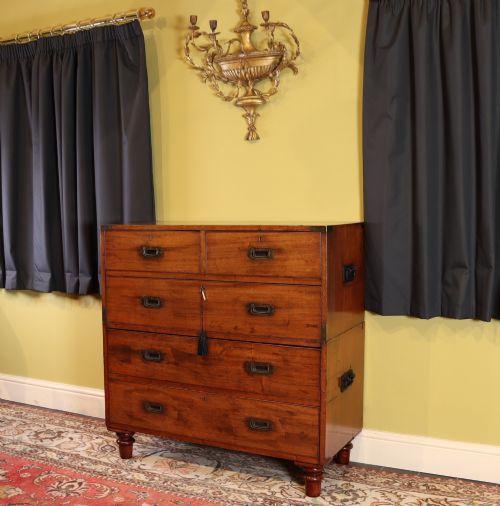
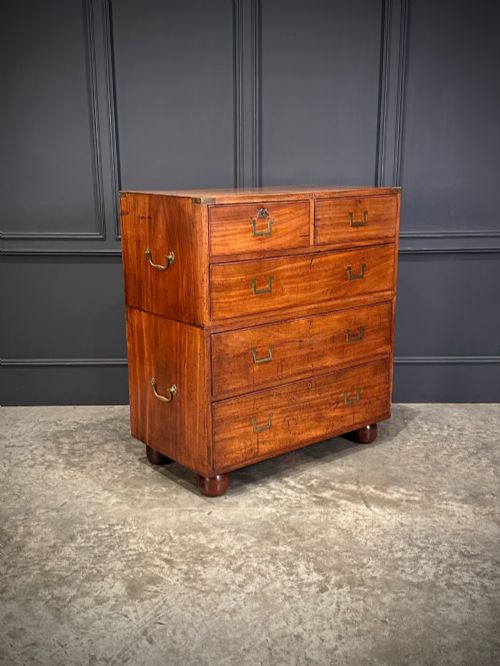
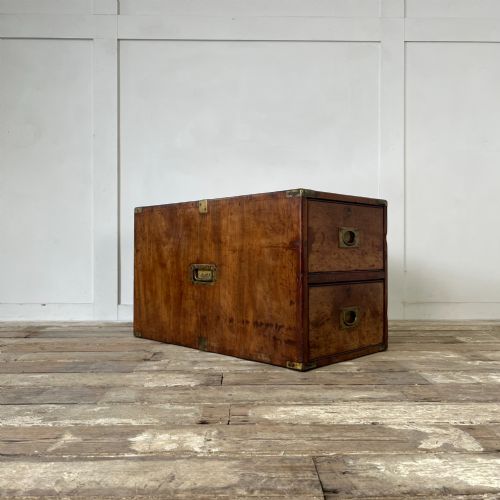
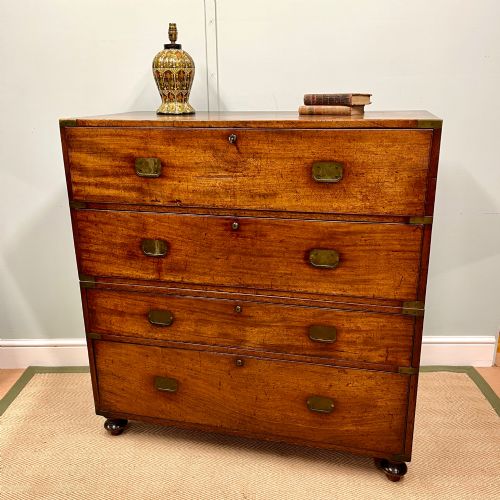
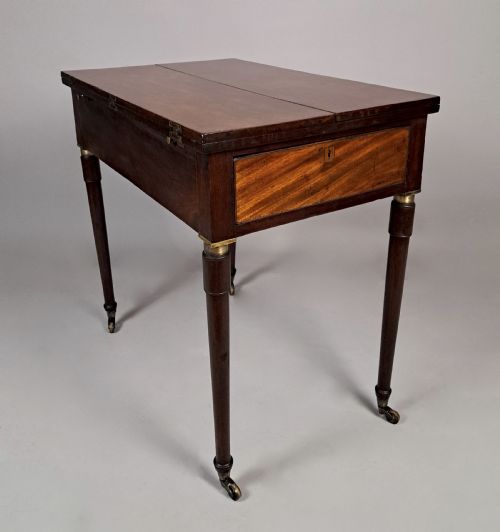
The most common forms on this page include mahogany, teak and camphor wood chests of drawers, alongside smaller desks, shaving mirrors and travelling cabinets. Many of these chests split into two separate parts for easier transport.
Makers built these objects to endure rough travel conditions by incorporating recessed brass handles, reinforced corners and tight joints that resisted humidity and shifting loads.
How they were made
Cabinet makers relied on dense timbers like mahogany, teak and camphor wood to withstand damp climates and heavy handling on long sea voyages. These woods provided structural stability while taking a fine finish.
Brass mountings, strapwork and corner brackets protected vulnerable edges from impact while keeping the overall profile flush so pieces could slide into packing cases. Recessed handles prevented snagging during transit.
Antique Travel Furniture Retail Price Guide 2026
Typical asking prices for travel furniture among the pieces listed under this phrase on Sellingantiques today, from the lower quarter to the upper quarter. They describe what is for sale here now, not the wider market.
Listings feature 19th-century campaign chests built from mahogany, teak and camphor wood, often fitted with brass hardware.
What varies in quality
Quality rests in the precision of the mechanics, such as how smoothly secretaire drawers drop and whether brass fittings sit flush into the timber rather than protruding. Superior pieces display clever internal compartments and original locking mechanisms.
The choice of primary wood and the integrity of secondary timbers dictate the standard of the build. Dense grain selection and minimal replacement parts distinguish finer examples from standard utilitarian gear.
S. W. Silver and Co·Gillows·Allen of London
The Antique Travel Furniture Glossary
- Secretaire
- A cabinet or chest containing a fitted writing drawer with small pigeonholes and a fold-down writing surface. This allowed officers to manage correspondence while stationed away from home.
- Recessed brass handle
- A flush fitting let into the timber drawer front or side so that no hardware protrudes during packing. It provides a secure grip while maintaining a flat exterior surface.
- Camphor wood
- An aromatic timber selected for campaign trunks because its natural scent repelled insects and protected stored woollens or uniforms in tropical climates. It weighs relatively little while remaining robust.
- Two-part chest
- A modular chest constructed as an upper and lower box that stack together and lock in place with side brackets. This division halved the weight and bulk for porters and pack animals.
Antique Travel Furniture: Frequently Asked Questions
Why do campaign chests split in two?
These chests split into separate upper and lower sections so porters, animals and ship crews could manage the weight and bulk during military campaigns.
Dividing the load also made packing tighter inside cargo holds and wagons easier.
How do I identify camphor wood?
Camphor wood stands out through its distinct aromatic scent and pale honey-brown grain that darkens with age.
It was specifically chosen for trunks to protect uniforms from insects during tropical postings.
Were these pieces only used by military officers?
While military officers and colonial administrators commissioned most campaign pieces, diplomats and wealthy travellers also utilised them.
Their modular design suited anyone needing durable portable storage for extended travel.
Where should I place a campaign chest at home?
A campaign chest works well as a bedroom chest of drawers or a living room side table because its flat sides and brass corners fit neatly against walls.
Keep solid wood pieces away from direct heat sources to prevent timber shrinkage.