



Antique Transferware Pot
These antique transferware pots bring patterned earthenware and glazed pottery into everyday rooms.
Antique Transferware Pot
When buyers search for an antique transferware pot, they find an array of utilitarian and decorative ceramics produced across the nineteenth and early twentieth centuries. The selection spans domestic tablewares and bathroom items including chamber pots, teapots, butter dishes, and decorative jars. Most pieces date from the Victorian era, alongside examples from the Georgian and Edwardian periods.
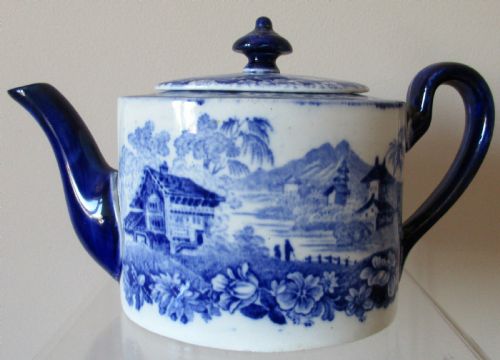
The assortment on this page reflects the broad range of forms typical of nineteenth-century English potteries. Buyers frequently encounter blue and white transfer printed teapots, chamber pots, and covered storage vessels, often bearing named patterns or regional motifs. These utilitarian objects transitioned from functional household items into collected decorative pieces over time.
How they were made
Potters shaped these vessels using earthenware and terracotta, applying a smooth ceramic glaze to seal the porous clay body. The distinct decoration relied on transfer printing, where engraved copper plates transferred inked patterns onto tissue paper before application to the biscuit fired ceramic.
Following the transfer of the design, pieces underwent a secondary firing to fix the pigment beneath or upon the transparent glaze. Certain refined tablewares received delicate applications of gilt highlights to accent handles, rims, and moulded details.
Antique Transferware Pot Retail Price Guide 2026
Typical asking prices for transferware pot among the pieces listed under this phrase on Sellingantiques today, from the lower quarter to the upper quarter. They describe what is for sale here now, not the wider market.
Listings span the nineteenth and early twentieth centuries, featuring earthenware bodies finished with traditional ceramic glaze.
What varies in quality
Quality rests in the crispness of the transfer print and the uniformity of the glaze application across complex moulded surfaces. Stronger examples display deep, sharp ink transfer without blurring or smudging, whereas lesser pieces show uneven pattern alignment.
The sophistication of the ceramic body and the intricacy of the form distinguish standard utility vessels from higher grade decorative tablewares. Relief modeling, such as lion mask handles or specialised earthenware bodies like Pratt Ware, elevates the distinction of individual pieces.
Mintons
The Antique Transferware Pot Glossary
- Transferware
- Earthenware decorated by applying a printed design from an engraved copper plate onto the ceramic surface before glazing and firing. This technique allowed potteries to produce intricate pictorial scenes with consistent detail across multiple vessels.
- Pratt Ware
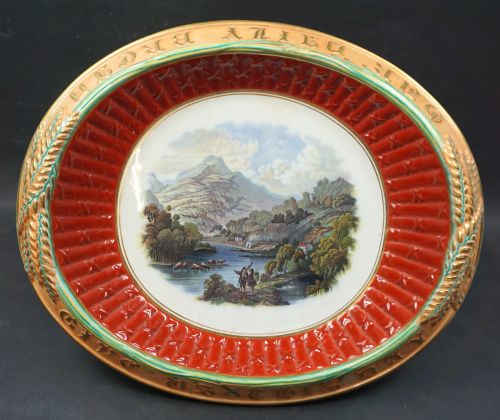
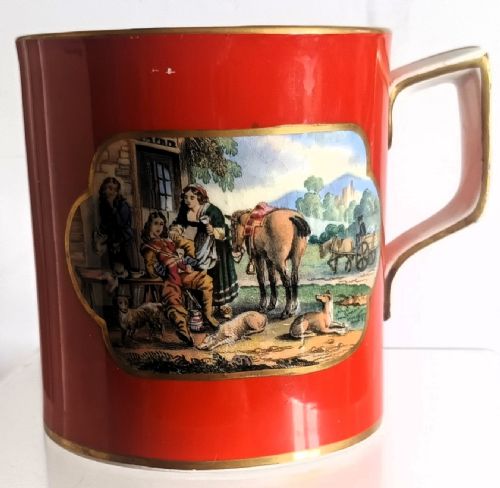
- A type of nineteenth-century English earthenware associated with multi-coloured underglaze transfer printing. The method produced vibrant pictorial decoration on pot lids, jars, and platters.
- Earthenware
- A porous pottery body fired at lower temperatures and rendered impermeable to liquids through the application of a vitreous glaze. It forms the structural base for the majority of nineteenth-century transfer printed domestic wares.
- Glaze
- A glassy coating fused to the ceramic body during firing to provide a smooth, waterproof surface. In transfer printed pieces, it protects the underlying pigment from wear during daily use.
Antique Transferware Pot: Frequently Asked Questions
What is transferware?
Transferware is pottery decorated by transferring an engraved pattern from a copper plate onto the ceramic body using inked paper. The piece is then glazed and fired to seal the design permanently.
This technique revolutionised ceramic production in the nineteenth century, allowing factories to create detailed pictorial scenes quickly and uniformly across domestic vessels.
How do I clean an antique pot?
Clean these ceramics gently using warm water and mild soap with a soft cloth. Avoid harsh scrubbing or abrasive scourers that can scratch the aged glaze or damage transfer printed surfaces.
Because nineteenth-century earthenware and glazes can develop hairline fractures over decades, avoid soaking pieces for extended periods.
Are these pots waterproof?
Most pieces were originally designed for functional domestic use, such as holding liquids or serving food, and feature a fully sealed ceramic glaze. However, older earthenware bodies can become slightly porous over time.
It is wise to test pieces carefully before using them to hold water for extended periods or displaying them on vulnerable wooden surfaces.
How do I date these pieces?
Dating relies on identifying the style of the ceramic body, the manufacturing technique, and any registry marks or impressed factory stamps on the base. Stylistic cues such as Victorian floral motifs or Georgian forms help narrow the period.
Comparing the pattern name and border style with historical pottery records often provides a reliable window of production.