



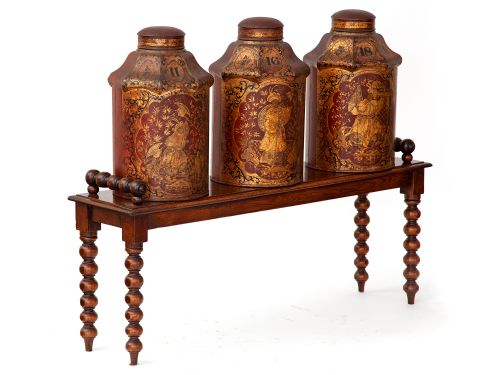


Antique Tin Canister
An antique tin canister brings enduring colour and utilitarian charm to a room, offering practical storage disguised in painted or polished metal.
Antique Tin Canister
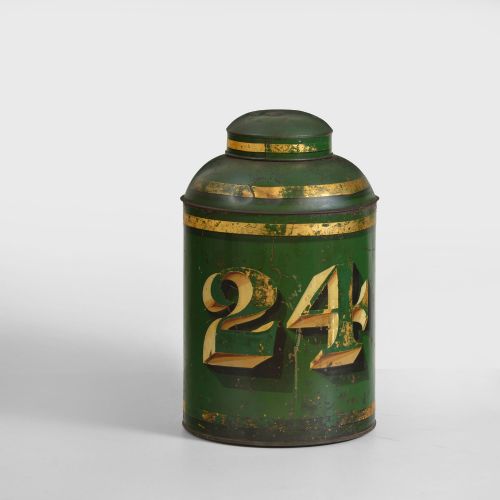
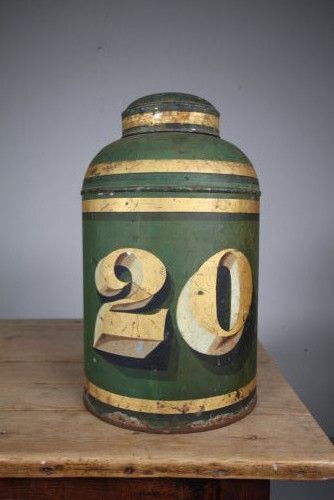
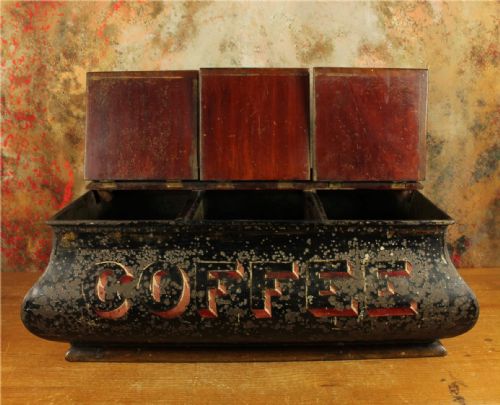
When you search for an antique tin canister, you encounter a varied selection of domestic and commercial containers originating from the eighteenth, nineteenth, and early twentieth centuries. These pieces encompass everything from grocer's shop tea canisters and tobacco jars to kitchen storage tins and decorative toleware boxes.
The versions you are most likely to meet on this page span the Victorian and Edwardian periods, frequently taking the form of painted tea canisters, flour bins, or novelty caddies. Many survive from retail settings, carrying the marks of past trade alongside their decorative painted surfaces.
Originating across Britain, France, Belgium, and further afield, these containers served utilitarian purposes in homes, shops, and offices before finding favour as decorative objects. Their forms range from simple cylindrical tea chests to elaborate pagoda style sets and converted table lamps.
How they were made
The construction of these pieces relies primarily on tinplate and iron, shaped into rigid containers designed to protect dry goods like tea, tobacco, and biscuits from moisture. Artisans applied layers of paint and gold leaf to the metal surfaces, creating durable finishes that often emulated oriental lacquer or fine porcelain.
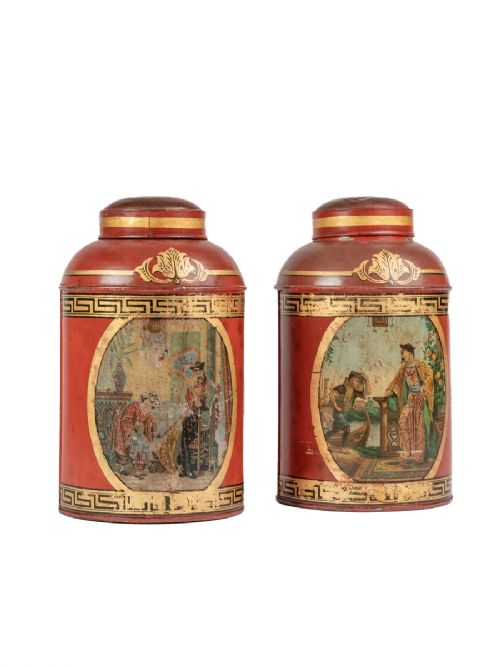
Specialised techniques such as toleware manufacturing involved japanning and hand-decorating tinplate, resulting in rich dark grounds adorned with floral motifs or Chinoiserie scenes. Brass fixtures, wooden elements, and hand-painted details added refinement to both commercial shop tins and domestic storage boxes.
Antique Tin Canister Retail Price Guide 2026
Typical asking prices for tin canister among the pieces listed under this phrase on Sellingantiques today, from the lower quarter to the upper quarter. They describe what is for sale here now, not the wider market.
Listings feature containers spanning the eighteenth, nineteenth, and early twentieth centuries, constructed from tinplate, brass, and iron.
What varies in quality
The distinction between ordinary utility items and exceptional pieces rests upon the crispness of the hand-painted decoration and the preservation of original surfaces. Containers featuring detailed Chinoiserie motifs, gilt work, or specialised forms demonstrate superior craftsmanship compared to plain commercial storage.
Maker attribution and material combination also elevate a piece, such as marked boxes by known retailers or fine brass and tinplate assemblies. The integrity of the painted finish and the survival of matching sets heavily influence the standing of an item within the range.
Asprey & Co
The Antique Tin Canister Glossary
- Toleware
- Lacquered or japanned metalware, usually tinplate, decorated with hand-painted designs or gilt. This technique was widely used in Britain and Europe to create decorative domestic vessels.
- Tinplate
- Sheet iron or steel coated with a thin layer of tin to prevent corrosion. It serves as the primary structural material for nineteenth-century storage containers.
- Japanning
- A European imitation of Asian lacquer work involving layers of heat-cured varnish applied to metal or wood. The process created a glossy, hard-wearing dark surface.
- Chinoiserie
- European artistic style reflecting Chinese motifs and techniques, popular in furniture and decorative metalwork. It frequently appears on painted tea canisters and storage boxes.
- Flatback
- A descriptor for containers or ornaments designed with a flat rear side to sit flush against a wall or shelf. This form is common in nineteenth-century flour bins and wall-mounted storage.
Antique Tin Canister: Frequently Asked Questions
What were antique tin canisters used for?
These containers stored perishable goods like tea leaves, coffee beans, tobacco, and flour in homes and retail shops. Their airtight metal construction protected contents from dampness and loss of flavour.
Over time, many found a second life as decorative objects, waste paper bins, or table lamps as tastes shifted and original contents changed.
How do I date a painted tin?
Dating relies upon stylistic clues, construction methods, and the nature of the painted decoration. Victorian pieces often feature specific floral motifs or japanned finishes, while eighteenth-century examples display distinct Dutch or English folk art palettes.
Examining the metal joins, hinges, and wear patterns provides further evidence of the period of manufacture.
Are these canisters still food safe?
Most antique metal containers contain historical paints, solders, and protective coatings that are not tested for modern food safety standards. Using them for dry goods or loose storage is generally discouraged to protect both the user and the interior surface of the tin.
Instead, they serve best as decorative display pieces, desk organizers, or standalone accessories in a room.
How do I clean an antique tin?
Maintenance requires gentle dusting with a soft, dry cloth to remove surface particles without disturbing fragile paint or gold leaf. Water, solvents, and abrasive cleaners should be avoided entirely to prevent permanent damage to the original finish.
Professional restoration is rarely needed if the piece is kept in a stable environment away from direct sunlight and moisture.