




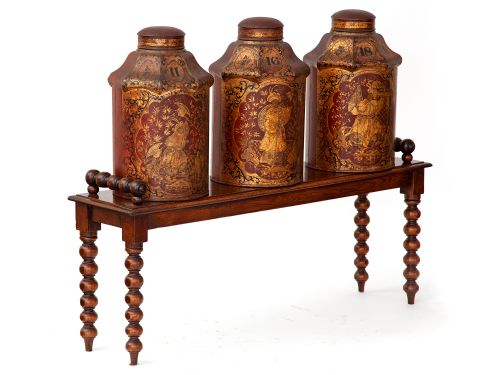


Antique Tin Caddy
An antique tin caddy holds leaf tea or biscuits securely while bringing hand-painted charm and metalwork character to a room.
Antique Tin Caddy
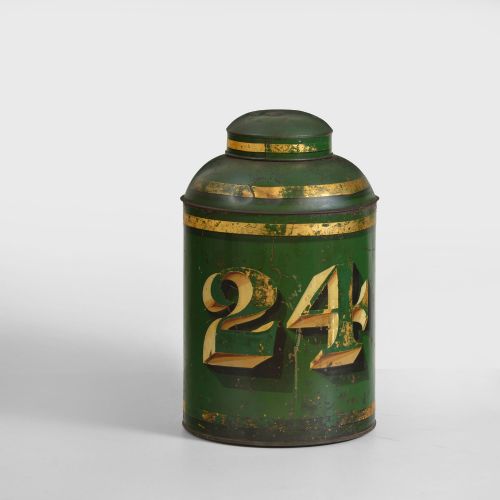
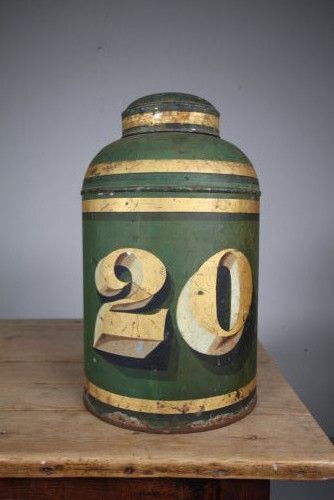
An antique tin caddy encompasses utilitarian metal storage vessels produced across the nineteenth and early twentieth centuries for domestic use. The pieces appearing here range from plain nineteenth century tea canisters to novelty biscuit tins shaped like books, hats, or weights, alongside larger biscuit boxes with fitted glass liners and silver plating.
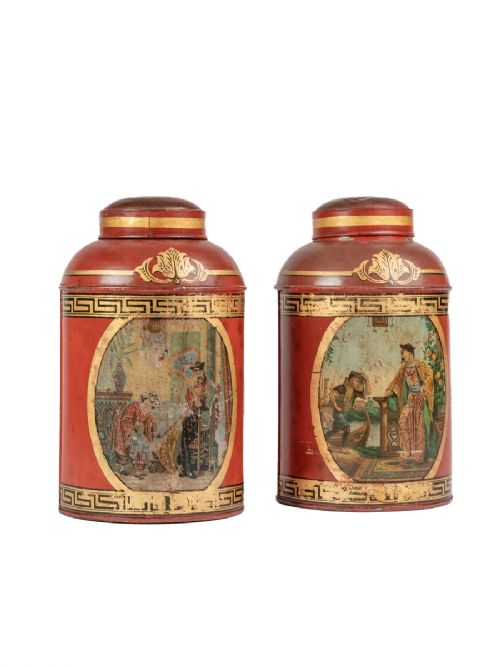
Buyers most frequently encounter painted toleware tea canisters from the nineteenth century, often decorated with Chinoiserie motifs or gilt details, as well as Edwardian and later novelty biscuit tins. Surviving examples reflect both grand English dining rooms and modest nineteenth century parlours, utilising materials from simple tinplate to elaborate silver plate and brass.
Forms vary from pairs and sets of tea canisters to locking biscuit boxes and table lamps adapted from older storage vessels. The selection draws on periods spanning the Regency, Victorian, and Edwardian eras, capturing both practical pantry items and decorative mantelpiece novelties.
Materials and construction methods
Construction relies heavily on tinplate, metal, and iron shaped into canisters, boxes, and cylinders, frequently finished with paint, gold leaf, or black lacquer. Toleware pieces demonstrate skilled application of decorative pigments over a metal substrate, often incorporating gilt Chinoiserie scenes or floral patterns.
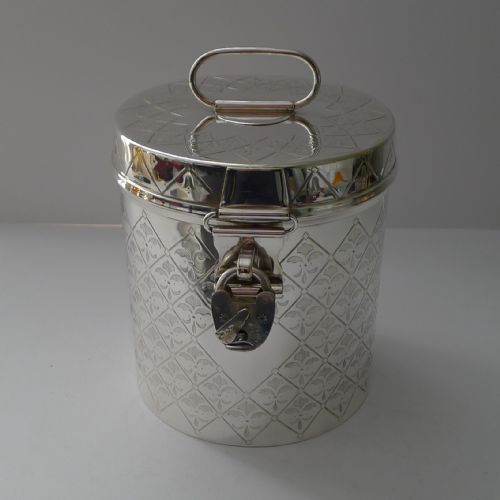
More formal biscuit boxes employ silver plate over a sturdy metal core, sometimes combined with glass liners and locking mechanisms of brass. Artisans also utilised oak, tortoiseshell, and papier-mâché in related storage forms, while novelty tins were pressed and moulded to mimic everyday objects like weights or books.
Antique Tin Caddy Retail Price Guide 2026
Typical asking prices for tin caddy among the pieces listed under this phrase on Sellingantiques today, from the lower quarter to the upper quarter. They describe what is for sale here now, not the wider market.
Listings feature items from the Regency, Victorian, and Edwardian periods, utilising tinplate, brass, iron, and silver plate.
Assessing quality in metal storage pieces
Quality reveals itself in the crispness of the hand-painted decoration, the integrity of the original gilt or black toleware surface, and the precision of the metal forming. Superior tea canisters maintain intact pigment and clear decorative motifs without heavy overpainting.
In silver plated biscuit boxes and locking pieces, the durability of the plating and the smooth operation of mechanical hinges or locking mechanisms distinguish finer workshop output. Novelty tins achieve higher regard when the illusion of the imitated object remains convincing and the printed or painted surface retains its original depth.
Mappin and Webb·Huntley & Palmers·Asprey & Co.·John Grinsell & Sons·Martin Hall
The Antique Tin Caddy Glossary
- Toleware
- Painted or lacquered metalware, most commonly tinplate, developed in the eighteenth and nineteenth centuries to mimic expensive Asian lacquer. These items frequently feature black grounds with gilt Chinoiserie decoration.
- Biscuit Barrel
- A covered container designed to keep dry biscuits crisp on the dining table or sideboard. Victorian examples often incorporate silver plate mounts, hinged lids, and glass liners.
- Chinoiserie
- European artistic style reflecting Chinese motifs and decorative techniques, popular on nineteenth-century tea canisters and toleware. It relies on imaginative landscapes, figures, and gilt detailing.
- Tinplate
- Thin sheet iron or steel coated with tin to prevent rusting, serving as the primary foundation material for antique canisters and novelty boxes. It provides a lightweight yet durable base for painted finishes.
- Novelty Tin
- A container manufactured in the likeness of an unrelated object, such as a book, a hat, or a heavy weight. Makers like Huntley and Palmers produced these for commercial packaging.
Antique Tin Caddy: Frequently Asked Questions
What is a toleware tea canister?
A toleware tea canister is a painted metal storage vessel made to keep tea leaves fresh while adding decorative colour to a room. These pieces usually feature hand-painted motifs on a dark lacquered background.
They were kept in domestic settings where dry goods needed secure storage away from damp air.
How were biscuit boxes used?
Biscuit boxes sat on Victorian dining tables and sideboards to serve dry biscuits during after-dinner port or afternoon tea. Many included glass liners and locking mechanisms to protect the contents.
Their sturdy silver plated or metal construction kept biscuits crisp in busy households.
How do I date an antique tin?
Dating relies on stylistic clues like Regency gilt work, Victorian Chinoiserie patterns, or Edwardian packaging designs found on novelty tins. Materials such as early tinplate and silver plate also indicate specific production eras.
Maker marks and construction techniques help narrow the decade of manufacture.
Can these canisters still hold tea?
While historic canisters were built to store loose leaf tea, surviving examples are primarily collected as decorative objects. Using them for food storage depends on the interior condition and the stability of the original metal.
Most owners prefer to display them empty to preserve fragile paint and gilt surfaces.