


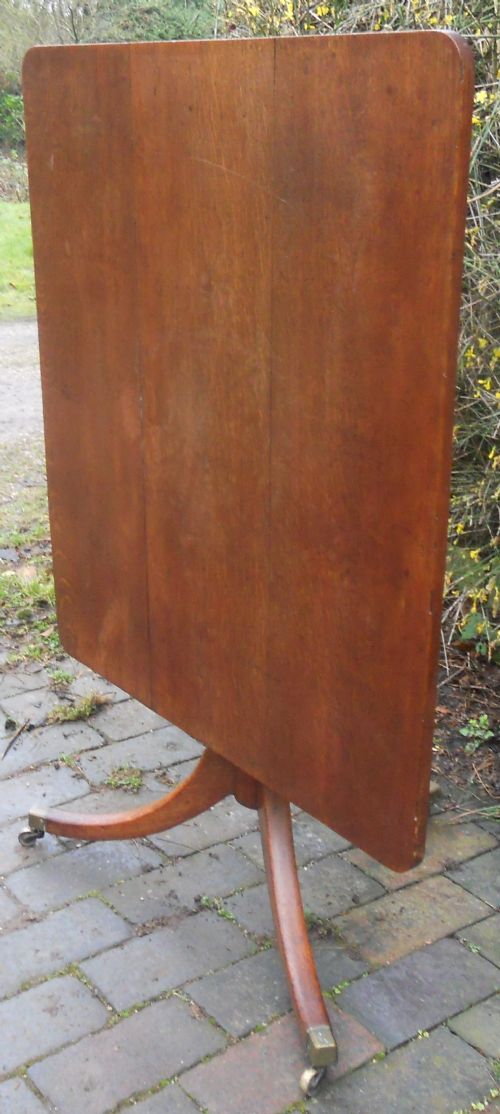


Antique Tilt Top Desk
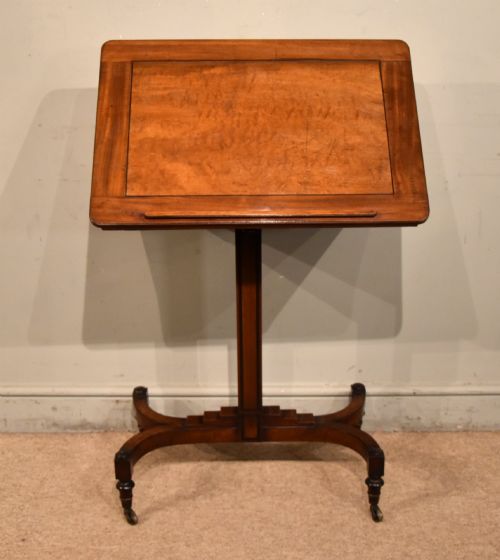
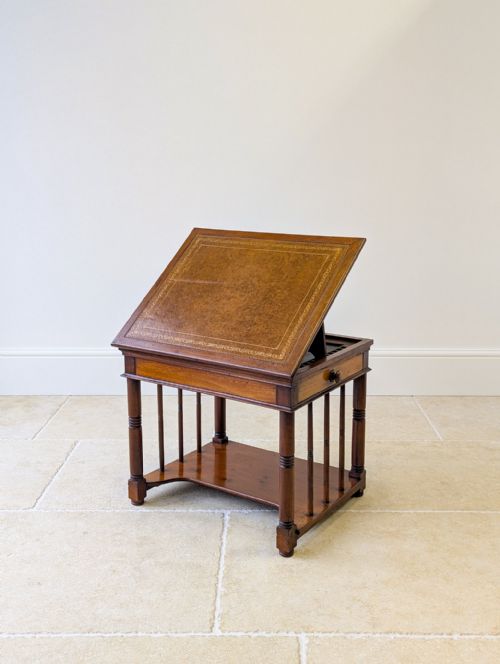
An antique tilt top desk offers adjustable writing and reading surfaces that adapt to various rooms with practical mechanical grace.
Antique Tilt Top Desk
When you search for an antique tilt top desk, you encounter a versatile group of writing furniture, reading stands, and tables that surface across several eras. The selection on this page draws from Georgian, Regency, Victorian, and Edwardian periods, bringing together library furnishings and campaign items.
You also encounter specialised forms like architects tables, campaign tables, and bed tables made from brass, iron, and leather. The variety spans formal domestic furniture and utilitarian travel pieces.
Materials and construction
The construction relies heavily on timbers such as mahogany, oak, and solid teak, frequently paired with brass hardware and leather inserts. Cabinet makers utilised these durable woods to support adjustable mechanisms and hinged tops.
Inlaid decoration appears on specific Dutch examples using marquetry techniques, whilst campaign and reading tables incorporate iron and brass ratchets for mobility and adjustment.
Antique Tilt Top Desk Retail Price Guide 2026
Typical asking prices for tilt top desk among the pieces listed under this phrase on Sellingantiques today, from the lower quarter to the upper quarter. They describe what is for sale here now, not the wider market.
Materials recorded include brass, mahogany, iron, leather, pine, padauk, solid teak, and walnut.
Assessing quality
Quality rests in the precision of the adjustable mechanisms and the selection of timber used for the top and base. Pieces featuring smooth ratchets and solid secondary woods stand apart from simpler utilitarian items.
The sophistication of the design, such as double-sided reading surfaces or complex marquetry inlay, dictates the distinction between standard domestic furniture and high-status library pieces.
The Antique Tilt Top Desk Glossary
- Tilt top desk
- A table or desk featuring a hinged surface that adjusts to an angle for reading or writing. These forms frequently incorporate mechanical ratchets.
- Campaign table
- Portable furniture made for travel, often featuring folding legs and brass corners. These items were designed for military or naval use.
- Marquetry
- Decorative veneer work arranged in pictorial patterns on furniture surfaces. This technique appears on specific 18th-century pieces.
- Pedestal table
- A table supported by a central column resting on feet. This form provides stable support for tilting tops.
Antique Tilt Top Desk: Frequently Asked Questions
What is an antique tilt top desk used for?
These pieces function as adjustable surfaces for reading, writing, and drawing in studies or libraries. The tilting mechanism allows users to angle books or papers for comfortable viewing.
They also serve as versatile side tables or display surfaces when the top is locked in a horizontal position.
How do I date an antique tilt top desk?
Dating relies on identifying the timber species, construction methods, and stylistic details associated with periods like the Georgian, Regency, or Victorian eras. Mahogany and oak dominate earlier pieces, whilst pine and cast iron appear more frequently in later examples.
Hardware such as brass hinges and ratchets also provides clear clues to the manufacturing decade.
Are these desks suitable for daily use?
Many of these pieces were built for functional utility in libraries, ships, or bedrooms and withstand regular handling. The adjustable mechanisms allow them to adapt to modern living spaces as reading stands or occasional desks.
Care should be taken with delicate veneers and antique leather surfaces during everyday tasks.
What woods were used for these desks?
Mahogany is the most frequent timber seen across Georgian, Regency, and Victorian examples. Other pieces utilise solid teak, padauk, oak, pine, and walnut depending on their origin and period.
Secondary materials like brass, iron, and leather provide structural support and working surfaces.