



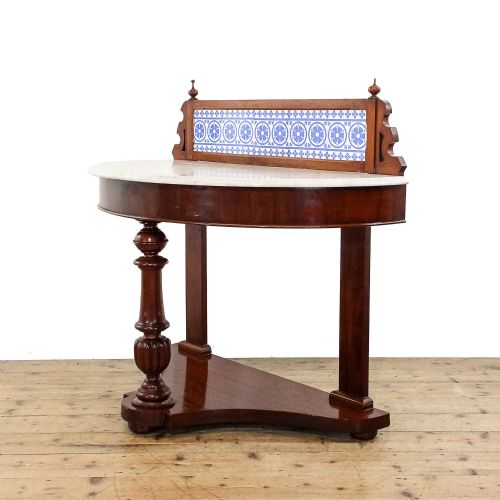


Antique Tiled Washstand
An antique tiled washstand brings practical ceramic and stone surfaces into a bedroom, offering sturdy splashbacks alongside timber framing from the Victorian and Edwardian periods.
Antique Tiled Washstand
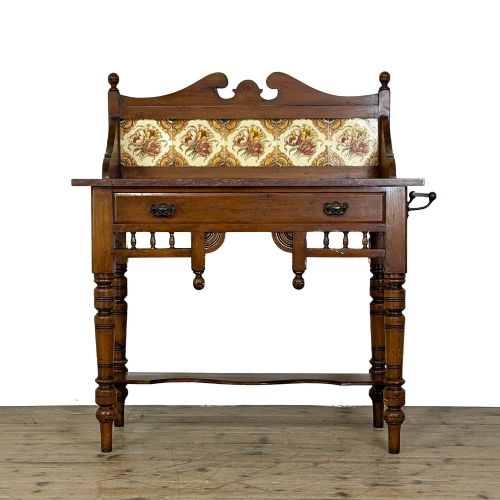
The antique tiled washstand is a substantial piece of bedroom furniture designed for personal washing before plumbed bathrooms became universal. These items combine timber framing with protective ceramic tile splashbacks and often feature stone surfaces.
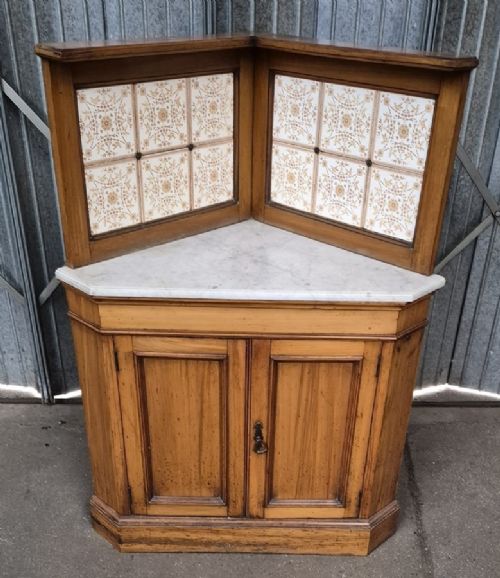
Most examples found here date from the Victorian and Edwardian eras, spanning the late nineteenth and early twentieth centuries. They appear in forms ranging from compact corner units to large bedroom furniture suites.
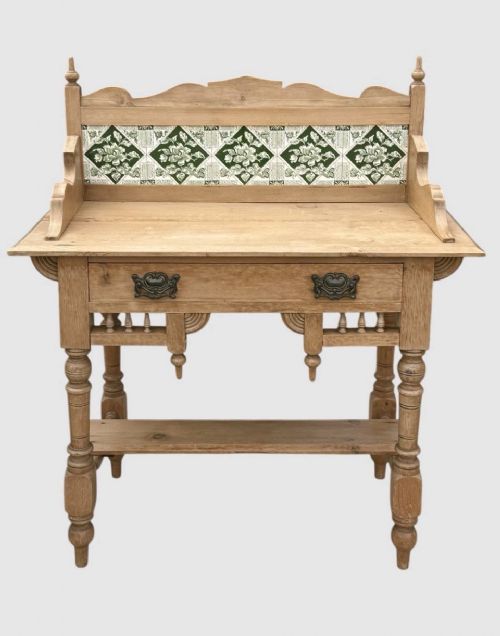
Makers utilised various woods including mahogany, walnut, oak, and pine to build these washstands. Many incorporate ceramic tiles along a gallery back to protect the wall from water splashes during daily use.
Materials and construction methods
Makers constructed the primary frames of these washstands using hardwoods like mahogany, walnut, and oak, alongside simpler softwoods such as pine. These timbers support heavy inset elements without warping.
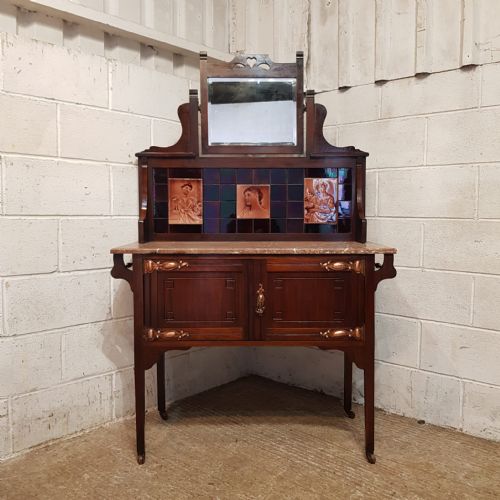
Marble tops provide a durable, water-resistant surface for basins and ewers, while matching ceramic tiles form decorative and functional gallery backs. Brass and glass hardware frequently appear on associated drawers and cabinets.
Listings feature woods such as mahogany, walnut, oak, and pine paired with marble and ceramic tiles.
Assessing quality in construction and materials
Quality in an antique tiled washstand rests upon the selection of timber and the integrity of the stone top. Dense marbles and well-figured mahogany or walnut indicate a more substantial investment by the original commissioner.
The execution of the ceramic tile gallery back and the joinery of the pine or hardwood frame distinguish finer examples from standard utility pieces. Intricate styling influenced by the Aesthetic Movement, Arts and Crafts, or Art Nouveau further elevates a piece.
Walker & Sons
The Antique Tiled Washstand Glossary
- Tile gallery back
- A raised section at the rear of the washstand inset with ceramic tiles to protect the wall from water splashes. This feature often defines the decorative character of the piece.
- Marble top
- A solid stone slab fitted to the washtable surface to provide a waterproof area for basins. It adds considerable weight to the furniture structure.
- Aesthetic Movement
- A late nineteenth-century design style focusing on visual beauty rather than narrative meaning. Pieces from this movement display refined craftsmanship and artistic detail.
- Arts and Crafts
- A design philosophy championing traditional handcraftsmanship and simple forms. Washstands in this style emphasise natural materials and unpretentious construction.
- Art Nouveau
- A style characterised by flowing, organic lines and natural motifs. It appears in furniture from around nineteen hundred.
Antique Tiled Washstand: Frequently Asked Questions
How were washstands used?
These units held jugs, basins, soap dishes, and sponges for morning and evening hygiene routines. The waterproof marble surfaces and tiled backs contained splashes during washing.
Lower shelves, cupboards, and twin drawers provided storage for linens, chamber pots, and washing accessories. Some designs included over-shelves for displaying personal items.
How do I date a washstand?
Dating relies on stylistic clues and materials such as the presence of Arts and Crafts or Aesthetic Movement design motifs. Pine and walnut frames often point to specific decades between eighteen eighty and nineteen ten.
Construction techniques, handle styles, and the specific patterns on the ceramic tiles help narrow down the period of manufacture. Edwardian examples often show lighter timbers and simpler lines compared to heavier Victorian pieces.
Can I use one in a modern bathroom?
Many buyers adapt these washstands for modern use as bathroom sink vanities or hallway consoles. The durable marble tops and ceramic tiles naturally suit areas exposed to moisture.
Plumbing can be routed through the wooden framework with professional modification to accommodate modern taps and basins while preserving the antique exterior.