
Antique Tier Shelving
Antique tier shelving delivers structured display surfaces, bringing multi-level timber construction into domestic spaces.
Antique Tier Shelving
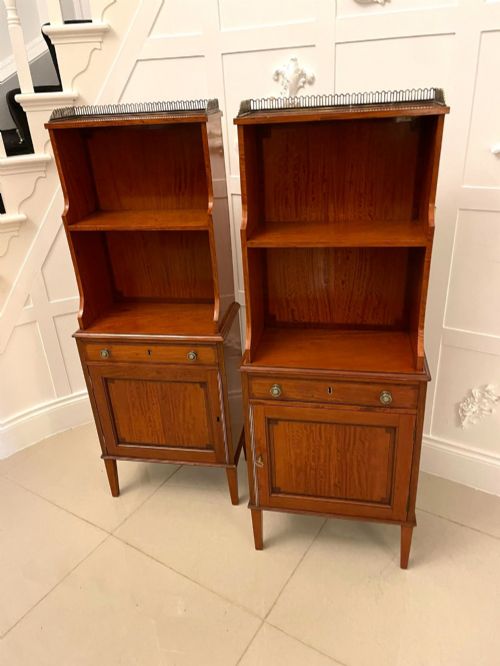
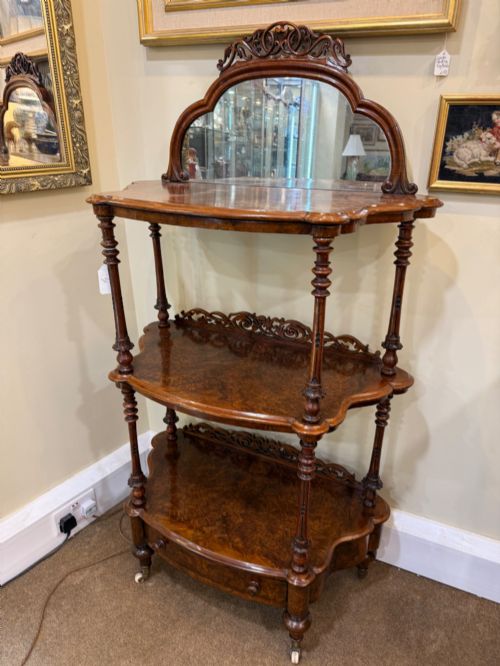
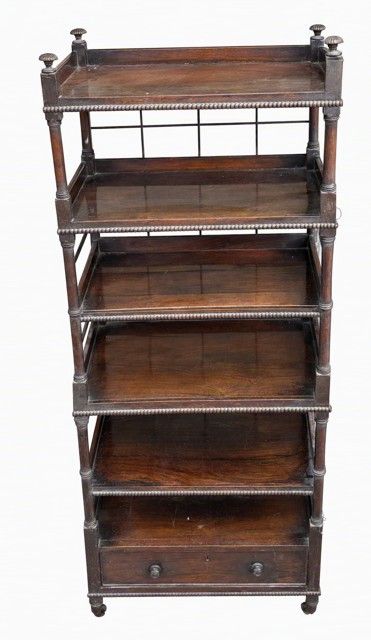
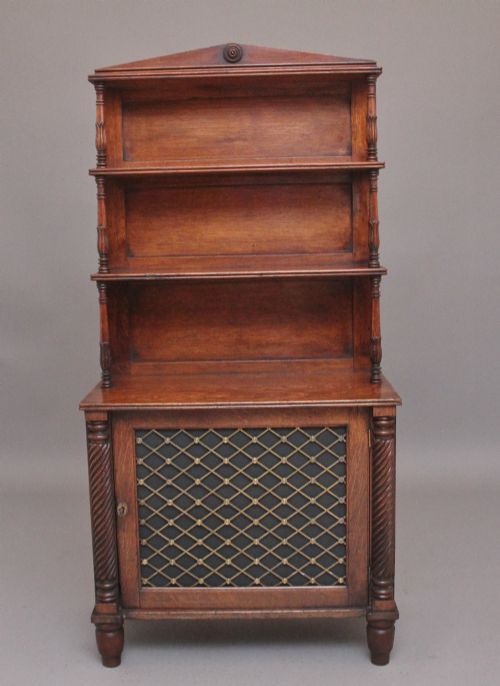
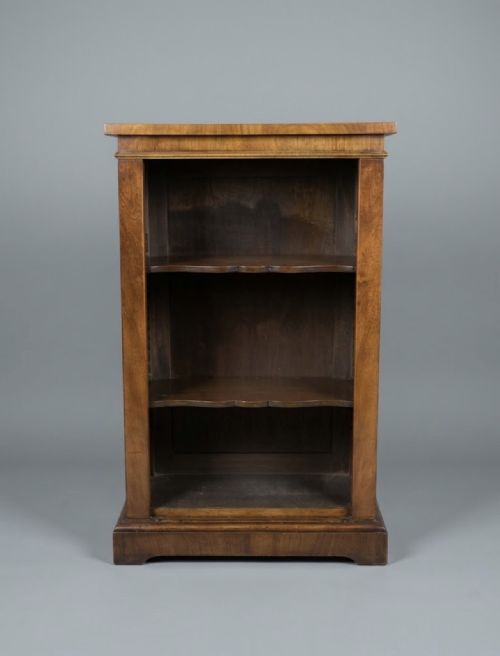
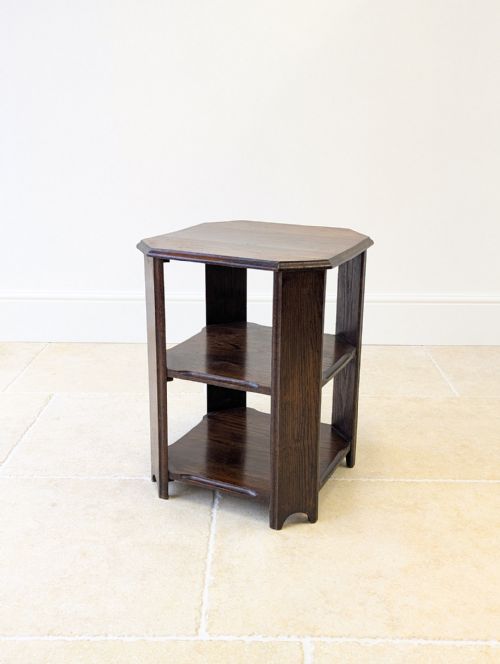
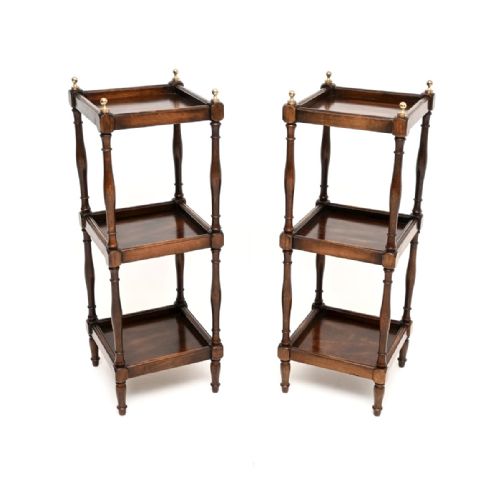
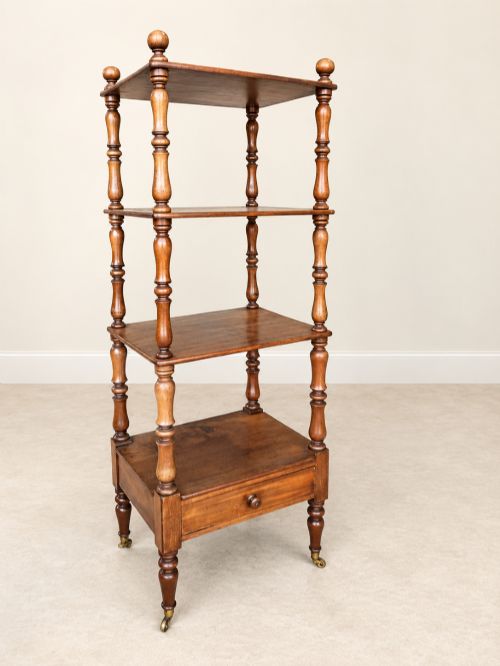
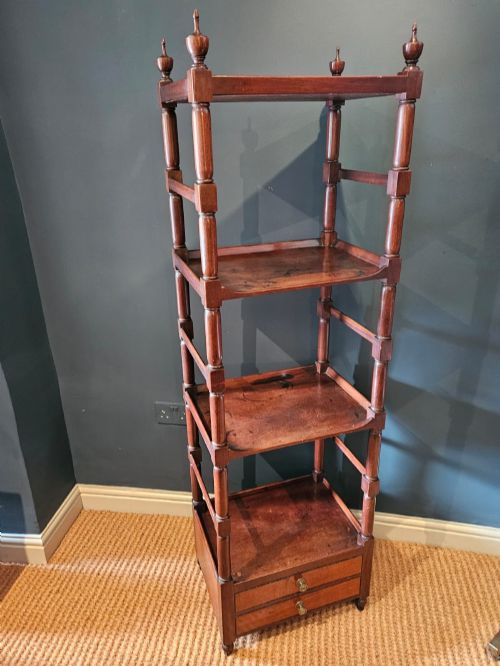
Buyers seeking antique tier shelving will encounter multi-tiered furniture including whatnots, etageres, wall shelves, and open bookcases. These pieces originate across the nineteenth and early twentieth centuries, spanning Victorian, Edwardian, and Regency periods.
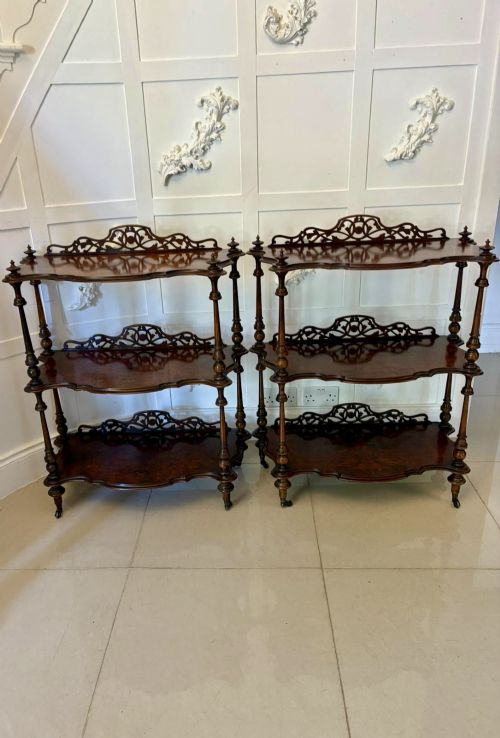
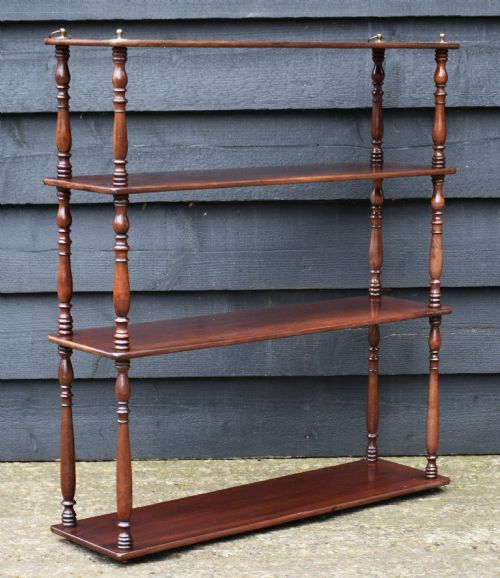
The most common forms on this page are freestanding whatnots and corner units, alongside wall-hanging shelves and bookcases. They utilise timber tiers supported by uprights, designed to hold books, display ornaments, and organise smaller household items.
Materials and construction
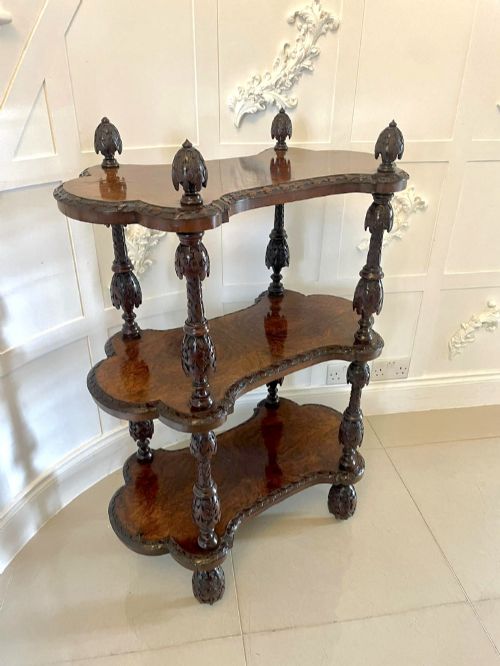
Cabinet makers constructed these multi-tiered pieces primarily using hardwoods such as mahogany, oak, walnut, burr walnut, and rosewood, occasionally incorporating padauk. Surfaces frequently display figured veneers and inlaid details, set upon turned legs or castors.
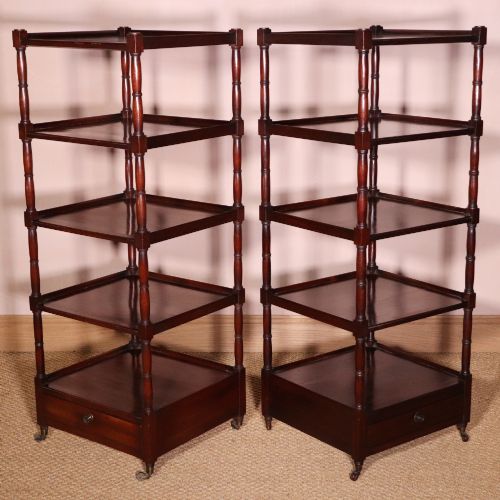
Structural reinforcement relies on brass fittings, metal components, and glass elements where cabinets or doors are present. Wall-hanging variants utilise secure timber brackets, while freestanding units balance multiple graduated platforms above a base cabinet or side table foundation.
Factors that drive quality
Superior examples demonstrate meticulous timber selection, using highly figured burr walnut, rich mahogany, or rosewood with precise grain matching across the tiers. Inferior pieces rely on plainer woods with minimal figure and simpler joinery.
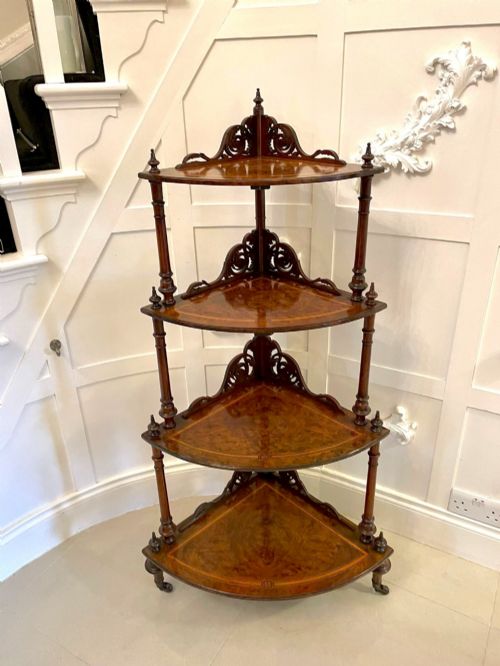
Detailing separates standard furniture from exhibition pieces, evident in pierced fretwork, carved uprights, parcel gilding, and integrated brass work. Construction integrity, stability across multiple shelves, and crispness of carving dictate the standing of each piece.
The Antique Tier Shelving Glossary
- Whatnot
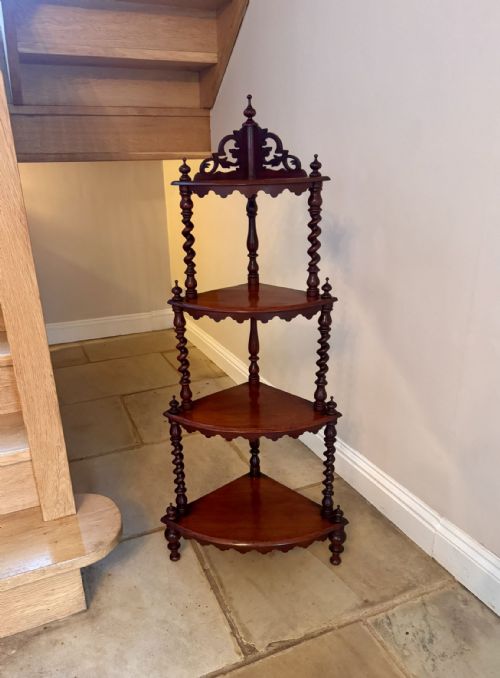
- A piece of furniture with multiple open shelves for displaying ornaments or books. Originating in the eighteenth century, it became a staple of Victorian drawing rooms.
- Etagere
- A set of ornamental open shelves for displaying small objects. This French term typically applies to lighter, more decorative multi-tiered stands.
- Waterfall bookcase
- A set of open shelves where each tier steps back progressively from bottom to top. This creates a silhouette resembling descending water.
- Barristers bookcase
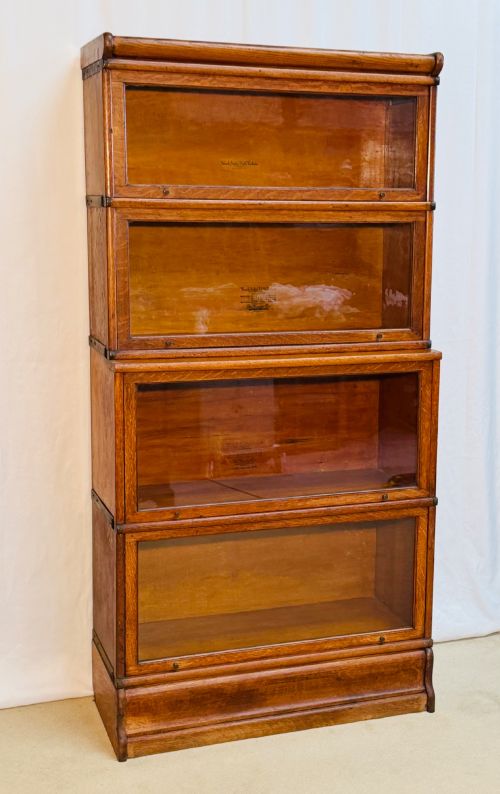
- A modular bookcase featuring glass-fronted stacking sections. The Wernicke system allowed multiple tiers to lock together or separate.
Antique Tier Shelving: Frequently Asked Questions
What is an antique whatnot?
A whatnot is a multi-tiered shelving unit designed for displaying ornaments, ceramics, and books. These pieces gained popularity in the nineteenth century as formal reception rooms demanded specialised display surfaces.
They stand either freestanding on legs or fit into corners to maximise room space. Their graduated tiers allowed owners to arrange smaller objects at the top and heavier items below.
Where should I place tier shelving?
Tier shelving fits well in living rooms, studies, and hallways where display space is needed without a heavy visual footprint. Corner whatnots utilise neglected angles, while freestanding units anchor empty wall spans.
Keep timber pieces away from direct sunlight and heat sources to protect the polished veneers and prevent wood shrinkage. Ensure wall-hanging shelves are anchored into solid masonry or studwork to support the weight of books.
How do I identify a Victorian whatnot?
Victorian examples often utilise rich timbers like burr walnut and mahogany, frequently featuring turned barley-twist supports or pierced fretwork galleries. Look for construction methods typical of the nineteenth century, including hand-cut dovetails and traditional wood screws.
Many Victorian pieces incorporate castors beneath turned legs to allow easy movement across carpets. The presence of exhibition-quality carved details usually points towards the mid-nineteenth century.
What is the difference between an etagere and a bookcase?
An etagere is primarily designed for decorative display, featuring open tiers intended for ornaments, porcelain, and small curiosities. A bookcase focuses on the storage and organisation of bound volumes.
Etageres often incorporate lighter frames, glass, and brass detailing, while bookcases rely on heavier timber construction to bear the weight of heavy books. Some hybrid forms combine open display tiers with a small enclosed cupboard below.