


Antique Tennis Art
These pieces of antique tennis art capture sporting movement in diamond platinum, bronze figures, and framed prints.
Antique Tennis Art
When you search for antique tennis art, you find items celebrating the sport across several decades and styles. The selection spans Georgian prints, Art Deco figures, and platinum diamond bracelets.
You are most likely to meet Art Deco pieces from the 1930s on this page. These include bronze or spelter male figure sculptures, table lamps, and diamond line bracelets.
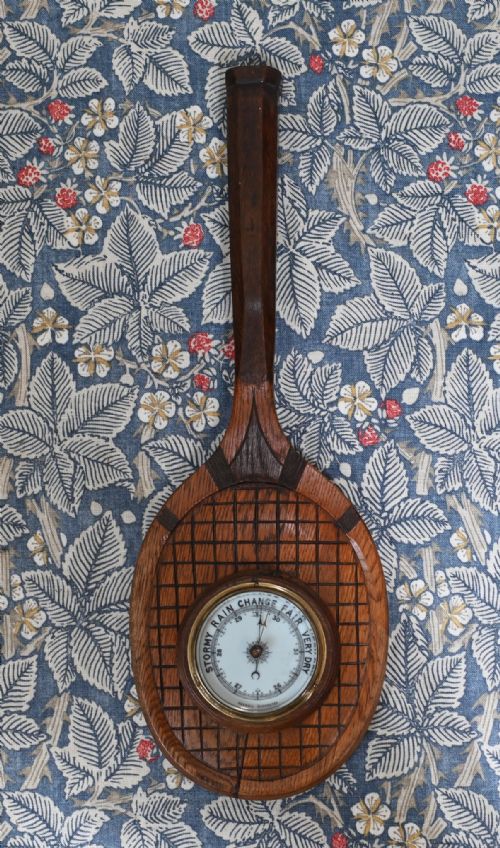
The category bridges fine jewellery and decorative objects. Wall barometers shaped like tennis racquets sit alongside sapphire and diamond bracelets.
How they were made
Jewellery pieces utilise platinum and gold settings for diamonds, sapphires, and rubies. Stones are secured in collet settings or arranged in flexible line structures.
Sculptural works and decorative items involve casting metals such as bronze, brass, and spelter. Figures often capture male tennis players in dynamic poses from the 1930s.
Framed works employ traditional printmaking and paper framing methods, as seen in Georgian sporting prints. Barometers combine carved oak wood with aneroid weather-measuring mechanisms.
Periods represented span Georgian, 1920, 1930, 1940, and 1960.
What varies in quality
The calibre of gemstones dictates the upper tier of jewellery pieces. Total carat weights, stone clarity, and the precision of platinum or gold metalwork create distinct tiers.
The Antique Tennis Art Glossary
- Art Deco
- A design style dominant in the 1920s and 1930s characterised by geometric shapes and streamlined forms. It appears frequently in figures, lamps, and diamond bracelets.
- Collet set
- A method of stone setting where a metal collar wraps tightly around the gemstone. This technique holds diamonds securely within line bracelets.
- Aneroid barometer
- A weather-measuring device that does not use liquid. Some examples take the form of tennis racquet wall barometers from the 1930s.
- Spelter
- An alloy of zinc used as a cheaper alternative to bronze for casting figures. It is common in decorative sculptures from the early twentieth century.
Antique Tennis Art: Frequently Asked Questions
What is antique tennis art?
Antique tennis art comprises decorative objects, sculptures, prints, and jewellery depicting the sport. Items range from 1930s bronze figures and racquet barometers to diamond line bracelets.
Many pieces date from the Art Deco era, reflecting the popularity of tennis during the interwar decades.
How were tennis bracelets made?
Tennis bracelets utilise platinum, white gold, yellow gold, or rose gold as a flexible metal base. Jewellers set rows of diamonds, sapphires, or rubies using claw or collet settings.
Earlier examples from the 1920s and 1930s often feature intricate platinum work alongside old-cut diamonds.
Are bronze and spelter figures different?
Bronze is a durable copper alloy that patinas well and holds fine sculptural detail. Spelter is a zinc-based alloy that is lighter and softer, used for more accessible decorative items.
Both materials were utilised for male figure tennis sculptures during the 1930s.
How do I date a piece?
Dating relies on stylistic markers such as 1930s Art Deco geometry, materials like platinum, and manufacturing techniques. Hallmarks on gold and silver items provide official assay office dates.
Print items often carry Georgian or later period characteristics through paper and ink analysis.