



Antique Tea and Coffee Service
An antique tea and coffee service brings formal hospitality to the table, combining matching pots, jugs and vessels in silver plate, sterling silver or porcelain.
Antique Tea and Coffee Service
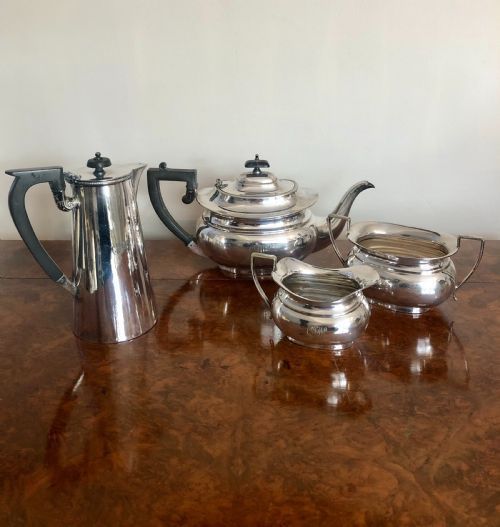
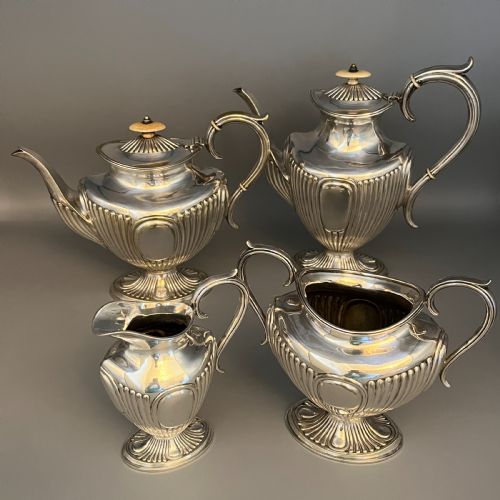
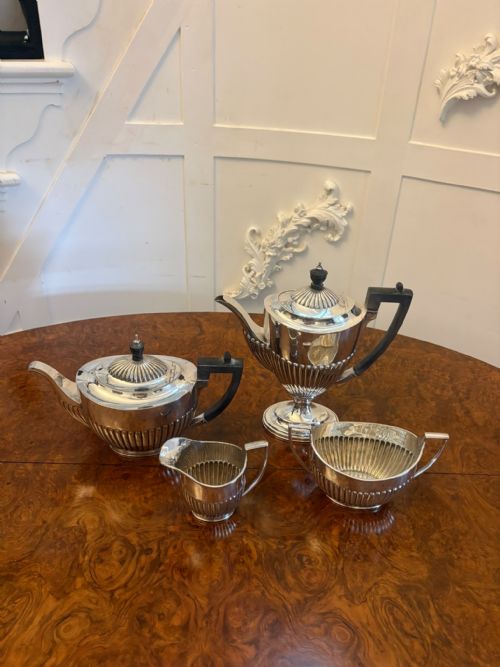
An antique tea and coffee service typically comprises matching or paired vessels for brewing and serving hot drinks, most frequently encountered here in Edwardian silver plate or Victorian ceramics. These gatherings range from three-piece settings with a teapot, milk jug and sugar bowl up to comprehensive five-piece services that add a dedicated coffee pot and hot water kettle. Sets span periods from the late Georgian era through to the Art Deco decades of the twentieth century, reflecting shifting domestic habits.
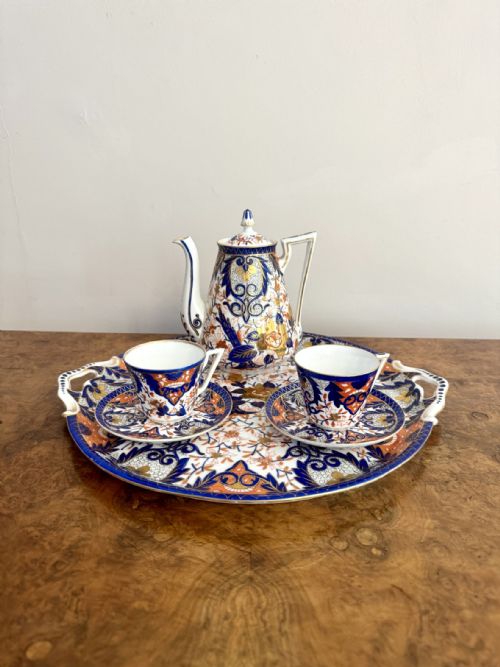
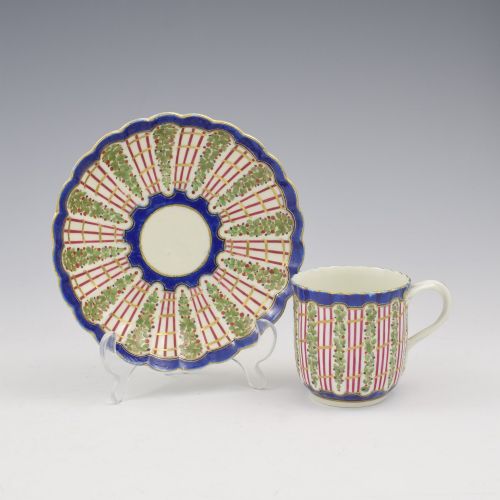
The materials reflect the social status of the original owners, moving between heavy sterling silver, resilient silver plate on copper or brass, and fine porcelain bodies. Forms vary from simple geometric shapes to ornate pedestal pots chased with grapevine motifs or painted with hand-gilded floral patterns. Buyers encounter everything from large dining room services to miniature breakfast sets designed for intimate use.
Materials and construction methods
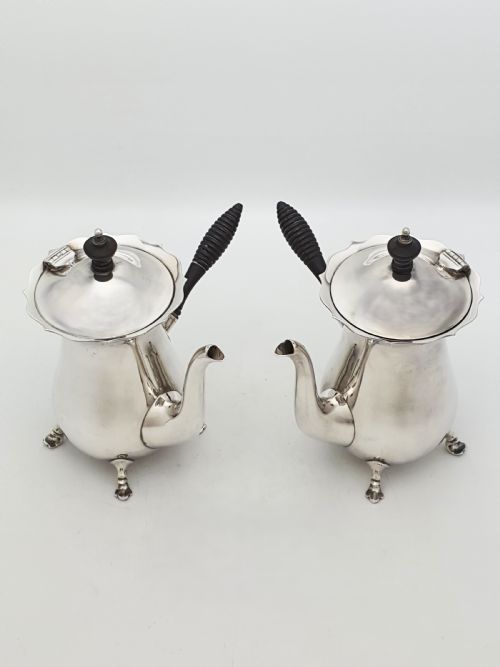
Silver plated services rely on a base metal foundation, such as copper or Britannia metal, bonded with a layer of silver through electroplating or older Sheffield plating techniques. Silversmiths formed the bodies by spinning or stamping sheet metal before soldering handles and spouts, often insulating heat with small spacers made of ebony or ebonised wood.
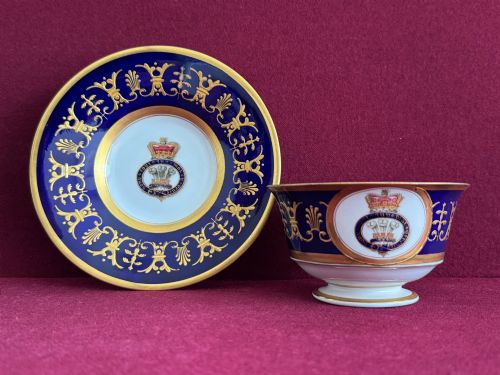
Ceramic services utilise porcelain bodies shaped by throwing or slip casting, then decorated with hand-painted enamels and gold leaf before multiple firings in kilns. Sterling silver pieces involve traditional hammering, chasing and engraving, frequently bearing hallmarks that record the assay office and year of creation.
Antique Tea and Coffee Service Retail Price Guide 2026
Typical asking prices for tea and coffee service among the pieces listed under this phrase on Sellingantiques today, from the lower quarter to the upper quarter. They describe what is for sale here now, not the wider market.
Listings feature porcelain, sterling silver and silver plate spanning from the eighteenth century through to the mid-twentieth century.
Assessing quality and craftsmanship
Quality rests upon the crispness of decorative chasing and the weight of the metal or ceramic body in the hand. Superior silver plated sets retain their plating without base metal showing through on high points, while top-tier porcelain displays smooth glazing and precise hand-painting without transfer printing shortcuts.
Integrity of form and completeness define the standing of a service, particularly when all pieces share matching maker marks, monograms and design motifs from a single production run.
Walker and Hall·Barr and Barr·Harry Atkin·Ahrenfeldt and Asalvary
The Antique Tea and Coffee Service Glossary
- Silver Plate
- A base metal object coated with a thin layer of pure silver. This technique allowed makers to produce domestic wares that achieved the appearance of solid silver at a lower cost.
- Old Sheffield Plated
- An early method of fusing a thin sheet of sterling silver to a thicker copper ingot before rolling them into sheets. Items made this way often show subtle hints of copper showing through along sharp edges.
- Porcelain
- A ceramic material made by heating raw ingredients, typically including clay in the form of kaolin, in a kiln. It is valued for its vitrified, non-porous body and translucent quality.
- Hallmark
- A formal stamp applied to precious metals by an assay office. It indicates the standard of purity, the maker, and the year the piece was tested.
- Ebonised Wood
- Timber treated to resemble ebony, a dense black wood. It appears frequently on the insulated handles and finials of metal pots to prevent heat transfer.
Antique Tea and Coffee Service: Frequently Asked Questions
How do I date a service?
Dating relies on reading silver hallmarks for specific town and year cyphers, or identifying ceramic backstamps linked to particular factory operating dates. Stylistic cues such as Neoclassical shaping or geometric Art Deco lines also narrow down the decade of manufacture.
Maker marks stamped into metal bases or painted underneath porcelain pieces provide the most reliable evidence for pinning down a precise era.
Were tea and coffee sets always sold together?
Many sets began as larger tea services where coffee pots were added later or purchased as supplementary matching items to suit changing dining customs. Complete four or five piece suites designed by a single maker from the outset became more common during the Victorian and Edwardian periods.
When buying, look closely at the handles, feet and engraving styles across all vessels to check whether they share an identical origin or were assembled over time.
How should I clean silver plated pots?
Gentle washing in warm soapy water with a soft cloth removes daily dust without harming the thin silver layer. Dedicated silver dips or harsh abrasive pastes should be avoided, as they strip away old patination and wear down the plating over time.
Dry the pieces thoroughly with a soft lint-free cloth after washing to prevent water spotting on the metal surface.
Can I use an antique service daily?
Silver plated and sterling silver sets remain entirely functional for serving hot drinks provided they are handled with care and washed by hand rather than in modern dishwashers. Porcelain sets require extra attention due to the fragility of fine handles, spouts and aged gilding.
Enamel and gold leaf decorations on antique ceramics can wear away if subjected to abrasive cleaning or harsh detergents.