
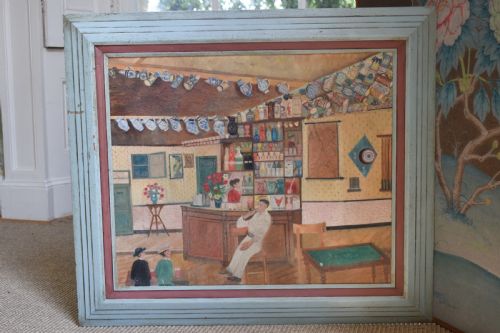
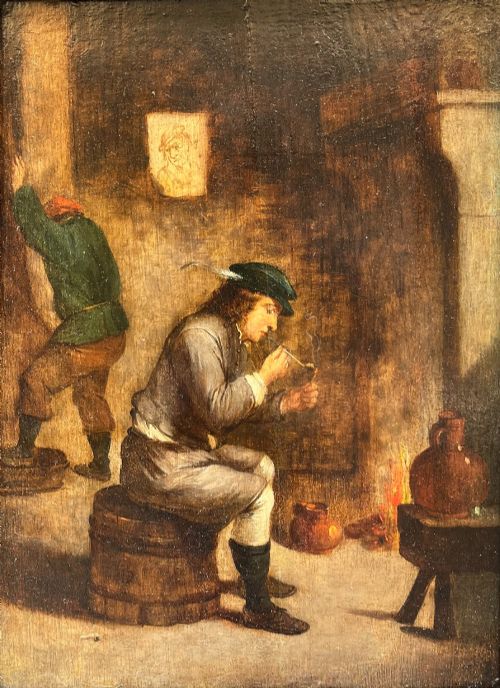

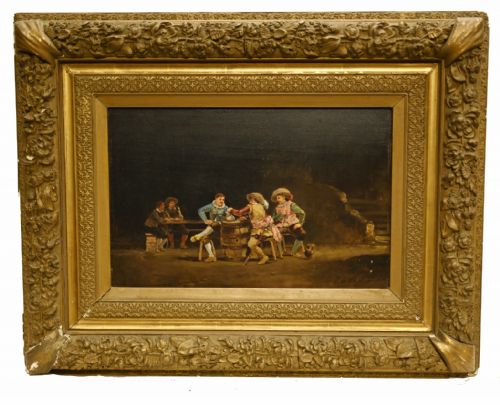
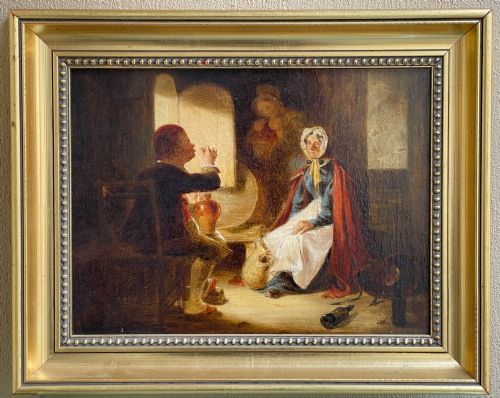


Antique Tavern Interior Painting
An antique tavern interior painting captures centuries of communal social life through rich, dramatic oil pigments on canvas, panel or metal.
Antique Tavern Interior Painting
An antique tavern interior painting depicts lively domestic scenes, card players, smokers and revellers gathered in historic drinking houses. These works span from seventeenth-century Dutch and Flemish subjects to nineteenth-century genre realism and Victorian interpretations.
Buyers encounter oil paintings executed on canvas, oak panels and metal supports, often housed within period giltwood frames. The compositions frequently draw inspiration from the Dutch Golden Age style and subsequent European academic schools.
Pieces range from intimate character studies of topers and musicians to larger historical genre scenes involving musketeers, hunters and peasants merrymaking. The surviving examples demonstrate how deeply past artists valued the bustling atmosphere of the local inn.
How they were made
Artists built these works using oil paint applied to stretched canvas, prepared oak panels or occasionally metal plates. The fundamental medium relies on pigments suspended in drying oils, allowing for subtle tonal gradation and deep shadows.
Many works utilise chiaroscuro techniques, contrasting intense areas of light and dark to focus attention on figures gathered around barrels or tables. Elaborate framing often incorporates gilt wood and gesso moulding to complement the finished canvas.
Styles span from the Dutch Golden Age and Flemish Baroque to nineteenth-century genre realism and Victorian painting.
What varies in quality
The sophistication of brushwork and the psychological depth of the figures separate standard decorative canvases from masterworks. Superior paintings handle light with striking clarity, rendering textures of rough wooden barrels and heavy fabrics convincingly.
Condition of the original paint surface and the survival of period giltwood frames significantly influence the character of a piece. Works bearing firm attributions or connections to established schools carry distinct historical weight.
David Teniers·Johann Hamza·John Arthur Lomax·Hermann Armin Kern·Francesco Bergamini·Jan Steen
The Antique Tavern Interior Painting Glossary
- Chiaroscuro
- An artistic technique employing strong contrasts between light and dark to give subjects a three-dimensional volume. This method defines the dramatic atmosphere inside dimly lit taprooms.
- Genre painting
- The pictorial representation of scenes from everyday life, typically involving ordinary people in domestic settings or inns. These works offer valuable windows into historical social customs.
- Giltwood
- Wood carved and coated with a thin layer of gold leaf or gold paint, frequently used for traditional picture frames. The reflective surface enhances the warmth of the oil painting it encloses.
- Panel painting
- A painting executed on a flat piece of wood, such as oak, rather than canvas. This solid support was favoured by early European masters for its smooth texture and durability.
Antique Tavern Interior Painting: Frequently Asked Questions
What periods do these paintings cover?
The available works primarily stretch from the seventeenth century through to the end of the nineteenth century. They include seventeenth-century Dutch school compositions alongside Victorian and later nineteenth-century interpretations.
Earlier pieces often echo the Dutch Golden Age tradition, while later examples embrace nineteenth-century genre realism. Each period brings its own approach to lighting and character study.
What surfaces are these paintings on?
Most works utilise oil paint applied to traditional woven canvas stretched over wooden frames. Other pieces are executed directly onto prepared oak panels or metal supports.
These different supports reflect the period of creation and the specific workshop practices of the artist. Panel and metal supports tend to offer particularly rigid foundations for fine detail.
How should I display an oil painting?
Hang the artwork away from direct sunlight and steady sources of artificial heat to protect the oil pigments and wooden supports. Maintaining stable room humidity prevents the canvas or panel from warping over time.
Ensure the piece is mounted securely using appropriate hardware suited to the weight of the period frame. Good placement allows the chiaroscuro lighting effects to be appreciated properly in natural room light.