

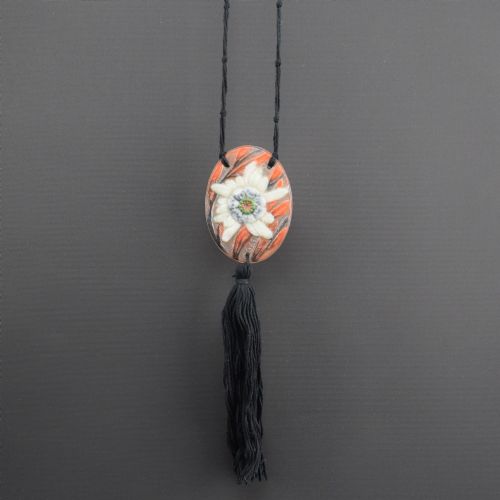
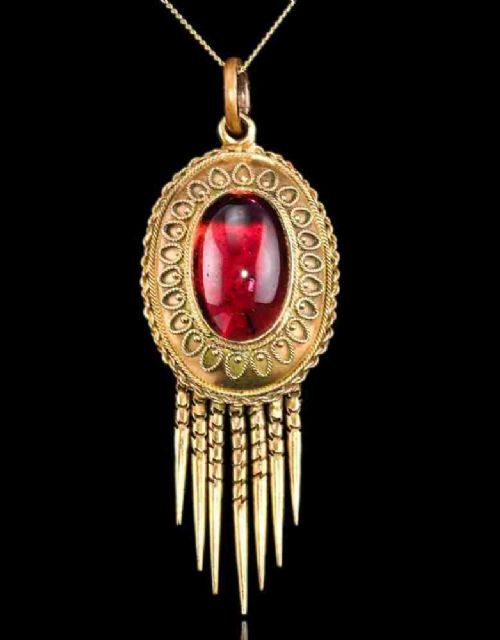


Antique Tassel Pendant
These antique tassel pendant pieces combine precious metals and glass in distinct period designs.
Antique Tassel Pendant
An antique tassel pendant sits on a chain or cord, bringing together drops of metal, glass, or gemstone in forms that span the Victorian era through the 1920s and 1930s. Buyers searching for an antique tassel pendant encounter diverse expressions of this ornamentation, from golden fringe drops to moulded glass motifs.
The pieces listed on this page range from Victorian gold work to Art Deco creations and Arts & Crafts silver. Among these, the forms include both pendant necklaces and earrings featuring dangling elements, reflecting how jewellers of different periods interpreted the tassel shape.
How they were made
Maker construction relies on precious metals such as 15ct gold, 9ct gold, 18ct yellow and white gold, platinum, and silver, shaped into foxtail chains, woven structures, and settings for gemstones. Gemstones including garnet, opal, diamond, coral, seed pearl, rose quartz, and rock crystal are integrated into these metallic frames.
Glass techniques are equally prominent, utilising pate-de-verre glass and moulded coloured glass with staining as seen in works by period glassmakers. Textile cords and thread also form components of these hanging ornaments.
Antique Tassel Pendant Retail Price Guide 2026
Typical asking prices for tassel pendant among the pieces listed under this phrase on Sellingantiques today, from the lower quarter to the upper quarter. They describe what is for sale here now, not the wider market.
A child holds two doves in red glass.
What varies in quality
Quality depends upon the fineness of the metalwork, such as the intricacy of an Etruscan Revival gold setting or the precise weaving of a gold chain. The selection of materials also dictates standard, with higher tiers utilising superior gemstones or master-executed pate-de-verre glass.
Artistic execution separates standard items from exceptional ones, particularly in moulded glass pieces where depth of relief and staining define the visual impact of the work.
Argy Rousseau·Rene Lalique·George Hunt
The Antique Tassel Pendant Glossary
- Pate-de-verre
- A glass-casting method where finely crushed glass is packed into a mould and fused in a kiln. This technique produces pieces with rich texture and nuanced colouration.
- Foxtail chain
- A flexible jewellery chain formed by curved links interlocked in a pattern resembling a fox's tail. It provides a smooth, tubular drape suitable for supporting pendants.
- Sautoir
- A long necklace featuring a pendant or tassel suspended at the end. This style gained popularity during the early twentieth century.
- Etruscan Revival
- A nineteenth-century design movement inspired by ancient archaeological discoveries. It is characterised by gold granulation and filigree wirework.
- Seed pearl
- Very small natural or cultured pearls used in delicate jewellery settings. They create subtle, luminous borders and floral motifs.
Antique Tassel Pendant: Frequently Asked Questions
What periods do these pieces date from?
The examples here date primarily from the Victorian era, the 1920s, and the 1930s.
Styles represented include Victorian Classical Revival, Etruscan Revival, Art Nouveau, Art Deco, and Arts & Crafts.
What materials are used in these pendants?
Makers utilised various metals including 15ct gold, 9ct gold, 18ct white and yellow gold, platinum, and silver.
Gemstones and glass types feature garnets, opals, diamonds, coral, seed pearls, rose quartz, rock crystal, and pate-de-verre glass.
How do I wear a pendant necklace?
These items hang from chains or textile cords, often designed to rest at standard necklace lengths.
They pair with garments that complement their drop length and period design.
How are tassel earrings constructed?
Earrings in this category utilise gold fringe and beadwork to create a hanging, mobile element.
They employ secure ear wires and posts typical of their respective periods.